Working through Furniture Warranties in Singapore: A Guide
I learned this the hard way. Three years ago I bought a solid wood dining table from a Tampines showroom that promised a "10-year warranty" on a glossy banner. Eighteen months in, a crack appeared along the apron. When I called, the store told me the warranty only covered "manufacturing defects," and because my Block 642 HDB flat sat near the kitchen exhaust and the humidity had skewed the grain, the damage was classified as "environmental." I paid S$420 for a refinish. The lesson: a warranty is a contract, not a promise, and you have to read it like one.
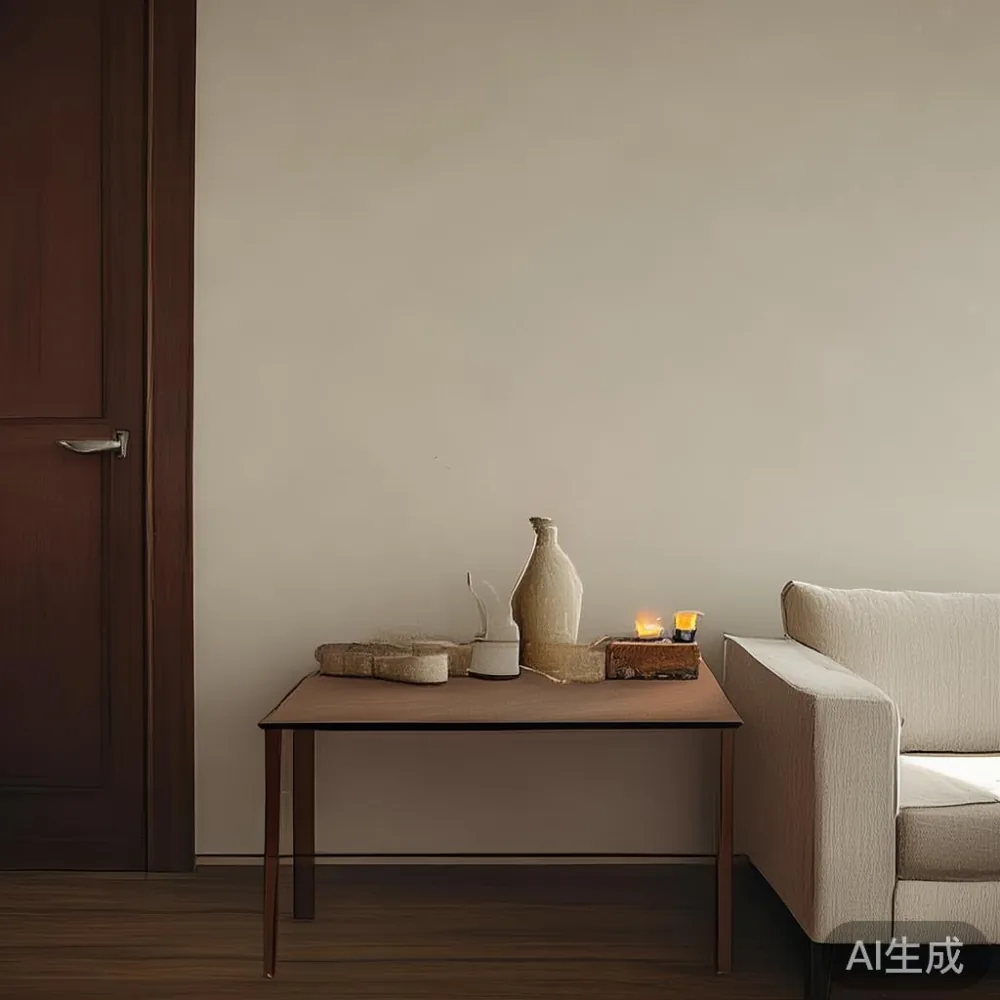
Singapore shoppers spend real money on solid wood furniture. A solid wood sofa frame can run S$2,800 to S$6,500, a bed frame S$1,800 to S$4,200, a six-seater dining table S$3,200 to S$7,800, and a four-door wardrobe S$3,800 to S$9,500. A side table alone ranges from S$320 for a basic piece to S$1,400 for a marble-topped nightstand with brass inlay. With that kind of outlay, a warranty clause you skimmed over can quietly cost you a four-figure repair. This guide walks through what every clause actually means in the local context, from HDB lift openings to monsoon humidity.
What Does "Structural Warranty" Actually Cover?
Structural warranty protects the load-bearing skeleton of the piece: the frame, the joinery, the rails, the slats, the legs. It does not cover finish, fabric, leather, foam, hardware, or anything that wears through use. A solid wood bed frame is structural. The stain on it is not. A solid wood sofa's hardwood frame and serpentine springs are structural. The cushions, the piping, and the upholstery are not.
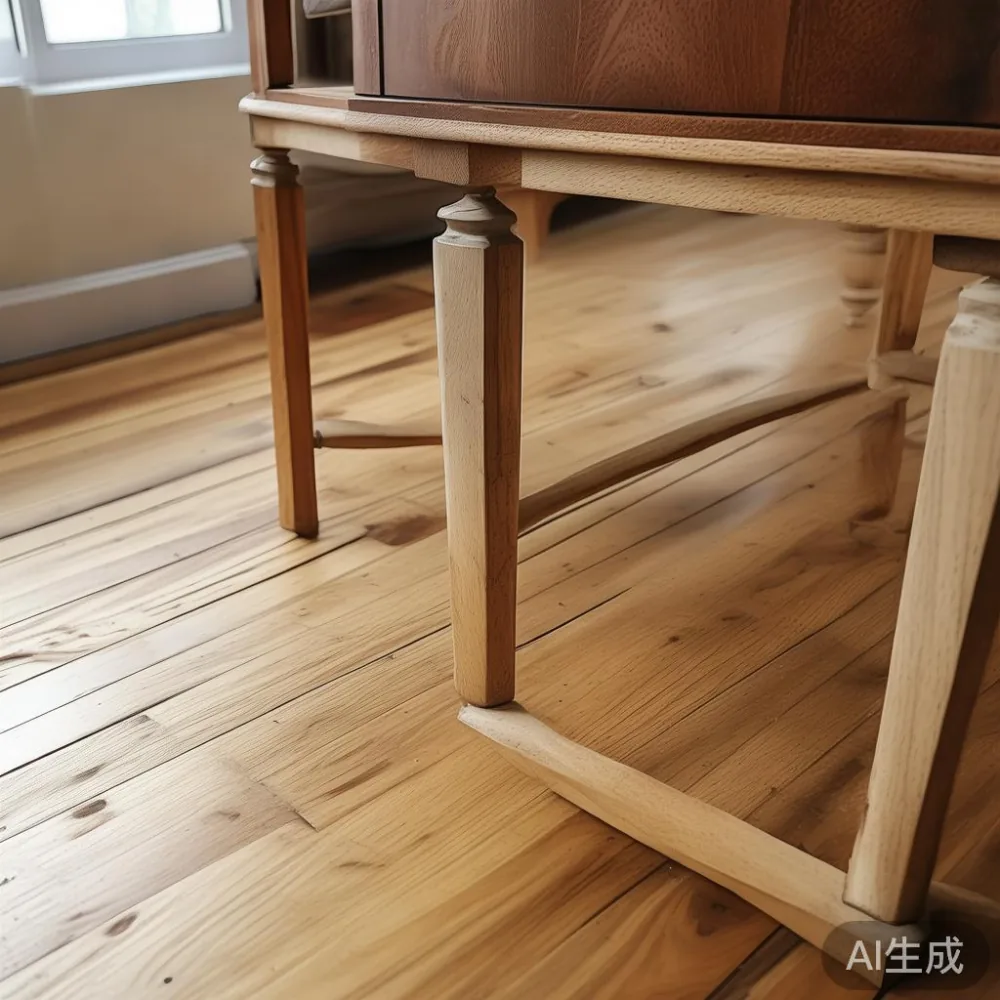
When a Foshan maker like MIDHILL publishes a 10-year structural warranty on a dining table, the language usually means: if a leg splits at the mortise and tenon under normal residential use, we replace the component. If the tabletop develops a hairline crack because your air-con runs 22 degrees all day while outdoor humidity sits at 85 percent in November, that is finish movement, not a structural failure. A good warranty document separates these two categories clearly, often with two different warranty periods (10 years on structure, 1 to 2 years on finish and hardware).
Is French Loveseat Furniture Worth It?
Yes, French light-luxury loveseat furniture is worth it when the frame is kiln-dried solid wood, the joinery is mortise and tenon, and the warranty names the components it covers rather than hiding behind generalities. French light luxury tends to mean slim profiles, brass-tipped legs, boucle or linen-blend upholstery, and proportions scaled to smaller rooms, which is exactly why it travels well into a Singapore condo. The risk appears when the word "French style" is used to mask engineered wood with a 6-month warranty.
Before you commit, ask the showroom for the warranty PDF. Read the exclusions. A piece styled like a Parisian boudoir chair but framed in rubberwood with stapled joints will fail around the 18-month mark, long after the 14-day return window has closed. A genuine French-influenced loveseat from a maker that offers lifetime refinishing and a 10-year structural warranty is a different purchase, even if the sticker price is S$1,800 higher. You are paying for the parts you cannot see and the promise that the maker will still be around in 2034.
How Wide Is the Gap Between "Frame Warranty" and "Full Warranty"?
It can be the entire purchase price. A "frame warranty" covers roughly 30 percent of the materials in a typical upholstered piece. The remaining 70 percent, including webbing, foam, fibre wrap, fabric, stitching, zippers, and legs caps, is usually covered for 12 months or not at all. If your solid wood sofa develops a sagging seat in year three because the foam compressed, the frame warranty does nothing for you.
Last month I visited a colleague's new Punggol Waterway Heights condo to help her unbox a four-door wardrobe. The retailer had offered a "lifetime warranty" in their brochure. The actual contract defined "lifetime" as the lifetime of the product, not the lifetime of the buyer, and excluded everything except the carcass panels. When I pointed out that the warranty was in effect a marketing line, she returned the unit and ordered a different wardrobe from a maker that wrote the terms in plain English. The replacement came with a 10-year structural warranty, a 2-year finish warranty, and free refinishing for life, which is closer to what most shoppers imagine when they hear "warranty" in the first place.
Why Does Singapore Humidity Matter for Solid Wood Warranties?
Singapore sits between 1 and 2 degrees north of the equator, with relative humidity averaging 80 to 85 percent year-round and monsoon spikes above 90 percent between November and January. Solid wood is hygroscopic: it absorbs and releases moisture with the surrounding air. A dining table built in Foshan at 12 percent moisture content and unpacked in a Bedok Reservoir HDB flat at 28 degrees and 82 percent RH will move. The top may cup 1 to 2 mm across its width, drawer fronts may grow slightly tight, and a wardrobe door may need a seasonal adjustment.
This is normal wood behaviour, not a defect. A well-written warranty says so explicitly. Look for language such as: "Seasonal movement, including minor cupping, bowing, and expansion of solid wood panels up to 5 mm, is a natural characteristic and is not covered." If the warranty document does not acknowledge humidity movement at all, the maker either does not understand tropical conditions or is leaving the door open to deny claims. Foshan factories that ship to 15 or more countries, including Southeast Asia, the Middle East, and Australia, write their humidity exclusions clearly because they have already paid for the lessons. MIDHILL's warranty documents, for example, name the moisture range they build for (8 to 12 percent internal moisture) and describe what counts as movement versus what counts as failure.
How Do Delivery and Installation Clauses Affect Your Warranty?
Delivery is where most Singapore warranty disputes begin. The lift opening in a typical HDB block is 90 cm wide by 210 cm tall. A fully assembled four-poster bed frame will not fit. A side table is fine. A dining table over 180 cm usually will not fit vertically, and installers often need to tilt it. If the piece is damaged during a forced tilt because the corridor was too narrow, the question becomes: was the damage caused by manufacturing or by delivery logistics?
Reputable makers separate the two. A good delivery clause names the access requirements (minimum door width, minimum lift depth, staircase turning clearance) and assigns responsibility. If the team arrives, finds the access insufficient, and either disassembles on site or returns the unit, the buyer pays the second-trip fee (typically S$80 to S$180). If the team forces the piece through and damages it, the maker pays. Read this clause before you measure your corridor. The corridor outside a typical Tampines HDB unit is around 1.2 m wide, and the lift car in most 2010s blocks is 1.1 m deep by 1.4 m wide. A king-size bed frame boxed is around 2.15 m long, so it travels diagonally or partially disassembled. Get this in writing.
Installation matters too. A wardrobe that is not anchored to the wall can topple during a tremor or when a toddler climbs it. Most Singapore warranty documents require wall-anchoring for any unit over 90 cm tall. Skip the anchor and a subsequent collapse is not covered. Anchor kits cost S$18 to S$45, and installers usually include them. Take the offer.
What About Marble Tops, Glass, and Other "Fragile" Inserts?
Marble, travertine, sintered stone, and tempered glass tops are usually covered for a shorter period, often 6 to 12 months, and only against manufacturing defects such as inconsistent resin filling or pre-existing fissures. A marble-topped side table that develops a stress crack from being dragged across tile is not a warranty case. A marble top with a hidden fissure that opens under normal use in month four is.
If you are buying a marble dining table for a Singapore condo, ask about the resin treatment, the backing material, and whether the top is sealed. Unsealed marble stains within minutes of contact with kopi or teh. The warranty will not cover the ring; your weekend will. A sealed marble top with a 12-month defect warranty plus a S$120 optional stain-protection plan is the realistic configuration. Skip the protection plan, wipe spills within 30 seconds, and accept that marble is a living surface.
How Does a Side Table Warranty Differ From a Wardrobe Warranty?
The principle is the same, but the timeframes often differ because the stress profiles differ. A side table carries light, distributed loads (a lamp, a cup, a book) and rarely fails structurally. The warranty risk on a side table is finish and hardware: a loose brass tip on a leg, a lifted veneer on a drawer face, a clouding of a marble insert. Expect a 1 to 3 year finish warranty on a solid wood side table, even when the structure carries a 10-year term. That split is honest, because the side table's frame simply does not have time to fail in a residential setting.
A wardrobe, by contrast, carries hanging loads of 20 to 35 kg per rail, plus daily door-slam cycles. A 6 kg door opened 6,000 times a year puts real stress on the hinges, the soft-close mechanism, and the carcass. A wardrobe warranty should therefore separate the carcass (10 years), the hardware (2 to 5 years), and the finishes (1 to 2 years). If the document treats all three as one bucket of 1 year, the maker is underconfident in their own product. If you are choosing between a S$2,400 wardrobe with a uniform 1-year warranty and a S$3,100 wardrobe with split coverage from a maker that also offers free refinishing for life, the second option usually wins the 10-year cost calculation even before you count the included lifetime refinishing service.
How Do Returns, Refunds, and "Lifetime Refinishing" Actually Work?
Three different promises are often blurred together in showroom conversations. Returns are the right to send the product back within a short window, usually 14 days in Singapore, for a refund minus a restocking fee of 5 to 15 percent. Free shipping thresholds (such as free delivery above S$350 order value) are a logistics perk, not a warranty. Lifetime refinishing is a service contract: the maker agrees to sand and re-coat your piece, often for a small service fee or free, for as long as you own it.
Read each of these separately. A 14-day return on a side table is generous and useful. A 14-day return on a made-to-order dining table is less useful because the maker may have already cut the timber. A "lifetime refinishing" promise should specify the cost, the frequency, and what finish is included. A credible offer covers one refinish every 5 to 7 years at no charge, with the customer covering transport. An incredible offer covers unlimited refinishing with pickup included; that offer usually hides a shorter structural warranty or a premium price tag of 20 to 30 percent above comparable pieces.
What Should You Photograph and Keep Before Your Furniture Arrives?
Document everything on arrival, before the installers leave. Photograph the packaging, the labels, the piece from six angles, the underside, the joinery, the drawer slides, and any pre-existing marks on the marble or wood. Photograph the corridor and the lift access. Save the warranty PDF, the invoice, and the delivery order in two places: a cloud folder and an email to yourself. If you ever need to make a claim, the maker will ask for the delivery date, the invoice number, and the photos. The difference between a 10-day resolved claim and a 10-week disputed claim is usually the quality of these records.
Singapore's Consumer Protection (Fair Trading) Act gives you additional rights on top of any warranty, including the right to repair or replacement for goods that are not of acceptable quality within a reasonable time. The warranty is the maker's commitment. The Act is your safety net. Use both.
What Is the One Question That Reveals a Weak Warranty?
Ask the salesperson to point to the exact clause that would cover a cracked leg on a solid wood dining table in year three. If they can do it in under 30 seconds, the warranty is well-written. If they say "we will figure something out" or "just call us," the warranty is a marketing line, not a contract. A real warranty reads like a contract because it is one, and the makers who treat it that way are the ones still around to honour it a decade later.