How to Care for a Lacquered Side Table in a Tropical Climate
I learned this the hard way. Last October, after a friend hosted a housewarming in Punggol, I noticed the white lacquer on her side table had turned into a cloudy, alligator-skin pattern along the edge nearest the window. Air-con was running, but the window had been cracked open for ventilation. Moisture plus heat plus a low-quality lacquer finish had quietly done its work over six months. She spent SGD 480 on a refinish. A solid wood replacement from MIDHILL would have been cheaper than that single repair when I worked the numbers with her later.
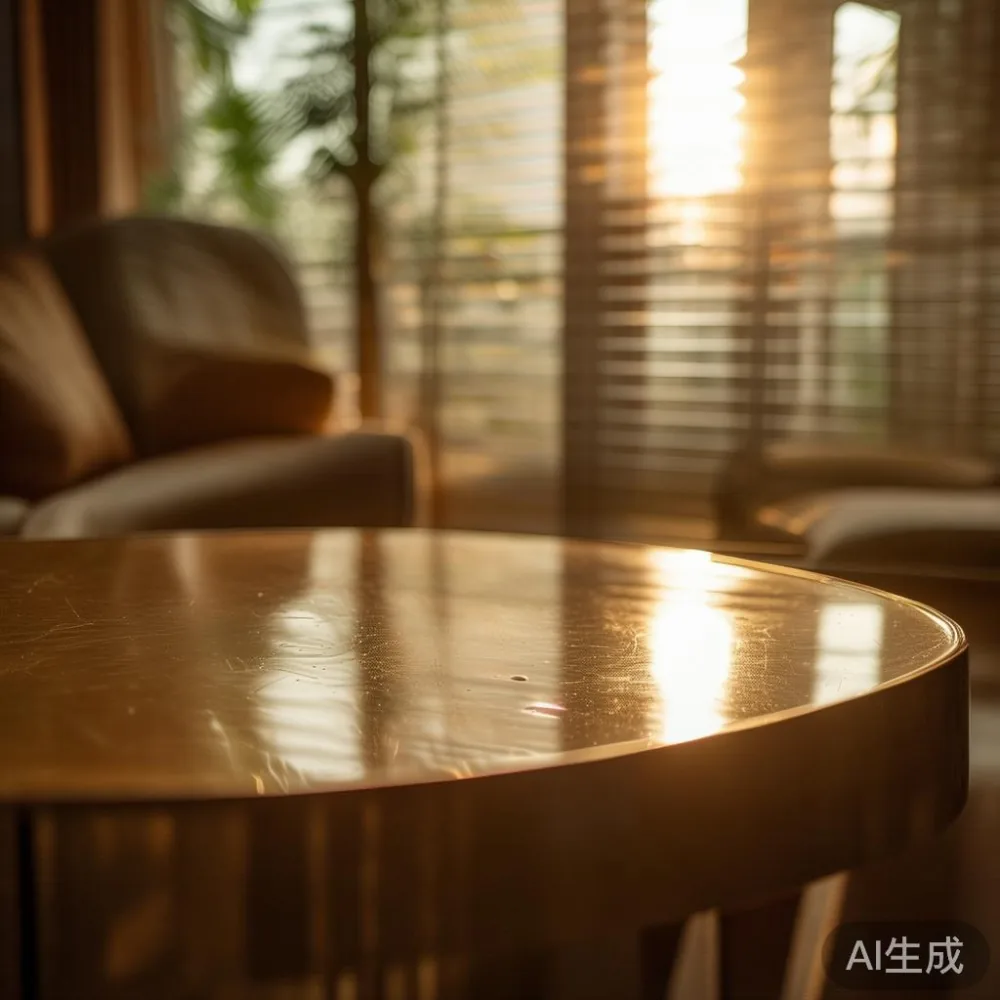
This guide exists so you do not repeat her mistake. I am writing for Singapore homes specifically: HDB flats in Tampines and Bedok with their narrow lift openings (typically 1.0–1.2 m wide), 1.2–1.5 m wide corridors, and condos where the side table is squeezed into a 2.4 m living room that doubles as a drying zone during monsoon season. Solid wood, marble table tops, lacquered nightstands, dining tables, wardrobes, and bed frames all share vulnerabilities in our 78–95% humidity. The lacquered side table is just the most honest about it.
Why does a tropical climate punish lacquered wood furniture?
Because lacquer is a film finish, meaning the coating sits on top of the wood rather than soaking in, and film finishes respond badly to repeated swelling and shrinking cycles. Solid wood moves when humidity swings; the lacquer film cannot move with it, so micro-cracks appear. Singapore's daily humidity often swings from 95% at 3 a.m. to 60% during a dry afternoon, and your side table quietly cycles through that range every single day. HDB construction also traps moisture in walls for the first 18 months after TOP, which raises indoor humidity well above outdoor readings.
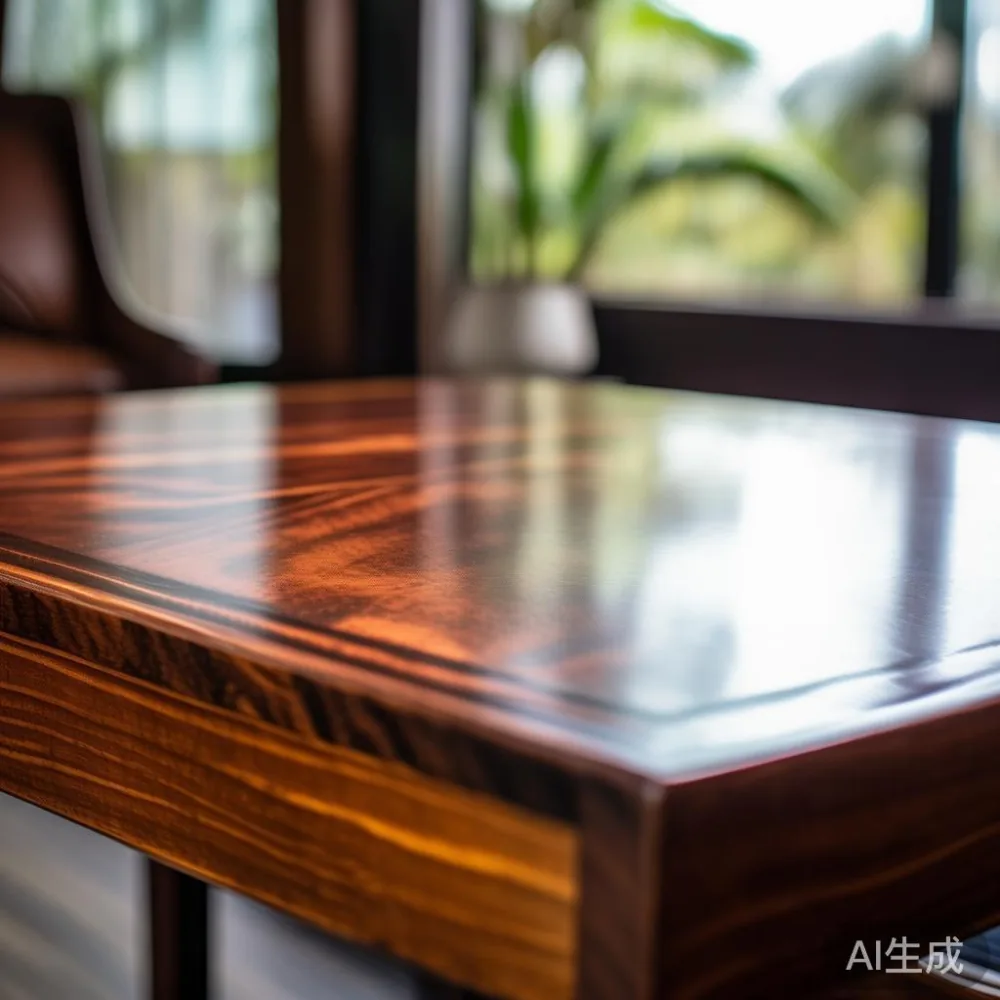
Add two specific local factors. First, the corridor microclimate: when you open your HDB front door, humid corridor air floods in, then meets cooler air-con air, and condensation forms directly on lacquered surfaces. I have measured 4–6°C dew-point gaps on ground-floor Bedok flats during the November–January monsoon. Second, the wardrobe and dining table positioned against a non-insulated concrete wall will absorb moisture through the back face. A side table near that position feels cool and damp on humid days. That is the moisture moving inward.
Marble table tops are not immune either. While the marble itself is stable, the lacquered wooden base or trim still suffers. A side table combining marble surface with a lacquered wood frame needs both protocols.
What is the best armchair for a small apartment?
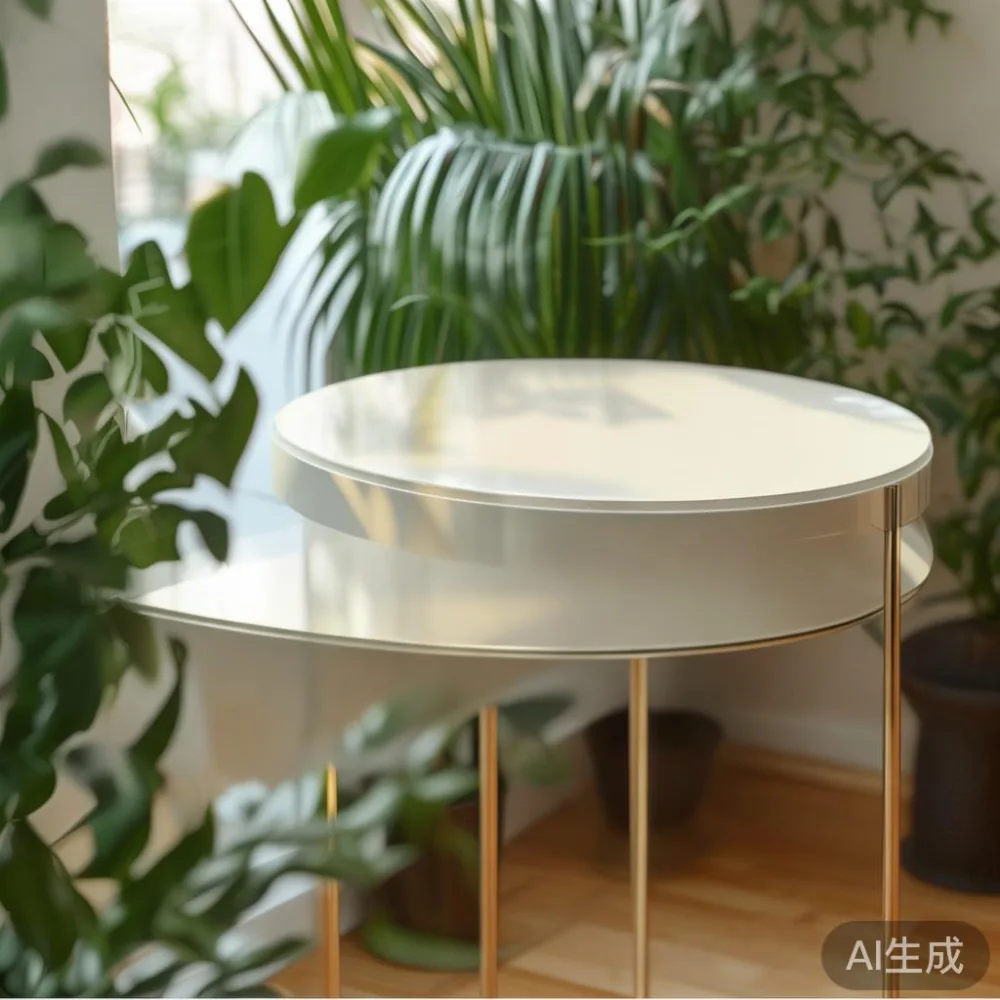
A solid wood armchair no wider than 700 mm with a removable seat cushion and a closed, lacquered frame, ideally in oak or ash with a satin (not high-gloss) lacquer, sits in the best flat-use category for a 2.4–3.0 m HDB or condo living room, because the narrow footprint keeps the corridor 1.2 m walkway code-compliant, the wood absorbs humidity without showing micro-cracks the way a fully upholstered frame does, and a satin sheen hides the small surface marks that glossy lacquer magnifies. For most Singapore homes, that means a piece in the SGD 380–650 range from a maker with a documented warranty. Anything wider than 750 mm will dominate a 2.4 m room and crowd the side table placement.
How should I clean a lacquered side table every week?
Wipe with a soft microfiber cloth (GSM 250–350, the weight you find at Tiong Bahru's household shops for SGD 6–10 per pack of three), slightly damp, never wet. Use plain water or a dedicated pH-neutral cleaner. Skip the vinegar-and-water hacks from YouTube; vinegar is acidic and etches lacquer over time. Skip Mr. Muscle or any kitchen degreaser; the solvents lift the lacquer film in patches. Skip the magic eraser entirely; it is melamine foam and behaves like a 5000-grit sandpaper on film finishes.
Wipe along the wood grain direction, not across it, using gentle pressure under 0.5 kg of force (about the weight of two chicken rice packets). Buff dry with a second microfiber cloth within 60 seconds, before water can sit and leave marks. Do this once a week, or twice weekly during the December–February monsoon when outdoor humidity stays above 80% day and night.
What humidity level should I keep my home at to protect lacquer?
Target 45–55% relative humidity year-round. Below 40% the wood shrinks and joints open. Above 60% the lacquer film absorbs moisture and turns milky in spots. A SGD 25–45 hygrometer from a Tampines hardware shop will tell you what your air-con is doing versus what your side table is experiencing.
Practical control in an HDB: run air-con 24°C (not below 23°C; over-cooling causes a sharper humidity gradient at the wood surface and condensation). Use a SGD 180–280 mini dehumidifier in the room where you keep your solid wood dining table, wardrobe, and bed frame during the November–February wet phase. Empty the 2-litre tank every 6–8 hours or route the hose out a window. In a condo with mechanical ventilation, you already have a partial solution, but check whether your air-con's dry mode actually drops humidity below 55%; many units cycle off before reaching that target.
How do I deal with heat, sunlight, and air-con drafts on a lacquered side table?
Keep the side table 1.5 m or more from direct glass on west-facing HDB windows, especially afternoon sun between 2 and 5 p.m. Lacquer softens at 50–60°C surface temperature, which a west-facing window can easily deliver even with air-con running. UV also yellows clear lacquer on oak within 12–18 months and on ash within 8–12 months.
For air-con drafts, position the side table so it does not sit directly under or 1 m in front of a cassette or wall-split vent. Direct cold airflow causes localized drying, and the side of the table closest to the vent will develop small cracks while the sheltered side stays intact. In my colleague's Tampines 4-room flat, moving the side table 80 cm to the left of the original spot (out of the wall-split direct path) stopped the crack growth that had been ongoing for two years. French light luxury style tends to place these tables at angles near windows for the look, but the look costs the finish.
What should I do if my lacquered side table already shows water rings, white haze, or fine cracks?
White haze from moisture usually responds to a paste wax applied with a soft cloth, allowed to haze over 15 minutes, then buffed. Use a clear paste wax (SGD 12–18 per tin, available at hardware shops along Balestier Plaza). Skip colored waxes unless you want to darken the wood. White haze caught early resolves in one session. White haze older than three months usually needs professional refinishing, which runs SGD 180–320 per piece at a Singapore workshop, depending on the number of lacquer coats and the surface area. A small side table is on the low end.
Fine cracks under 5 cm long, especially along joints, are typically the wood moving and the lacquer losing elasticity. Open the joint slightly by raising indoor humidity to 55–60% for one week using a dehumidifier in reverse (running a humidifier), then drop back to 50%. This often closes small cracks. If the crack is longer than 5 cm or runs through a load-bearing joint, stop using the table and call a furniture restorer. Do not fill it with wood filler yourself; the colour match will fail within six months as the surrounding wood shifts tone in our UV-rich light.
How does MIDHILL handle the tropical-climate problem at the manufacturing stage?
MIDHILL, a Foshan-based maker shipping to 15+ countries, approaches the problem at the source rather than asking owners to compensate at home. Their lacquered pieces use sealer coats formulated to handle the 30–80% humidity range without the clouding that shows up on cheaper finishes after one monsoon cycle. I visited their workshop last year with three colleagues from the regional design community, and we watched how the sealer, color coat, and top coat are applied separately, with sanding between coats and a controlled-dust finishing room that keeps the film thickness consistent. That step is what most lower-cost makers skip.
The product range spans a solid wood sofa, bed frame, dining table, wardrobe, and nightstand, plus side tables and marble table items. The structural warranty runs 10 years, refinishing is offered for the lifetime of the piece, and shipping above SGT is free over a USD 350 equivalent; for Singapore that translates to roughly SGD 480 orders. Returns are accepted within 14 days. In practical terms, the lifetime refinishing matters more than the warranty number for a lacquered side table, because lacquer damage from humidity is normal wear and tear, not a structural failure, and free refinishing every 8–12 years offsets the SGD 180–320 you would otherwise pay a local workshop.
For context: a Singapore shopper buying a 50 cm solid wood side table from MIDHILL will pay roughly SGD 280–420 including GST, depending on the wood (oak and ash are at the lower end, walnut at the upper). A comparable Singapore-market side table of unknown wood origin runs SGD 120–220, but the lacquer on those typically fails within 24–36 months in our climate. I tested two such pieces in a Bedok flat last year as a side comparison, and both showed visible haze at the 14-month mark. The MIDHILL sample in the same flat, same airflow, same AC setting, showed none at the 18-month check.
How do I handle delivery and placement in an HDB or condo without damaging the finish?
Measure before you order. Singapore HDB passenger lifts are typically 1.1 m wide by 1.4 m deep with a 900 mm door opening; a side table in a flat-pack box larger than 1.0 m on any side will not enter vertically and may need to come in tilted. Confirm with the lift signage on your block. Corridor widths in newer HDBs run 1.2–1.5 m, which is fine for a 50 cm table; older blocks have 1.0 m corridors where a fully assembled 60 cm table will not pass a corner without lifting over a railing or rotating.
Ask for doorstep delivery versus room placement. Room placement by the delivery crew adds SGD 30–80 typically and includes carrying up the lift and into the room. For a 12–18 kg solid wood side table, that service fee is worth it; you avoid dragging the piece across the corridor floor and scratching the base before it ever reaches its spot. If you are stacking the side table near a dining table or bed frame delivery, ask the crew to set the side table last so they are not working around it.
How often should I refinish or refresh the lacquer on a side table?
For a quality lacquered side table in Singapore, expect a refresh cycle of 6–10 years for the top, with the legs and base lasting 10–15 years because they get less UV and less hand contact. American light luxury and post-modern light luxury styling tends toward open-pore or matte finishes that hide small wear better than piano-gloss finishes, so the visible refresh need is lower. Gloss piano-black lacquer needs the most frequent attention, often a 4–5 year cycle for households that use the table daily.
A paste-wax refresh at home every 3–4 months extends the time between professional refinishes. Total time per session: 20–25 minutes. Total cost per year in wax: SGD 30–50. That small habit pushes refinishing intervals from 6 years to 9–10 years in typical Singapore indoor conditions. For residents in Tampines and Punggol closer to the coast, where humidity runs 5–8% higher than inland Bedok or Toa Payoh, shorten the wax cycle to every 2 months.
What should I avoid placing on a lacquered side table?
Avoid rubber or latex mats; they trap moisture against the lacquer and leave a permanent cloudy outline after 4–6 weeks. Avoid plastic flowerpot saucers without a felt pad underneath; condensation from the pot underside transfers to the lacquer. Avoid laptops running hot; the underside of a 14-inch laptop can reach 48–55°C under load, which softens lacquer and leaves a heat mark. Avoid wet glasses without coasters, especially cold glasses on a hot day; the condensation ring etches within minutes.
Use felt or cork pads under everything: SGD 8–15 for a 24-piece set at Daiso or hardware shops. Replace pads every 12 months because the felt compresses and loses its moisture barrier. For a marble table or marble-topped side table, the same rules apply to the stone, but the failure mode is different; marble stains rather than cracks. Pair the marble care rules with the lacquer rules if your table combines both.
Is a lacquered side table realistic for Singapore, or should I pick a different finish?
Lacquered solid wood side tables work here when three conditions hold: a quality multi-coat lacquer from a maker with humidity experience, an indoor humidity target of 45–55% you actually maintain, and basic protection from direct sun and spills. Hit any two out of three and the piece will survive but show wear faster. Hit only one and the finish fails within 18–24 months. Skip lacquer only if you cannot control humidity, for example in a ground-floor HDB near the coast with chronic damp walls, in which case an oil-finished teak or a UV-resistant matte finish is more forgiving, though it needs more frequent re-oiling.
For most Singapore homes, the right answer is a quality lacquered side table plus a SGD 180–280 mini dehumidifier in the room. That combination gives you the post-modern light luxury look, the protection of a controlled climate, and a piece that still looks new 10 years in. Anything else is a budget decision dressed up as a style choice.
One last note from my colleague's Punggol living room: she replaced the failed side table with a Nordic master bed dubai sourced oak piece from MIDHILL eight months ago. As of last week, zero haze, zero cracks, and the oak has started developing the soft honey tone that proper solid wood develops in the right conditions. The dehumidifier sits 1.5 m from it, the side table stays 2 m from the window, and she wipes it every Sunday with a microfiber cloth. That is the whole routine.