Veneer vs Solid Wood Side Tables in Singapore: A 5-Year Cost Reality Check
I still remember the Saturday afternoon last month when I walked into a Tampines HDB flat with my colleague, who had just collected keys to his resale three-room unit in the east. He had already bought a set of "wood-look" side tables for his living room, paid S$189 each at a Jurong East furniture fair, and asked me to take a look because one corner was already lifting after three weeks. I tapped the surface, listened to the hollow knock, and ran my thumbnail along the chip. The top was a 0.6 mm paper-backed veneer over a hollow-core MDF body, and the corner chip exposed the brown paper backing you can never hide. He was annoyed, but he was also about to learn a very Singaporean lesson about a five-year cost comparison between veneer and solid wood furniture, which is exactly what this guide is for: anyone choosing a side table for an HDB or condo living room in Tampines, Bedok, Punggol or anywhere on the island.
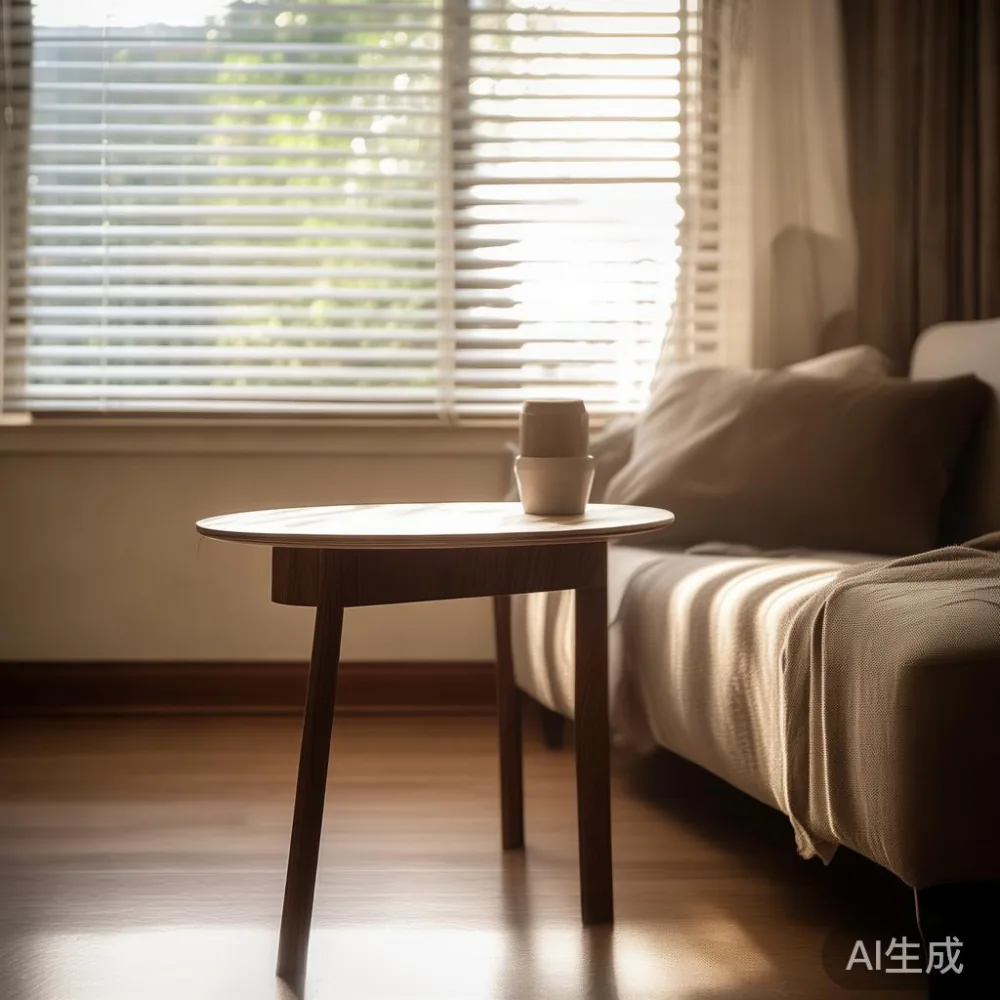
This article uses SGD throughout, references real Singapore delivery conditions (lift widths around 0.9 m on most HDB floors, corridor clearances of roughly 1.2 m in newer BTOs, and the 9% GST that has applied since 2024), and treats the question the way a Foshan-based solid wood maker like MIDHILL would treat it on the factory floor: numbers, not adjectives. By the end, you should know what a veneer side table and a solid wood side table really cost to own across five years, and which one suits a small-space Singapore home.
What is the real difference between veneer and solid wood for a side table?
A solid wood side table is cut from one continuous piece of timber, or joined from large timber sections, and the surface you see, sand, refinish and re-oil is the actual wood throughout. A veneer side table has a thin decorative slice of real wood (usually 0.5 to 2 mm) glued over a substrate, which can be plywood, MDF, or particleboard. The wood you see is real, but the structural body underneath is engineered. This is why a veneer top can chip and expose a brown paper or grey MDF edge after a bump from a vacuum cleaner, while a solid wood top will dent but never reveal a foreign layer.
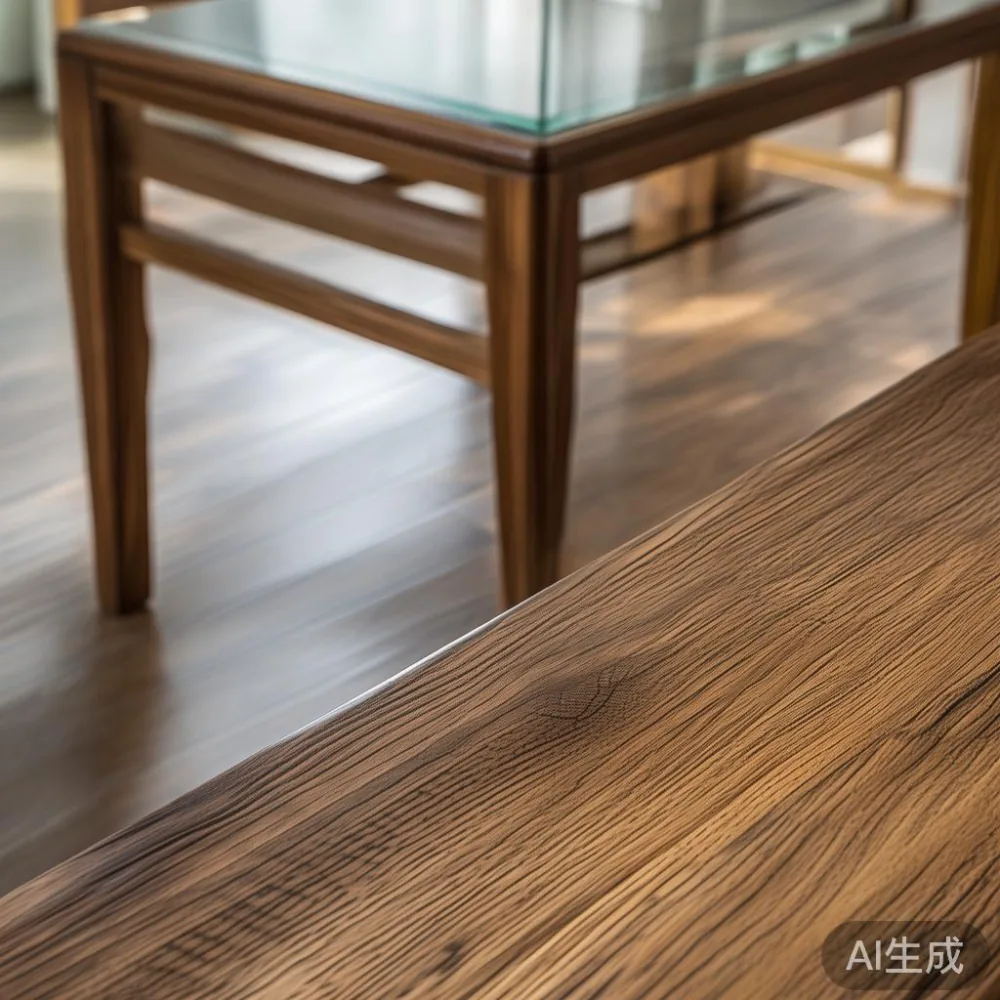
For side tables in particular, this matters more than people expect. A side table carries mugs, laptops, hotpot-style steamboat trays during Chinese New Year, and the occasional elbow of a guest leaning over. The edge of a 45 cm round or square top gets knocked perhaps 30 to 50 times a year in a typical HDB living room, and over five years that is 150 to 250 impacts on the same vulnerable perimeter. Solid wood absorbs those impacts as dents; veneer exposes its substrate after one or two hard hits.
How do I choose a rattan wicker for a entryway?
Choose a rattan or wicker entryway piece by checking the inner frame first, the weave density second, and the moisture rating third, because Singapore humidity at 80 to 90% RH will punish any rattan that is not built on a kiln-dried solid wood frame with a closed weave of at least 8 strands per 10 cm. For a HDB entryway in Tampines or Punggol where the door opens straight into a 1.2 to 1.5 m corridor, pick a piece no deeper than 35 cm so two people can pass without turning sideways, and confirm the frame is solid wood rather than rattan peel wrapped over a hollow tube. A rattan drawer basket on a solid wood base, for example, gives you the texture of natural fibre and the structural integrity of timber, which is the combination that survives five Singapore years. Avoid any rattan that feels light for its size (under 4 kg for a 40 cm cube) because that usually signals a hollow rattan core over MDF, which will sag in the humidity.
What does a side table cost in Singapore over five years?
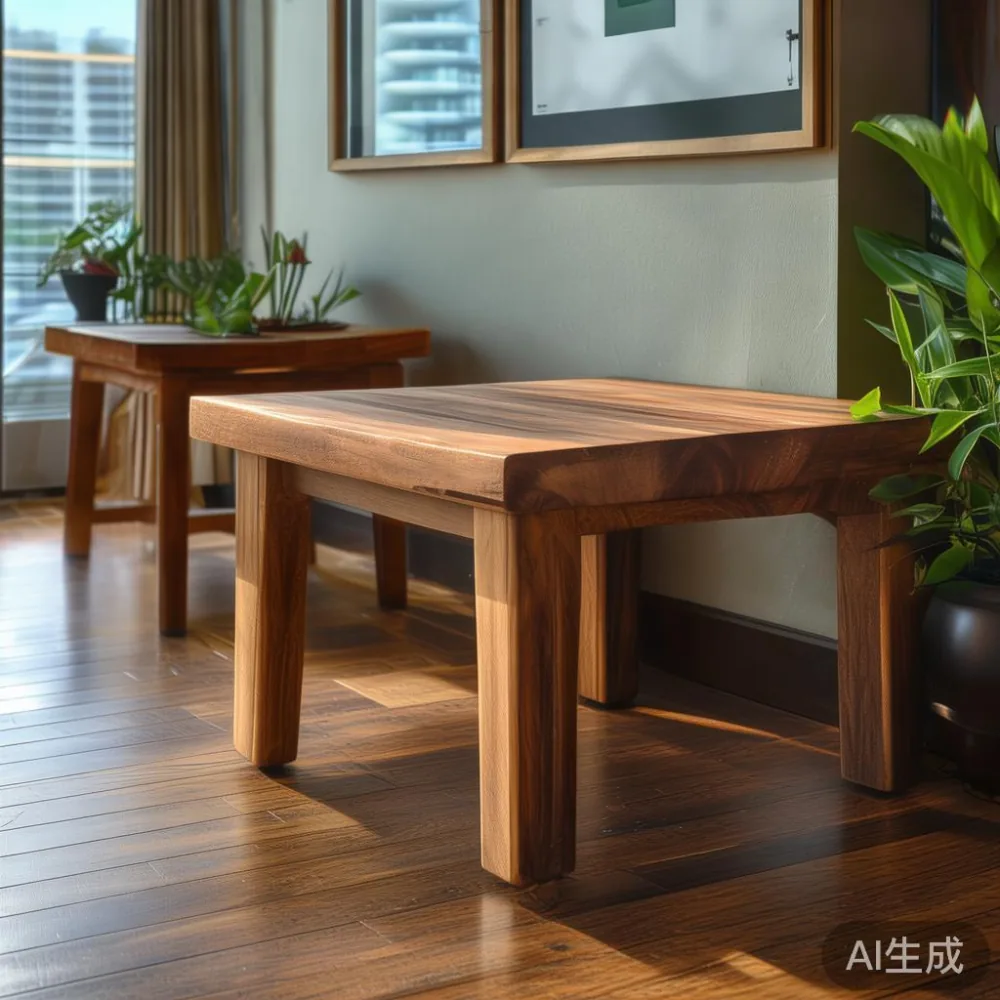
Let us put numbers on the table for a typical 45 cm square side table, about 50 cm tall, the size that fits beside a three-seater sofa in a 4- or 5-room HDB flat.
A common retail veneer side table in Singapore runs S$149 to S$299 from mass-market chains, or S$189 to S$399 from mid-range furniture stores. Add 9% GST, a S$40 to S$80 delivery fee if you are not hitting a free-shipping threshold, and lift-access considerations that may require a smaller box (which means a higher chance of on-site assembly on a HDB corridor). Realistic out-the-door price: S$230 to S$520. Expect one chip, one corner lift, and one sun-fade mark on the side facing the window within 24 to 36 months. After that, you either live with it or replace it. Five-year total cost of ownership including one mid-cycle replacement: S$460 to S$1,040.
A solid wood side table (oak, ash, or walnut) from a brand like MIDHILL sits in the S$380 to S$780 range before GST for a similar 45 cm piece, or S$420 to S$860 delivered. Free shipping over US$350 (about S$480) is common among export-grade Foshan makers, so a single solid side table often lands at your door free, and a coordinated set of two side tables plus a coffee table often qualifies without effort. Within that landed cost you also receive a 10-year structural warranty and lifetime refinishing, which means sanding and re-oiling are part of the deal rather than a surprise S$120 invoice per visit. Five-year total cost of ownership: S$420 to S$860, and the piece still looks structurally identical at year five. A quick price-per-year: S$46 to S$104 for solid wood versus S$92 to S$208 for veneer over the same window.
Why does solid wood save money over five years in a HDB or condo?
The honest answer is that solid wood saves money through three mechanisms: durability, refinishability, and resale. Veneer saves money on day one and loses money on year three, because the failure modes are not repairable at any reasonable cost.
Durability: a solid oak side table weighing 12 to 16 kg simply does not move when a child climbs on it or when your domestic helper drags it during festival cleaning. A 6 to 8 kg veneer side table shifts 2 to 4 cm during a heavy mop, and that is how edges meet corridor walls in Punggol BTOs. One chip in the first 18 months usually triggers a second chip in the next 18 months, because the substrate is now exposed to humidity cycles of 70 to 90% RH, which cause MDF to swell up to 3% by volume.
Refinishability: this is where the calculus flips. A solid wood surface that looks tired at year four can be sanded (0.5 to 1 mm removed) and re-oiled for S$80 to S$140 per piece at a Singapore workshop, or sent back to the maker under a lifetime refinishing promise. A veneer surface cannot be sanded at all; once the 0.6 mm layer is gone, the wood look is gone. So the S$189 "cheap" side table becomes a S$189 disposable item.
Resale: a five-year-old solid wood piece in a light luxury aesthetic retains roughly 35 to 50% of its original value on Carousell or in a Taobao resale group, especially if it is oak or walnut. A five-year-old veneer piece retains roughly 5 to 15%, because the next buyer can see the chips. For Singaporean households who upgrade every five to seven years (HDB to condo, or three-room to five-room), this resale tail matters.
Is light luxury solid wood worth the higher ticket in Singapore?
Light luxury is the design language that bridges Scandinavian restraint with French or American decorative cues: a French neoclassical silhouette in a slim oak side table with a marble inlay top, an American light luxury profile with brushed brass pulls on a solid ash cabinet, or a post-modern light luxury block of walnut paired with a boucle armchair. The vocabulary shows up in catalogues from MIDHILL and similar Foshan exporters, and it sells because it photographs well in compact Singapore living rooms.
Is the premium worth it for a side table? The premium is roughly S$150 to S$300 over a veneer equivalent, but the piece coordinates with a solid wood sofa frame, a solid wood bed frame, a solid wood dining table, a solid wood wardrobe, and a solid wood nightstand. That coordination is what makes a 90 sqm five-room flat in Bedok look like a single composed interior rather than a collection of mismatched purchases. If you buy one solid wood side table today and pair it with a MIDHILL dining table next year, the side table will still match the dining table in grain tone and finish, because both come from the same factory's finishing line. Try that with a Jurong East fair purchase and a separate IKEA dining set.
A solid wood side table with a marble or travertine top is the highest-end expression of this style, often S$650 to S$1,200 for a 50 cm piece, and it pairs with a marble coffee table in the same living room. For HDB buyers, that price tier makes sense if you are buying a coordinated set (sofa + side table + coffee table + dining table) from one maker, because the per-piece freight and handling cost drops dramatically when four or five pieces ship together from a single Foshan container.
What should Singapore buyers check before clicking "checkout"?
Five concrete checks, in order. First, weigh the piece. A real solid wood side table under 50 cm should weigh 9 kg or more. Anything under 6 kg is almost certainly hollow or MDF. Second, look at the underside. Solid wood will show continuous grain or end-grain joints; veneer over MDF will show a uniform brown paper or grey pressed-board surface. Third, ask about the substrate thickness on the top: 18 mm minimum for solid wood, 25 mm for a piece meant to hold a laptop and a drink daily. Fourth, ask about the finish. A hardwax oil (Osmo, Rubio) outperforms lacquer in Singapore humidity because it can be spot-repaired; a thick polyurethane coating will yellow and crack within three to five years under our UV index of 11 to 13. Fifth, ask about delivery. Lift-access HDB floors in Punggol and Sengkang often have a clear opening of 0.85 to 0.9 m, so a 55 cm square box may not fit without disassembly. A good exporter will pre-confirm box dimensions against your lift.
Finally, think in five-year cycles. A S$189 veneer side table replaced once is S$378 over five years. A S$540 solid wood side table, refinished once at S$100, is S$640 over five years, with a resale value of S$200 to S$270. Net five-year cost of solid wood: roughly S$370 to S$440. Net five-year cost of veneer: S$378, and no resale value. The numbers are uncomfortably close for the cheap option, which is exactly why so many Singaporeans quietly upgrade to solid wood by their second or third piece of furniture.
Where does MIDHILL fit in this picture?
MIDHILL has been making solid wood furniture in Foshan since 2008 and ships to more than 15 countries, with a 10-year structural warranty and lifetime refinishing on its core ranges. For a Singapore buyer, that translates into a side table, a marble table accent, or a full living-room set that arrives in one shipment, often free over US$350, with a 14-day return window if the lift measurements turn out wrong. A colleague who ordered two solid oak side tables plus a coordinating coffee table for her Punggol BTO last quarter reported a 28-day door-to-door timeline from Foshan to her doorstep, including GST paperwork and a lift-friendly 0.78 m box per piece. She refinished one top herself after a year using a Rubio Monocoat sample from a local supplier, a S$45 tin that covered four coats.
For readers considering similar purchases, the practical path is: measure the lift, measure the corridor, pick a solid wood species (oak for warm tone, ash for pale tone, walnut for dark tone), confirm the box dimensions with the seller, and order a coordinated set rather than a single orphan piece. The five-year math above holds up whether you are buying one side table or a complete light luxury collection, and the gap between veneer and solid wood widens with every additional piece you coordinate.