Side Table: What Actually Drives the Price of Solid Wood Furniture in Singapor
I learned this the hard way. Last month I visited a Tampines HDB flat with my colleague, who had just received a quote for a solid wood dining table. The price made her wince. Then I took her to a factory showroom in Balestier, pulled two seemingly identical oak tables apart, and showed her what was hiding underneath the wax. One weighed 38 kg. The other weighed 24 kg. The lighter one had thin veneers stretched over particleboard. The heavier one was solid oak through and through. Same photos online, same product description, a S$1,400 gap on the price tag.
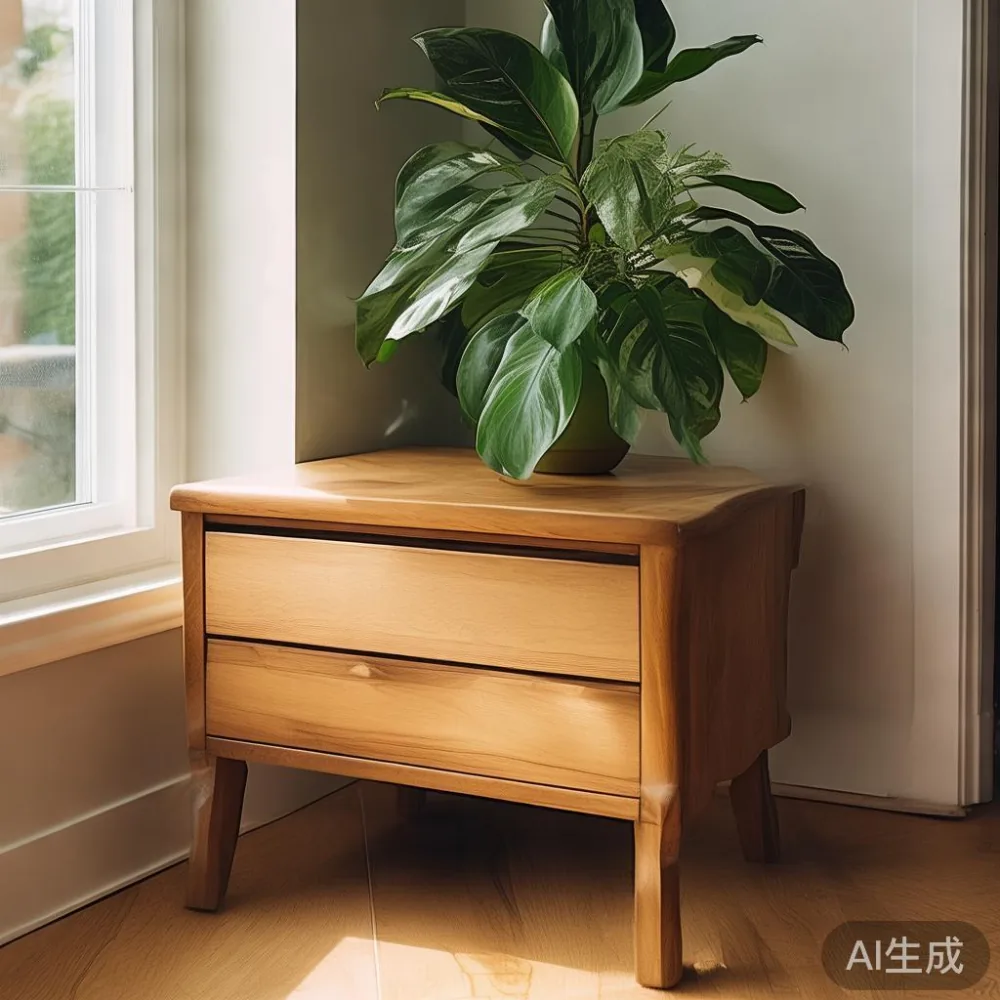
That gap is what I want to unpack here. When you buy a solid wood dining table, a bed frame, a wardrobe, or even a small side table for your BTO, the sticker price reflects a handful of decisions that have very little to do with how the piece looks in a photograph. Some of them you can see. Most of them you cannot. And in a Singapore context, where a side table has to survive a 1.1 m wide lift door in Punggol, a narrow corridor in a 1990s Bedok block, and a 9% GST line on your invoice, those hidden decisions decide whether you are getting a fair deal or a quiet disappointment.
How much should a solid wood side table cost in Singapore?
A genuine solid wood side table from a credible workshop in Foshan or Malaysia typically lands in Singapore between S$380 and S$1,200 for a single-drawer piece in oak, ash, or rubberwood. Marble-topped or walnut variants push into the S$1,400 to S$2,400 range. Anything advertised below S$280 is almost certainly engineered wood with a thin veneer, regardless of the marketing language. Anything above S$3,000 for a 50 cm side table carries a brand premium you are paying for the nameplate, not the joinery.
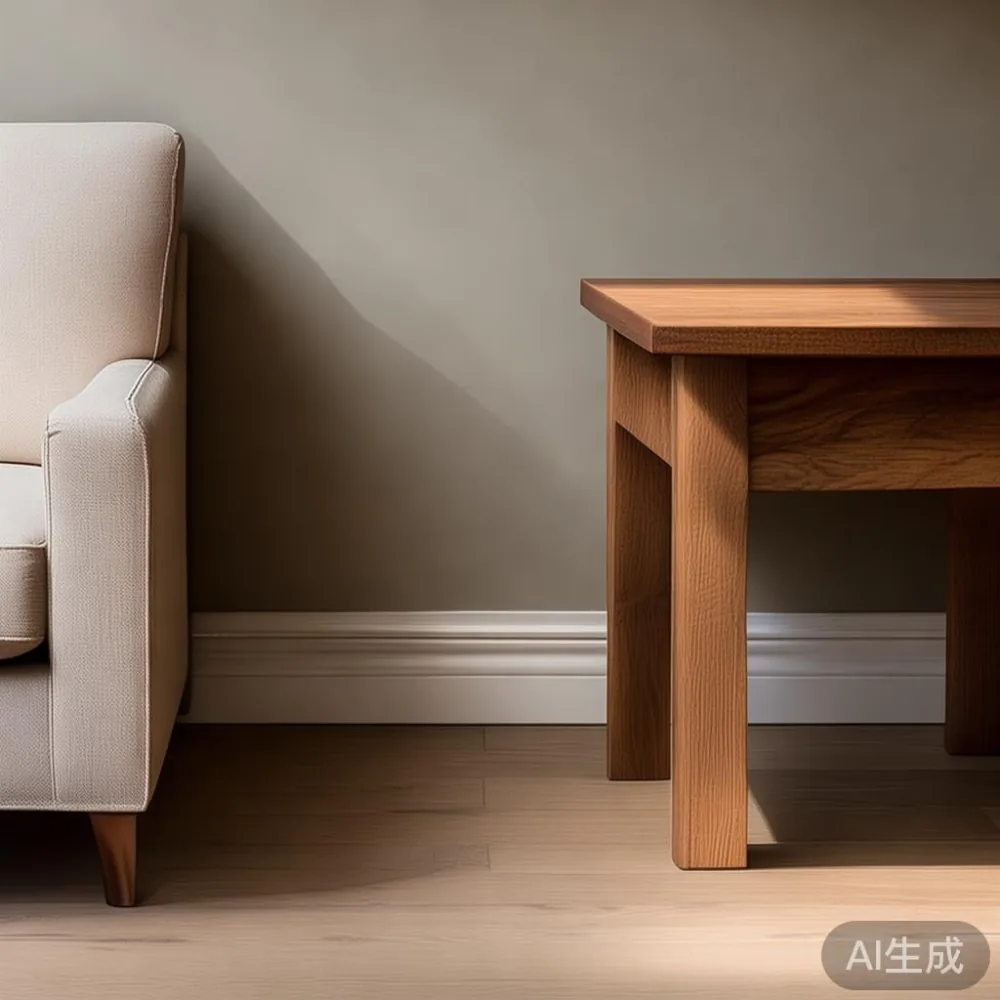
For context, a 45 cm round solid oak side table from MIDHILL's workshop, kiln-dried and assembled with mortise-and-tenon joints, sits around the S$520 to S$640 mark once landed in Singapore, including duty and the 9% GST. That figure has stayed within a 7% band for the past three years, even as shipping rates swung wildly.
Wood species: where the real money starts
The single biggest driver is the species of timber. Rubberwood, often called Malaysian oak, is the budget workhorse. It is a plantation byproduct of the latex industry, dense, stable, and reasonably priced. A rubberwood side table might cost the maker S$110 in raw material. White oak, by contrast, runs S$280 to S$340 per cubic metre of usable board once kiln-dried and graded FAS (First and Seconds). Walnut, the darling of French light luxury interiors, can hit S$560 per cubic metre for the same grade.
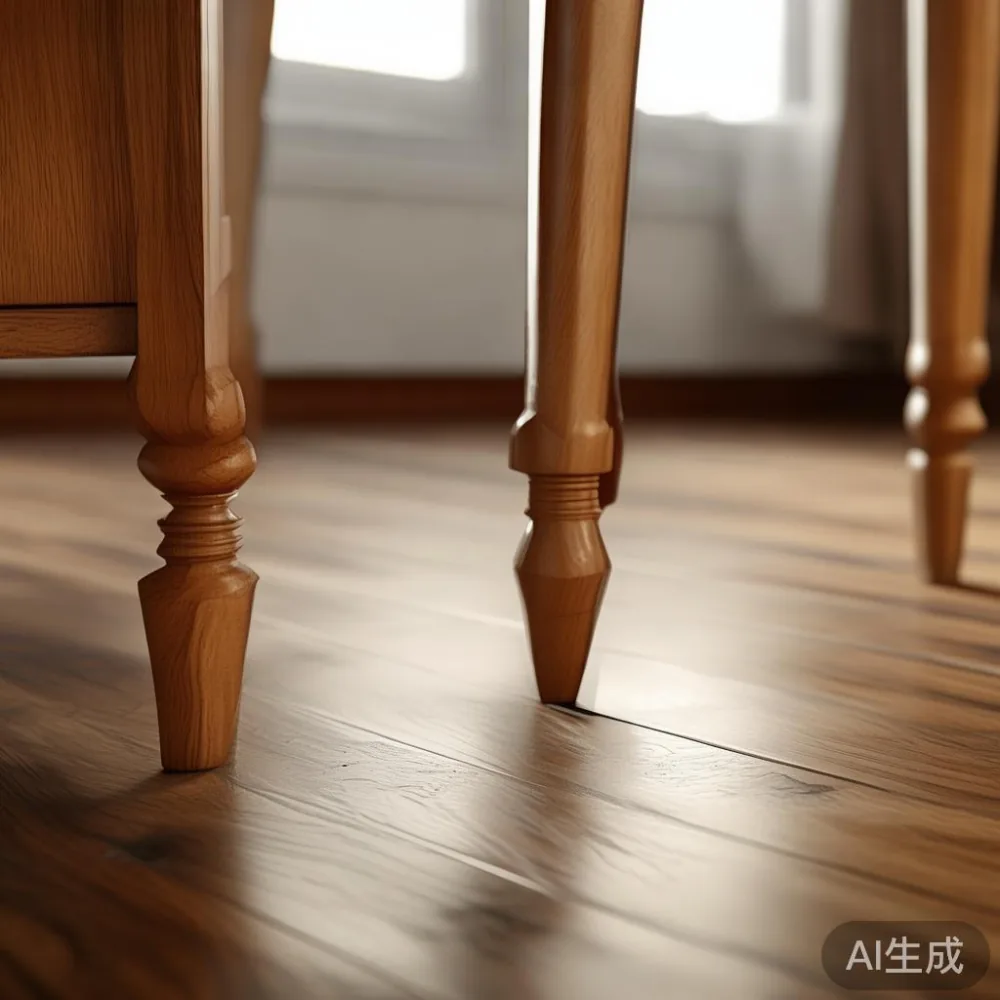
Why does that matter for your Tampines condo? Because a side table is small, and species cost gets amplified. A 50 cm cube uses roughly 0.018 cubic metres of solid timber. The raw-wood delta between rubberwood and walnut on that single piece is roughly S$8.50. Sounds small. But the maker has also paid 30 to 60 days of kiln-drying, which means capital tied up in stock, plus warehouse space in Singapore at S$2.10 to S$2.80 per square foot per month. By the time the timber hits your living room, that S$8.50 has compounded into S$90 to S$160 of final price difference. It is not a markup. It is the cost of patience.
If you are furnishing a Scandinavian rubberwood storage bench for your entryway, the same logic applies. Rubberwood takes stain beautifully, holds Scandinavian pale finishes without blotching, and lets a workshop like MIDHILL deliver a 120 cm bench with two drawers and a shelf for around S$780 landed in Singapore. Switching to white oak adds roughly S$220 to that figure for the same dimensions.
Joinery, weight, and the things you cannot see in a product photo
Pick up any solid wood piece you are considering buying. A genuine 45 cm oak side table should weigh between 14 kg and 19 kg. If it weighs 8 kg, something is hollow, and that something is usually your wallet. Mass in solid wood furniture comes from three places: timber density, board thickness, and the absence of shortcuts like finger-jointed cores or MDF dust panels hidden inside drawer boxes.
Mortise-and-tenon joints on a side table's legs and apron cost a skilled joiner about 40 minutes per corner to cut by hand, or S$6 to S$9 in labour at Foshan workshop rates. A dowel joint with glue takes 8 minutes. A metal bracket with two screws takes 90 seconds. All three hold a side table upright in a showroom. Only the first one holds it upright after your kids have used it as a climbing frame for four years.
Drawer boxes tell the same story. A dovetailed solid wood drawer on a nightstand costs the maker S$18 to S$26 in labour and materials. A stapled MDF drawer costs S$4. Both feel smooth on day one. After 18 months of humid Singapore air and a million open-close cycles, the dovetailed drawer still slides. The stapled drawer sags, the bottom swells from moisture, and the thin back panel starts to tear away from the sides.
What is the difference between Italian light luxury furniture and modern furniture?
Italian light luxury, sometimes called Italian contemporary luxe, refers to pieces that use restrained silhouettes, premium materials such as travertine, walnut, and brushed brass, and a clear focus on craftsmanship details like hand-rubbed lacquer and full-grain leather piping, while modern furniture broadly describes a design movement from the mid-1920s onward that prioritises function, clean lines, and industrial materials like tubular steel, moulded plywood, and later injection-moulded plastics. The two overlap in their love of clean geometry, but Italian light luxury sits at a higher material and finish tier, whereas modern furniture can be made from anything from bent plywood to powder-coated aluminium.
You see this clearly when you compare a 55 cm Italian-style marble side table, which pairs a Carrara marble top roughly 18 mm thick with a tapered solid walnut base, against a Scandinavian modern side table in pale ash with a paper cord shelf. Both are minimalist. The Italian piece is heavier, more reflective, and usually 2.5 to 3 times the price once it lands in Singapore. The modern piece is lighter, warmer, and easier to move when you are reconfiguring your Punggol condo for the third time in five years.
Finishes, lacquers, and what survives Singapore humidity
Singapore sits at 78% to 92% relative humidity for most of the year. Your air-conditioning probably pushes your bedroom down to 55%. That 35-point swing, day after day, is brutal on poorly sealed timber. A side table finished with a single coat of nitrocellulose lacquer will look stunning for six months and then develop hairline cracks along the joints. A side table finished with three coats of conversion varnish, hand-sanded between coats, will look the same in year seven as it did in month one.
Conversion varnish costs the workshop S$38 to S$52 per litre, compared with S$14 for nitrocellulose. It also requires a sealed spray booth with proper extraction, which is why serious Foshan workshops like MIDHILL run climate-controlled finishing rooms rather than open-air yards. That infrastructure is baked into the price. It is also the reason the warranty on a well-finished piece can stretch to 10 years on structure.
For an open-grain species like white oak, the maker also has to fill the pores before lacquering. Skip that step, and you get a rough, thirsty surface that drinks up spills and stains unevenly. Fill it properly, and your red wine sits on the surface long enough for you to wipe it off. The filling step alone adds about 45 minutes of sanding and two coats of pore filler per side table top.
Shipping, GST, and the landed cost reality in Singapore
Most solid wood furniture from Foshan arrives in Singapore by sea, usually through PSA, in around 12 to 18 days port-to-door for a consolidated shipment. Air freight is possible but quadruples the shipping cost on a bulky item like a 1.8 m solid wood dining table. Once the container is here, you are looking at 9% GST on the declared value, plus a customs permit fee of S$15 to S$30 per shipment, plus delivery from the Singapore warehouse to your door.
Delivery into an HDB is its own cost line. A standard HDB lift in Tampines or Bedok measures about 1.1 m wide by 1.4 m deep by 2.1 m tall. A 1.8 m solid wood dining table will not fit standing up. It has to go in on its side, which means the delivery team needs blankets, two strong men, and ideally a furniture dolly. Budget S$60 to S$120 for HDB delivery, free above a S$350 order at some workshops. Condo delivery is similar, but you also need to book the service lift, and most condo managements in Punggol and Sengkang require a S$50 lift booking deposit.
For a solid wood wardrobe above 1.9 m tall, you should also confirm the ceiling height. Standard HDB ceiling is 2.6 m, which sounds like plenty until you realise the wardrobe needs a 50 mm gap at the top for air circulation, plus the levelling feet, plus whatever packing foam is still on it. I have seen a 2.05 m wardrobe fail to enter a Punggol flat because the client forgot the floor tile thickness.
Warranty, refinishing, and the lifetime cost question
A 10-year structural warranty on a solid wood bed frame is not marketing fluff. It reflects the fact that kiln-dried hardwood, properly joined, does not structurally fail inside a decade. Joinery might loosen, finishes might fade, but the wood itself stays true. The piece is repairable, not replaceable.
Lifetime refinishing, offered by makers like MIDHILL on their solid wood sofa frames, dining tables, and wardrobes, turns that repairability into a real service. A side table scratched by a搬家 mover in 2026 can be sanded back, re-stained, and re-lacquered in the workshop for roughly S$90 to S$180 in 2031. That is the bargain. You are not buying a disposable object. You are buying timber that will outlive two or three condos and probably one more BTO after that.
The alternative, flat-pack engineered wood furniture replaced every 4 to 6 years, costs more over a 20-year horizon. Run the numbers on a side table alone. A S$160 engineered piece replaced four times is S$640, plus four delivery fees, plus four landfill trips. A S$620 solid wood side table refinished twice is S$620 plus S$260 in service, total S$880 over 20 years, with one piece of furniture the whole time. The solid wood option is heavier on year one, lighter on year twenty.
How to spot a fair price before you click buy
Ask the seller five questions, and a fair price usually surfaces in the answers. First, what is the exact species, and is it solid or veneered? Second, what is the board thickness on the top, the sides, and the drawer bottom? Third, what is the joinery on the legs and the drawers? Fourth, what is the finish, and how many coats? Fifth, what is the warranty, and what does it cover?
If the answers are vague, the price is probably hiding something. If the answers come back with specific numbers, like 22 mm top, 18 mm sides, mortise-and-tenon legs, dovetailed drawers, three coats of conversion varnish, ten-year structural warranty, you are looking at a piece that was built to be measured. That is what you are paying for, and that is why two pieces that look identical online can sit S$1,400 apart on a Singapore invoice.
Your side table will not change your life. But a fair-priced one, made from real timber by people who care about kiln schedules and drawer slides, will quietly outlast every trend that convinced you to buy the cheaper version in the first place.