Optimal Side Table Size for Singapore Living Rooms
Choosing a side table for a Singapore HDB living room is rarely about finding an attractive square to fill an empty corner. It is about proportion, circulation, daily habits and the realities of a compact home. A table that looks balanced in a showroom can crowd a 3-room flat, block the route from the lift lobby, or leave nowhere for a mug, remote, book and charging cable.
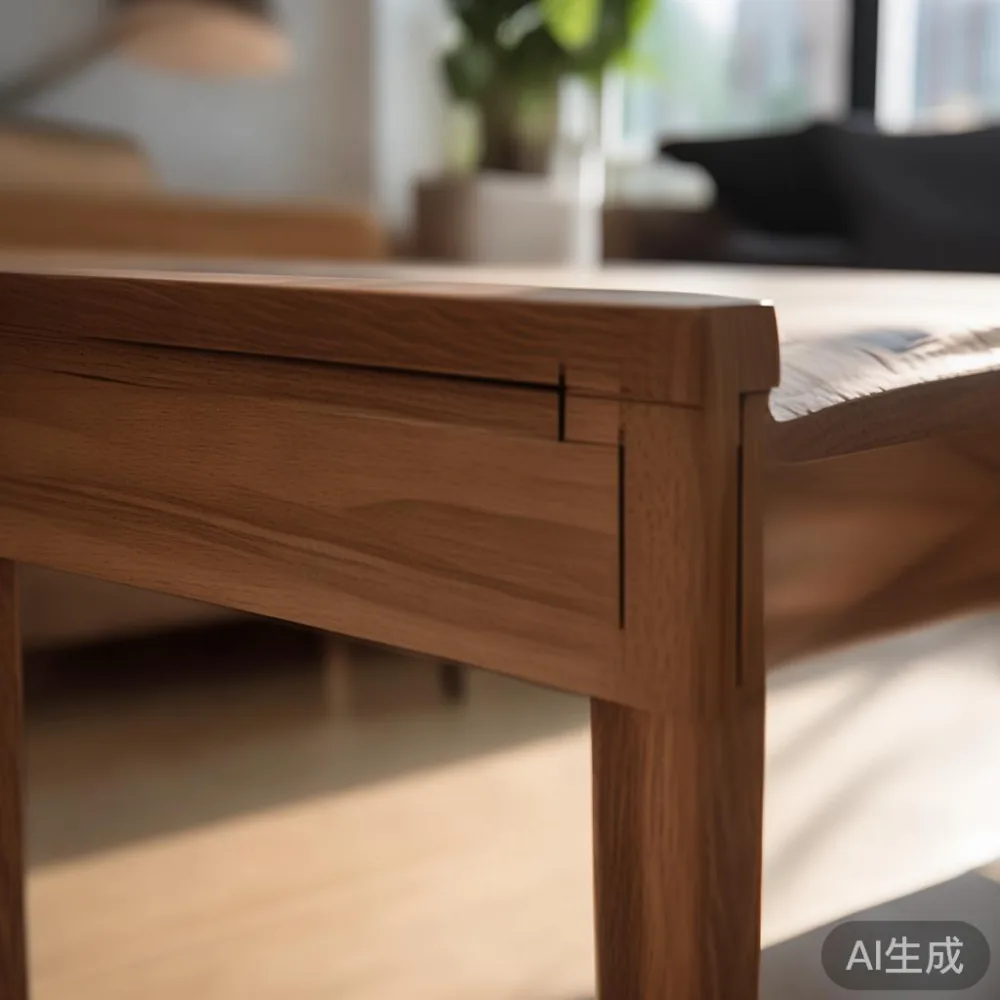
At MIDHILL, we design side tables as useful companions to a solid wood sofa, bed frame, dining table, wardrobe or nightstand. Our approach combines practical dimensions with restrained detailing suited to French light luxury, American light luxury and post-modern light luxury interiors. Here is how to work out the size that fits your Tampines, Bedok or Punggol home without turning the living room into a furniture showroom.
What size side table should fit beside my Singapore sofa?
Measure the sofa before choosing the side table. The working rule is to match the table height to the sofa arm or seat back, generally within 2-5 cm. A sofa seat is often 40-45 cm high, so a 40-45 cm side table gives a comfortable surface for a cup of kopi, a phone or a small bowl. A table more than 7 cm taller than the arm can look disconnected; one more than 7 cm lower can disappear into the sofa silhouette.
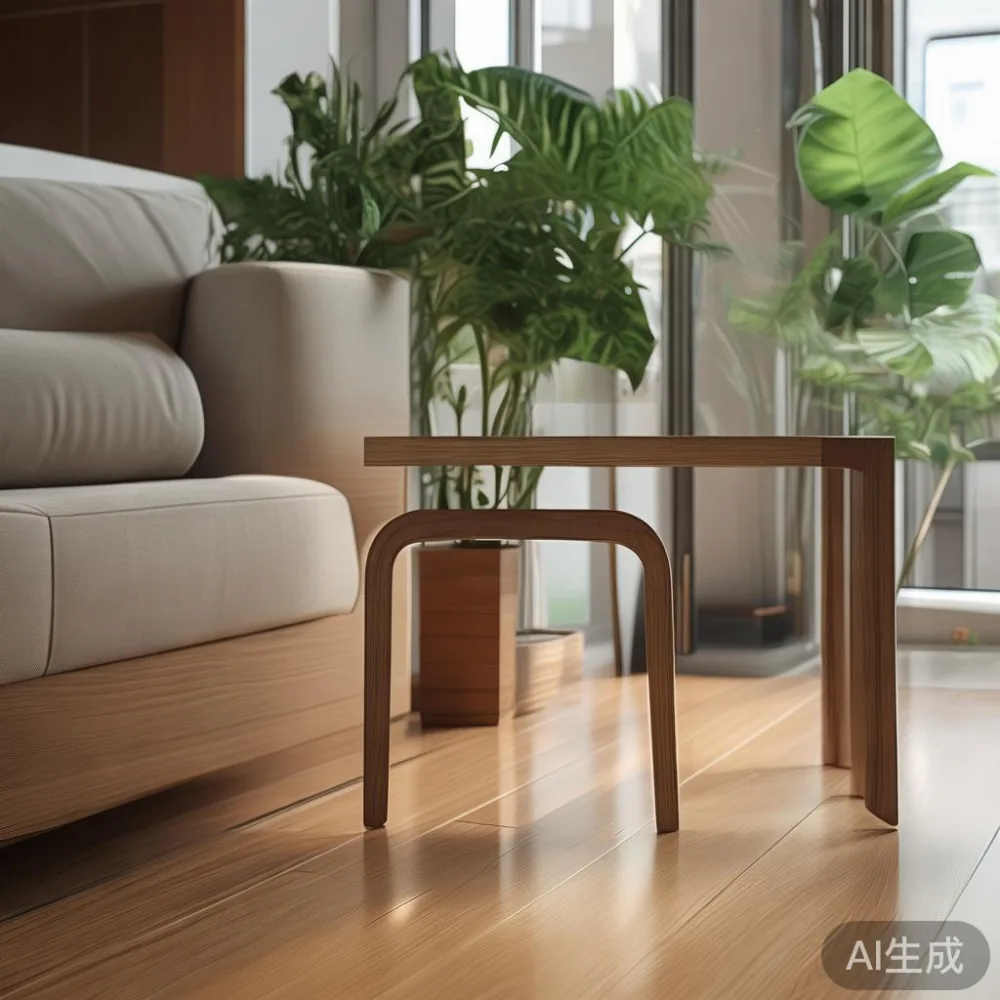
For width, allow roughly the equivalent of one sofa cushion, or 45-60 cm, for one person. A 40 cm table is sufficient for a drink and phone but feels tight when two people share it. A 50-60 cm table suits a family, while 65-75 cm is more appropriate beside a sectional or chaise.
Do not rely on a catalogue photograph alone. Measure the actual sofa from arm to arm, note the depth of the arm and check whether the table legs can slide beneath it. Allow at least 5 cm of clearance between a closed side-table drawer and the sofa arm so the drawer can be opened without scraping the upholstery.
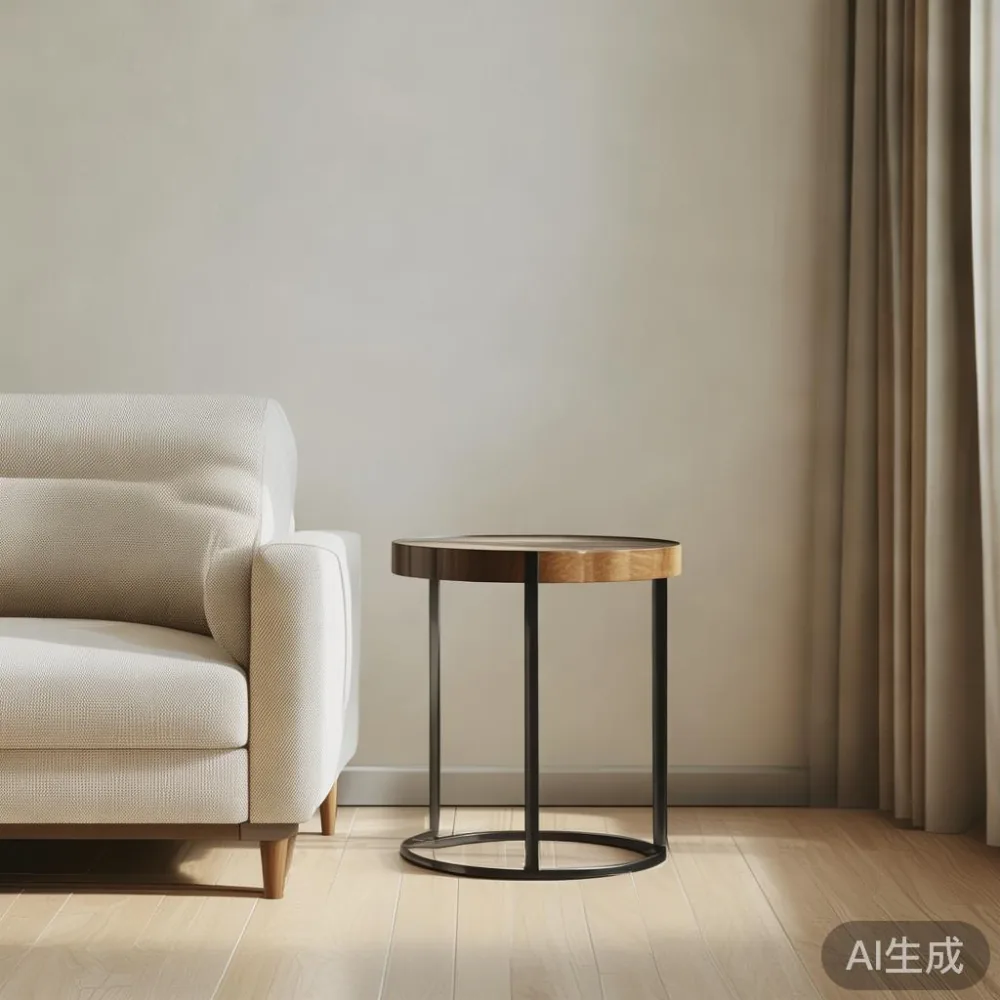
For visual proportion, the table should usually be no more than two-thirds as wide as the sofa’s visible length. A 200 cm sofa paired with a 120 cm side table would look overloaded unless the table is open-framed. A 45-50 cm table is more harmonious beside a standard 160-180 cm HDB sofa.
How much floor space should remain around the side table?
Singapore’s compact layouts make walking clearance more important than in many larger houses. A side table should not sit directly in the main travel path between the flat entrance and the living or dining area. Keep at least 60 cm of clear passage beside it and 75 cm where people pass frequently. If the table projects into the main route, move it closer to the sofa or place it near the arm rather than in the centre of the room.
Measure the narrowest point from the wall or corridor to the opposite obstruction. In many HDB interiors, 90-120 cm is already occupied by a dining chair, shoe cabinet or television console. A side table with a narrow footprint of 35-45 cm can work in these locations, especially if it has a single pedestal or slim legs. Deep versions of 50-55 cm are easier beside a roomy sofa but less suitable beside a swinging door.
Check the position of the television console and avoid overlapping sightlines. A side table that rises above the sofa arm by more than 10 cm may interrupt the view from a low seat. In a three-room BTO flat, a 40 cm-wide table with a 40 cm height often creates the least congestion; in a larger Tampines or Punggol condo living room, a 50-55 cm version can carry more daily function.
Use masking tape on the floor to mark the proposed footprint. Leave it there for 24 hours and move through the room at normal speed. Include the times when guests are present. This simple test reveals whether 2-5 cm of extra clearance would make life more comfortable.
Will a solid wood side table fit through the lift and corridor?
Choose dimensions only after checking the access route. Ask the building management for the lift car dimensions and door opening, then measure the corridor turns, threshold and flat entrance door. A table listed as 50 cm wide may have a 55 cm top, and the diagonal depth can become the limiting measurement when the piece turns through a right-angled corridor.
Some older lift doors open to about 80-90 cm, while the usable car depth may be 110-135 cm. Newer lifts in many HDB estates and private condos can be larger, but the building’s actual specification matters more than the district. Remove detachable shelves and secure moving hardware before lifting. The owner or recipient should also be present to direct the delivery.
A flat-packed side table can solve an access problem, but the assembled dimensions must still fit the intended position. Make sure the instructions show the final height and that all joints and fixings are included. Solid wood expands and contracts slightly as humidity changes, so leave around 3-5 cm from a wall when ventilation is limited.
MIDHILL offers delivery across Singapore, with the timing confirmed by destination and access conditions. Allow approximately 5-10 working days for standard delivery and extra time for peak periods or made-to-order finishes. The service includes a 10-year structural warranty and lifetime refinishing, which makes maintenance planning part of the purchase decision rather than an afterthought.
What should the side table be made from for humid Singapore conditions?
Solid hardwood is a sensible choice for an HDB living room because it feels substantial, can be repaired and develops character over time. Ask which species is used and whether the panels are solid wood rather than veneer over particleboard. A genuine solid wood side table may weigh 12-25 kg depending on its dimensions and construction, making it stable enough for drinks, lamps and small decorative objects.
Stability depends on the base. A broad pedestal or four legs set 5-10 cm inward from the edges provides good resistance to tipping. Very tall, narrow side tables should have legs fixed with concealed hardware and a footprint of at least 30 x 30 cm. Avoid extremely light models that slide when a drink is placed near the edge.
Singapore’s high humidity calls for controlled finishing. Look for a hardwax oil or protective lacquer that can be maintained, and ask about cleaning: damp wiping is usually enough, while harsh solvents and excess water should be avoided. If the table includes a marble table top, confirm the total weight, support method and seal treatment. Marble can add a refined French light luxury note, but it should not be treated as an indestructible surface.
For shoppers considering luxury Mid-century modern furniture, tapered legs, clean edges and restrained profiles are useful visual cues. Those looking for under 2000 Vintage furniture should check the condition, joinery and restoration history of each piece. A well-maintained older side table may have more patina than a new one, but dimensions and structural condition still deserve careful attention.
How do I coordinate the side table with my sofa and room?
Start with one visual link to the sofa: a repeated wood tone, matching metal finish, related cushion colour or shared geometric shape. If the sofa is upholstered in warm beige, walnut or teak can create continuity. With a charcoal fabric sofa, pale oak or natural ash provides contrast. Keep the palette to two main colours and one accent so a compact room does not feel cluttered.
A round side table softens the straight lines commonly found in HDB layouts and works well beside a curved sofa or in front of a square window. A square table reinforces architectural geometry and fits a rectangular recess. Round versions of 35-40 cm diameter feel visually lighter; square versions of 35-40 cm are easier to align beside a straight sofa arm.
Storage is another decision. An open shelf suits books and magazines, while a drawer is better for remote controls, medication, keys and charging cables. Drawer interiors need at least 8-12 cm of usable depth for common accessories. A narrow side table with one drawer can replace a separate decorative stool, but it should not become the catch-all for everything in the room.
Lighting matters too. If the side table carries a lamp, leave 3-5 cm above the surface and use a shade no wider than the table. This proportion prevents the lamp from dominating the sofa. For a slim table, choose a compact fixture with a stable base of at least 12-15 cm. If the main lighting comes from a ceiling fixture, the side table can instead hold a small framed photograph or ceramic vessel.
Should I buy one side table or a matching pair?
A pair gives symmetry and is useful if the sofa has two clear end zones. Keep the tables identical in height, with a maximum 5 cm difference between them. Position them close enough to the sofa to feel related, normally 0-5 cm from the arm, but leave enough space to open a drawer or place a drink.
One table is usually more practical in a smaller HDB flat because it can be moved when visitors arrive or when the dining area becomes busy. Place it beside the sofa’s stronger arm, often the arm nearest the room entrance, and allow roughly 60 cm around its outer edge. A second table can be introduced later from another room if needed.
Two tables also increase the delivery and access burden. If the lift opening is only about 80 cm, a pair of 55 cm-wide tables may require more careful handling than one table with a narrow 40 cm profile. Grouping two slim tables within 20 cm of each other can create the appearance of a pair without committing to two full-size pieces.
Can I use a side table in a condo without making the room look crowded?
Yes, if the scale and placement are correct. Condo interiors often have longer walls, wider television recesses and higher ceilings than HDB flats, but the furniture footprint still needs to respect the room’s main circulation zone. If the sofa is 220-240 cm long, a 50-55 cm side table is proportionally suitable. A smaller living room with a 160 cm sofa calls for a 35-45 cm table.
Coordinate the side table with other furniture families without letting the living room become an unrelated display. A solid wood dining table may share the same finish; a bed frame and wardrobe can use a related timber tone; a nightstand beside the bed can mirror the side table’s profile. In a multifunctional space, one finish family across 3-4 pieces often looks more composed than several isolated statements.
Budget also includes taxes. A side table priced at SGD 590 before GST becomes SGD 649 after 9% GST. Compare the final amount with the available space: saving SGD 80 by choosing a smaller table can be more valuable than buying extra width the room cannot comfortably support. MIDHILL’s free shipping applies above US$350, while Singapore delivery arrangements are confirmed separately.
What are the common sizing mistakes to avoid?
The most common error is selecting the table before measuring the sofa. The second is forgetting that a drawer needs operating space. The third is treating visual balance as more important than circulation. A small table can look lost beside a large sectional, while a substantial table can overpower a compact two-seat sofa.
Another mistake is assuming standard HDB dimensions are identical across estates. Tampines, Bedok and Punggol blocks vary by model and refurbishment year. The living-room opening, balcony access, corridor turns and lift dimensions must be checked at the specific block. Measure the sofa’s delivery route too, especially when it was bought separately and had to be angled into the flat.
Final checks should include the table’s stability, the opening direction of drawers, the distance from sockets and the reach of charging cables. Keep a 30 cm cable path where possible, or choose a side table near the socket so a lamp or phone charger does not trail across the walking area.
For coordinated interiors, readers often search for the best European light luxury sofa for 2026 before selecting accent furniture. If a solid wood sofa is the centrepiece, a side table with a related finish and simple silhouette will usually integrate more easily. For bedroom planning, how to style Japandi bed in apartment and how to style French wardrobe in room can use the same timber palette without crowding adjacent spaces.
One related purchasing question is is Japandi sofa worth it for a compact Singapore home. A low, clean-lined model can suit an HDB interior, but the sofa dimensions still determine the correct side-table height and clearance. The same disciplined measurement applies whether the brief is a sofa, a dining table, a wardrobe or a nightstand.
Last month, I visited a colleague’s three-room flat in Tampines to check a side table for her compact living room. The room had a 175 cm solid wood sofa, and the table she had admired online was 55 cm wide with deep drawers. A taped floor plan showed that it would reduce the path beside the television console to 48 cm. We tested a 42 cm-wide, 42 cm-high version with a 35 cm drawer extension. It preserved 67 cm of passage, held her mug securely and looked balanced beside the sofa arm.
The practical answer is therefore simple: choose a side table that matches the sofa’s height, respects a 60-75 cm circulation zone and can be delivered through the actual lift and corridor. Measure those elements, compare solid wood construction, and allow 5-10 working days for delivery. A correctly sized piece will feel generous in use because it gives you room to move, while still giving every object a deliberate place.