How to Match Furniture to a Warm Minimalist Interior with the Right Side Table
A warm minimalist interior is not an empty room. It is a carefully edited arrangement of light, texture, proportion, and usable objects. In a Singapore HDB flat, the practical challenge is often harder than the visual one: a side table must fit beside a compact solid wood sofa, leave the main walkway clear, and still hold a cup of coffee, a phone charger, and perhaps a book. The right piece can make the room feel composed without making it precious.
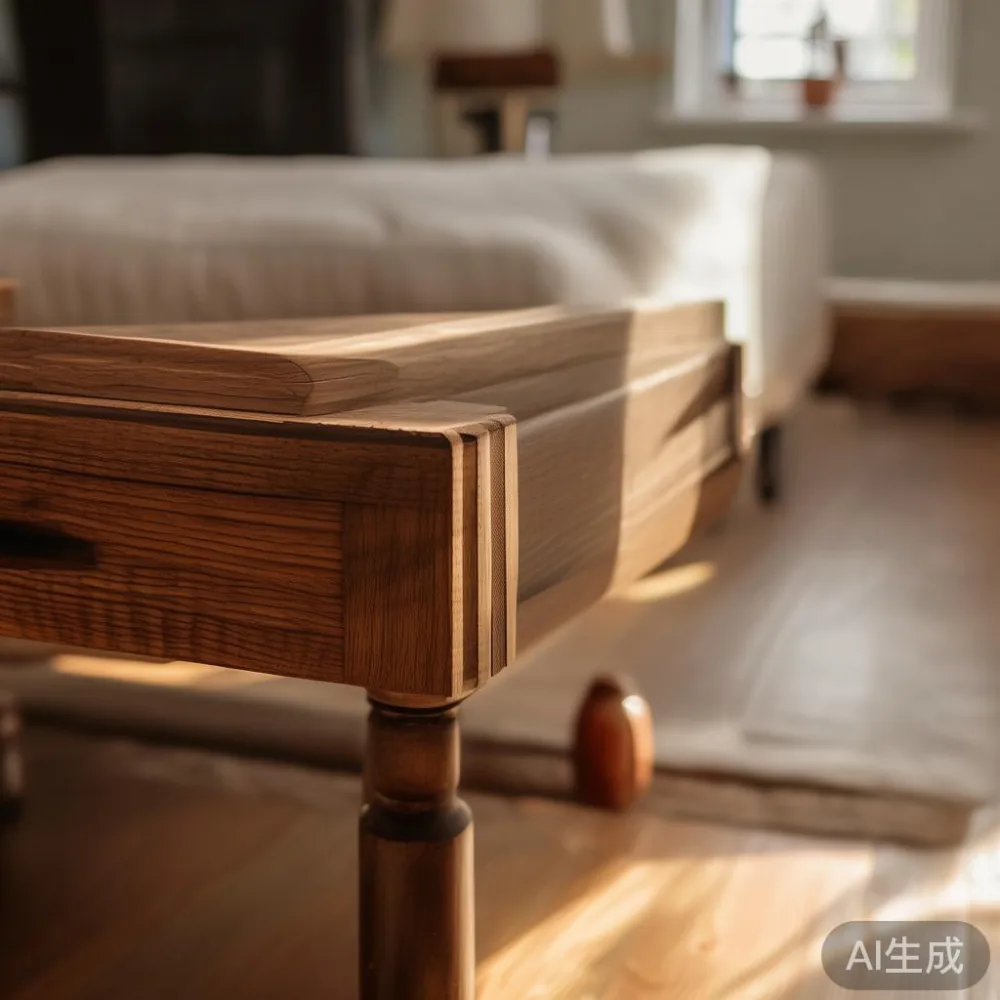
MIDHILL makes solid wood furniture for homes where daily life matters as much as appearance. The company was established in 2008, exports to more than 15 countries, and backs its furniture with a 10-year structural warranty, lifetime refinishing, and a 14-day return period. Delivery is free above US$350, although Singapore orders should be confirmed with the local team because quoted times and GST treatment can vary.
This guide focuses on the side table as the anchor for a warm minimalist scheme. It considers measurements common in Tampines, Bedok, and Punggol homes, corridor and lift constraints, and the way one small table changes the relationship between a solid wood sofa, bed frame, dining table, wardrobe, and nightstand.
What makes a warm minimalist interior work?
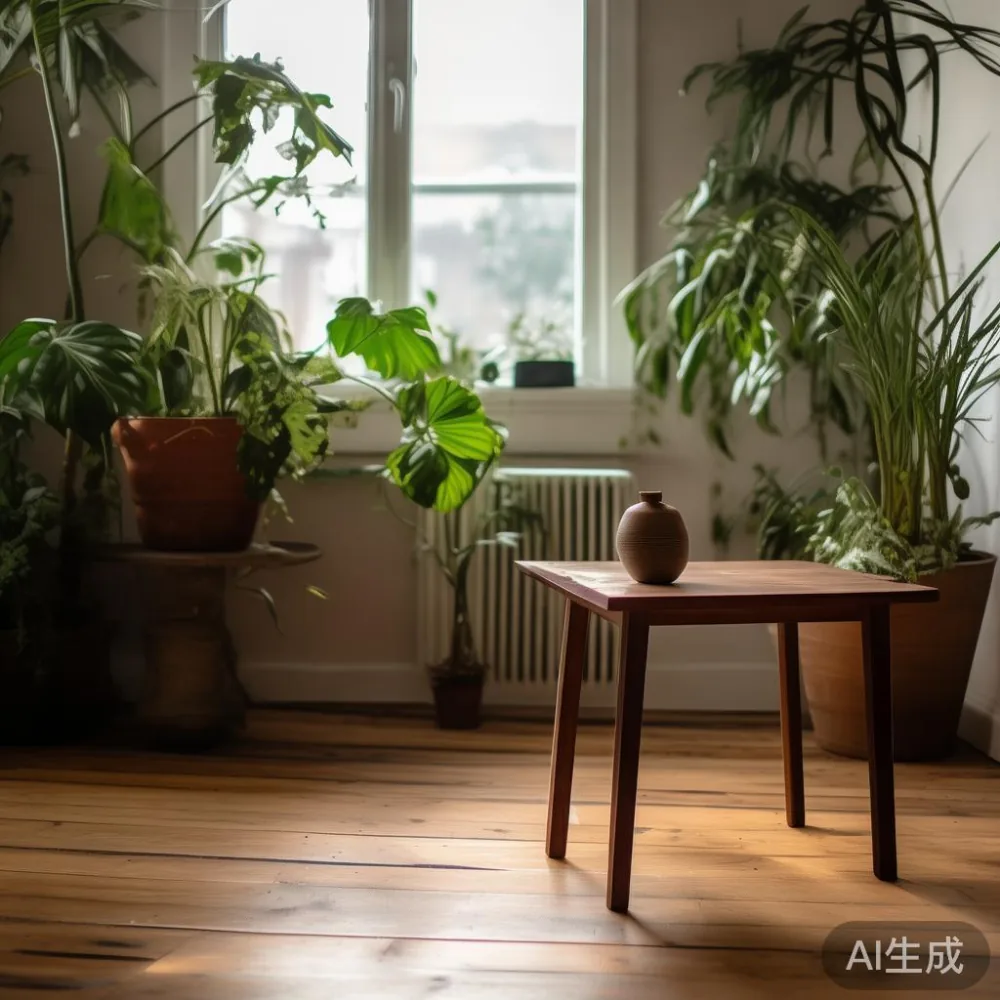
Warm minimalism relies on contrast rather than excess. Pale walls, warm white ceilings, and a restrained floor finish are useful because they allow the texture of wood to remain visible. Choose a side table with a simple silhouette, but let its grain or joinery provide the detail. A 45 cm diameter round table beside a 180 cm sofa will feel light. A rectangular 100 cm by 40 cm table can sit against the sofa arm and offer more surface area without occupying the centre of the room.
Think in three measurements: room, furniture, and clearance. A compact living room may be 280 cm wide with a 220 cm sofa, leaving only 30 cm on one side and 30 cm on the other if the table is centred. In that case, a 35 cm round side table is easier to pass than a 50 cm square one. The aim is not to fill every gap. A little visible floor around the piece gives it breathing space.
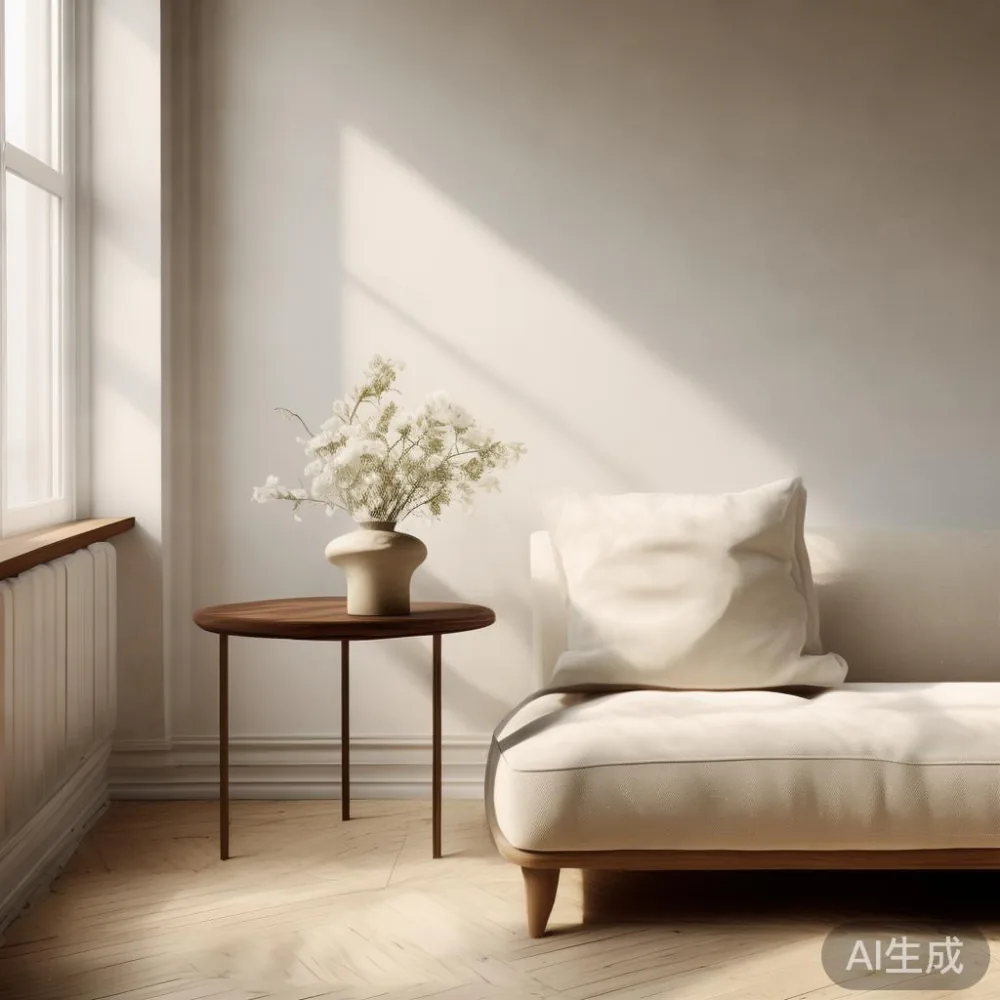
Material coordination should be loose enough to avoid a showroom effect. Match a solid wood sofa with oak, walnut, ash, or a similar timber; match a bed frame with the same tone family rather than demanding an identical board; and repeat one colour elsewhere, such as in a dining table, nightstand, or wardrobe. If marble is used on a marble table, keep it singular and give it a calm companion. For example, one 60 cm round marble table in an otherwise oak room can create a deliberate focal point.
Lighting is equally important. A table lamp with a linen shade around 25 cm high will cast a warm pool of light without competing with overhead lighting. If a side table is only 40 cm high, use a low lamp or place the table next to the sofa rather than forcing a tall object onto it.
How do you measure a side table for a Singapore HDB flat?
Measure the actual route from the lift to the unit before ordering. Standard HDB corridors can be narrow, and a large carton may not turn easily at a staircase or doorway. A boxed side table 65 cm by 55 cm by 45 cm might fit a lift diagonally, but the packaging, protection, and turning space still count. Ask for the outer carton dimensions, not only the product dimensions.
For a model that must travel through a common corridor, keep the tabletop diameter or width below 60 cm where possible. A table with a height of 50 cm and a top diameter of 40 cm weighs approximately 7 kg to 10 kg, depending on the timber and construction. A rectangular version 90 cm by 40 cm and 55 cm tall may weigh 11 kg to 15 kg. Both are manageable for two people, but one person carrying 15 kg up three flights is not a good test of elegance.
Next, measure the intended position. Leave 60 cm to 75 cm between the front edge of a sofa seat and the opposite obstruction when a person must walk past. A side table placed beside the sofa should not project more than 35 cm into the main circulation route. In a Punggol or Tampines unit where the living room opens directly into the dining area, this small projection can preserve a clear path from the entrance to the kitchen.
Check whether the table has adjustable feet. Uneven HDB floors are common, and levelling pads can prevent a small wobble. A round edge is also forgiving in a narrow route than a sharp square corner. For a family home, rounded corners reduce accidental knocks and make the table more comfortable beside a solid wood sofa.
GST is generally applicable to furniture sold in Singapore at the prevailing rate, so include the tax in the final comparison. If a table is listed at SGD 260, the pre-GST figure is SGD 200; the customer should confirm whether the displayed price includes GST before payment. Prices for comparable solid wood side tables often sit between SGD 180 and SGD 420, while marble versions can range from SGD 450 to SGD 900 depending on the material and finish.
Which side table shape suits a compact warm minimalist room?
Round side tables suit compact rooms because they have no corners and can be moved when guests arrive. A 40 cm round model works beside a 170 cm to 190 cm sofa. Its 50 cm height should align closely with the sofa arm; a difference of more than 8 cm can make the table look disconnected. If the sofa has a low arm, a 45 cm table is more harmonious.
Square tables create a stronger geometric character and suit post-modern light luxury, particularly when the timber is warm and the edges are softened. A 38 cm square side table can look neat beside a straight-lined solid wood sofa, while a 45 cm square model feels more substantial. Keep the table slightly lower than the sofa back and avoid placing it directly in front of a door swing.
Rectangular side tables suit long sofas and narrow gaps. A 100 cm by 40 cm table can span the sofa arm or sit alongside a chaise section, but its length should be supported visually by a second object. Pair it with a bed frame or dining table using similar horizontal lines, and keep the styling limited to one book and one small lamp.
Pedestal bases offer useful storage without the visual weight of four legs. A round table with one central column can be positioned beside a nightstand, but avoid placing it where knees might catch the base. The classic French light luxury approach would use an elegant turned pedestal and a lightly grained timber; the American light luxury approach would keep the base clean, proportioned, and quiet.
For practical guidance, search for cheap Mid-century modern furniture only when the piece has credible dimensions, solid construction, and a finish that can be maintained. A low price can be attractive, yet a warped top or unstable joint will work against a calm interior. A side table should remain level with a 2 kg object placed near each edge, and the drawer or shelf should close without forcing.
How can I coordinate the side table with a solid wood sofa?
Start with the sofa, then choose a side table that shares either colour, grain, or shape—not all three at once. A honey-oak sofa can be paired with a pale ash table for gentle contrast. A walnut sofa may sit beside a warmer medium-oak table without appearing too dark. If the sofa has visible grain, keep the side table finish quieter so the sofa remains the main subject.
Scale is the next test. A tiny table beside a large sofa can look like an afterthought, while an oversized table can crowd the room. For a sofa 200 cm to 220 cm wide, a side table 40 cm to 50 cm in diameter is usually balanced. For a sofa under 170 cm, consider 30 cm to 38 cm. Round tops soften a rectilinear sofa; square tops reinforce a tailored silhouette.
Use the table to complete the seating arrangement. Place a tray, a small lamp, and one object with a curved outline. Keep cords out of sight with an internal cable opening or a cord clip. If the table includes a drawer, measure its useful interior space at approximately 25 cm wide by 18 cm deep for remotes and charging cables, or 35 cm wide by 25 cm deep for books and a tablet.
Storage should also be considered when planning European light luxury with storage. A side table with one drawer and an open shelf can serve as a discreet charging station, yet the visual burden should remain low. If the table has open shelving, use baskets or boxes with a consistent material. If you need more enclosed storage, a slim wardrobe can handle larger items, while the side table should remain focused on everyday objects.
Do not forget the side table beside the dining table. If both are visible from one viewpoint, repeating the timber finish creates continuity. If they are in separate zones, a close but less exact tone gives the room a layered feeling. The goal is to make the eye move smoothly from the solid wood sofa to the dining table without making every item look like part of one rigid set.
What should I put on a side table without making the room feel cluttered?
Choose a small group with a clear vertical line: one lamp, one book or tray, and one decorative object. The lamp should be proportioned to the table. A 35 cm diameter table can carry a lamp with a shade 20 cm to 28 cm wide. A narrow 40 cm by 25 cm table can support a slim lamp, a coaster, and a phone charger without making the surface crowded.
For a warm minimalist look, use materials with tactile differences: linen against wood, ceramic against metal, or paper against stone. Avoid displaying more than three materials on one table. A small branch in a vase, a ceramic bowl, or a framed image can work, but choose one rather than several competing accents.
Colour should remain close to the room's existing palette. Warm white, sand, muted clay, and soft charcoal sit comfortably with oak and walnut. If the side table has a dark finish, use it to anchor a pale corner rather than covering it with more dark objects.
Storage is often more useful than decoration. A drawer around 30 cm by 20 cm is enough for sunglasses, a watch, keys, and earbuds. A lower shelf 28 cm by 25 cm can hold a folded throw or two magazines. For a small child, add a stable guard around the lower shelf and keep the top clear of breakable objects.
Before buying online, use the room as a test. Tape the planned footprint on the floor with masking tape and mark a 60 cm path. I last month visited a colleague's new Bedok condo and watched this simple exercise expose a 55 cm table that had looked fine in the catalogue but narrowed the route to the balcony door. We replaced the concept with a 40 cm round side table, and the traffic line opened immediately. That 10-minute check saved the room from feeling pinched.
How do I connect the side table to the rest of the bedroom and dining area?
A warm minimalist interior should carry a few repeated cues, not a full matching set. Use the side table to link zones. In an open living-dining layout, a round oak table can echo the round dining table while introducing a lighter finish. In a bedroom, its silhouette can relate to the bed frame or nightstand. This continuity is especially useful when a condo uses one long sightline from the dining area to the bedroom.
For a bedroom, the side table should be 3 cm to 7 cm lower than the bed frame's top rail. A 48 cm to 55 cm table is common, with the top roughly level with the mattress for convenient reach. If the table sits beside a nightstand, keep one function distinct: let the nightstand hold charging and bedside necessities, and let the side table hold a lamp, book, or small tray.
Wardrobes should be considered as vertical anchors rather than additional pattern. A flat-front wardrobe in warm white can let the side table's timber become more visible. If you are working out how to style Japanese wardrobe in apartment interiors, use simple sliding panels, concealed storage, and a neutral wall around them. The side table can then introduce warmth without making the wardrobe look over-designed.
For the bed, search for how to style Japandi bed in bedroom ideas that emphasize low profiles, warm timber, and clean bedding. A low solid wood bed frame paired with a modest side table creates a grounded composition. Keep the bedside surface mostly empty and let texture come from linen, wool, or a woven basket.
The dining table deserves a similar restraint. If it is large and dark, a lighter side table can balance it. If it is pale and compact, a medium-toned table can create definition. A marble table nearby introduces cool veining, so keep the side table uncomplicated to avoid competing with it.
Can a small side table still feel luxurious?
Yes. Luxury here comes from proportion, material, and finish rather than scale. A 38 cm round side table in solid wood can feel more refined than a broad unit packed with decoration. Look for a smooth surface, a stable joint, softened edges, and hardware that feels proportionate to the drawer. The grain should be continuous enough to suggest careful selection, while the finish should not look excessively glossy.
French light luxury tends to draw on graceful curves, warm timber, and restrained ornament. A round top with a turned pedestal fits that language. Post-modern light luxury is more graphic: a square top, slender cylindrical pull, and subtle bevel can work with clean architecture. American light luxury is comfortable and understated, often pairing pale woods, soft textiles, and practical storage.
When browsing for sale French furniture, check the measurements and construction rather than relying on a broad style label. Confirm the timber species, finish thickness, drawer movement, and warranty. MIDHILL's 10-year structural warranty and lifetime refinishing service can provide useful reassurance for a table that will remain in regular use.
Delivery planning is part of the purchase. Confirm whether the stated delivery window is 7 to 12 working days, 14 to 21 working days, or another range for Singapore. Ask who carries the carton from the lift lobby and whether stair delivery is included. In a high-rise with a narrow corridor, a flat-pack carton may be easier to manoeuvre, but assembly requirements should be understood before the day of delivery.
How should I finalise a side table for a warm minimalist home?
Make a final three-point check. First, fit: the side table should leave at least 60 cm of practical circulation space where people pass, and its carton should fit the lift, corridor, and doorway. Second, harmony: its finish should relate to the solid wood sofa, bed frame, dining table, wardrobe, and nightstand without demanding an identical set. Third, use: the top should hold the objects you actually carry, and any drawer should open with one hand and close securely.
For most Singapore interiors, a round solid wood side table 40 cm to 45 cm in diameter and 50 cm to 55 cm high is a versatile starting point. Choose the finish to echo the room's largest furniture piece, add one warm lamp, and resist filling every surface. The result will feel warm because of wood and light, minimal because of editing, and livable because the table does its job every day.
Before checkout, confirm the final dimensions, product weight, carton size, delivery lead time, GST, assembly needs, and return arrangement. A considered side table is not an extra object competing for attention. It is the quiet point that lets the rest of the room settle into balance.