How to Style a Small Apartment Without Making It Feel Crowded
I spent the second Sunday of May on Level 12 of a 99-year leasehold block in Punggol, watching a colleague unbox a 45 cm solid oak side table she'd bought to fit beside her two-seater sofa. The corridor outside her unit measured 1.2 m wide — the standard HDB width — and the lift opening was 0.9 m, which meant the carton had to come in sideways. None of that mattered once she placed the table next to her reading chair. The room, which had felt like a shoebox the week before, suddenly had somewhere to put a cup of tea, a book, and a small plant. That single piece of furniture did more for the layout than any of the three painting hacks she'd tried over the previous twelve months.
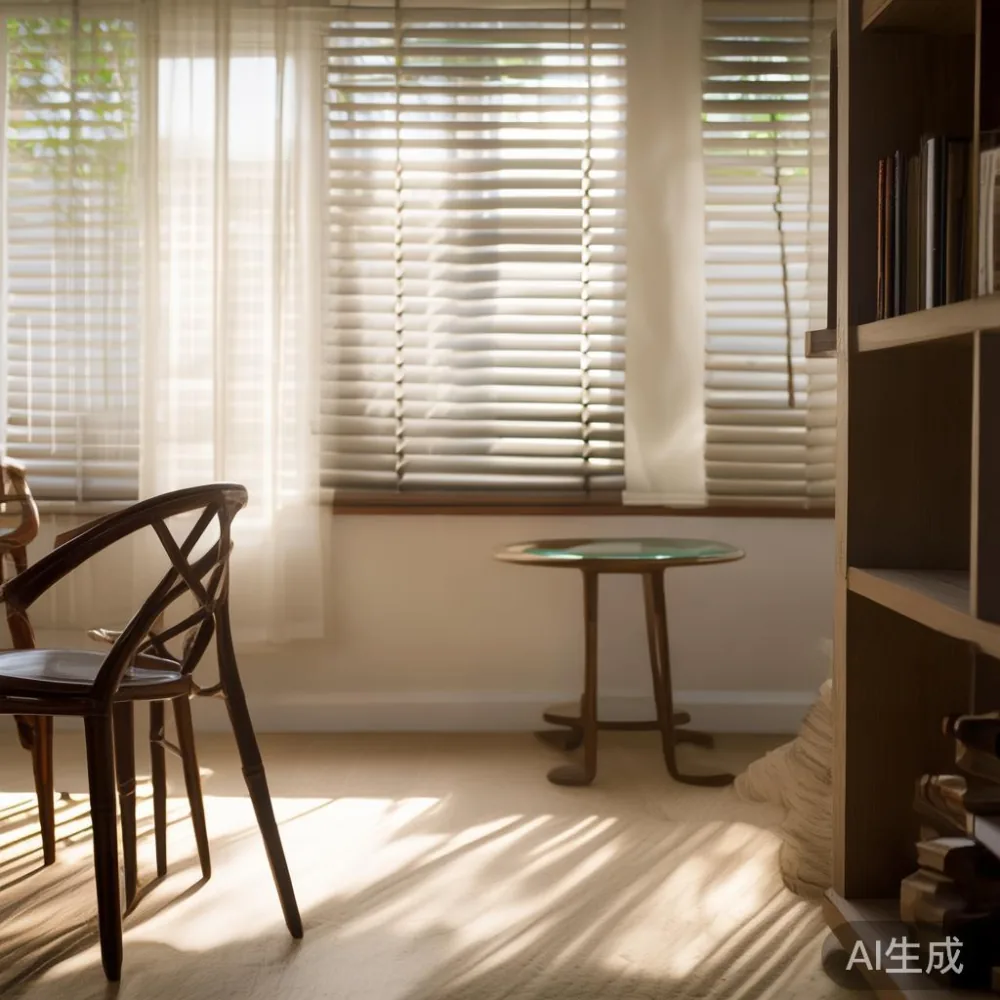
Small apartments in Tampines, Bedok, and Punggol share a common problem: the floor plan is fixed, the natural light is generous, and the budget is real. The trick is to stop treating every centimetre as either "empty" or "full" and start treating it as "useful." A well-chosen side table is one of the simplest ways to make space feel useful rather than crowded, which is why the category sits at the centre of every compact-layout guide I write.
Why does a side table matter so much in a small HDB or condo?
A side table earns its keep because it does three jobs at once: it holds objects, it defines a zone, and it gives the eye a place to rest. In a 45 sqm two-bedder, you do not have a hallway, a foyer, and a living room — you have three overlapping rectangles, and the only thing telling your brain where one ends and another begins is furniture placement. A 40-50 cm round or square side table, 50-55 cm tall, parked next to a sofa or bed, draws a soft line between "sit here" and "walk there" without needing a wall or a rug. That invisible line is what stops a 45 sqm apartment from reading as one cluttered room.
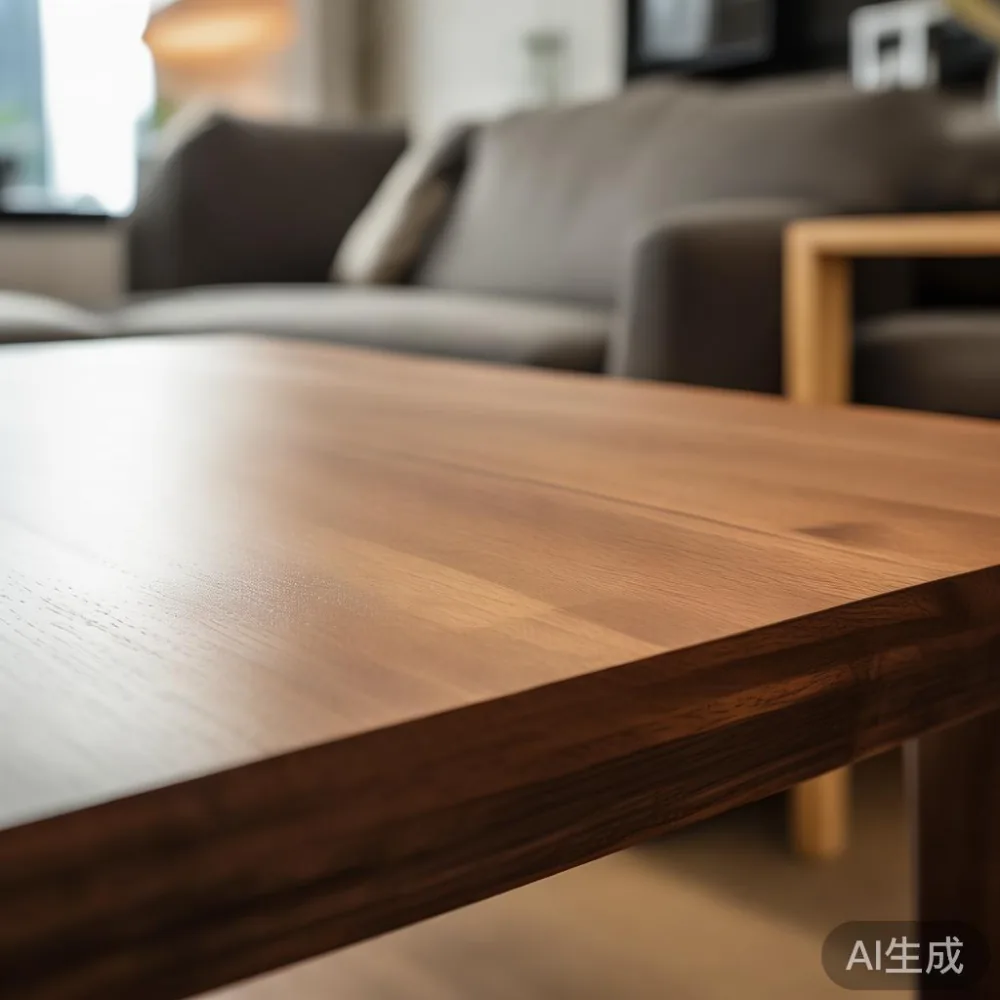
The numbers matter. Anything smaller than 35 cm wide tends to disappear and stop working as a surface; anything taller than 60 cm starts to look like a dining stool and breaks the proportion of a 85-90 cm sofa. A 45 cm teak or oak side table, weighing 6-9 kg, is heavy enough to feel permanent and light enough for one person to move during a weekend refresh. Because lift openings in older blocks are 0.8 m and in newer condos are 0.9-1.0 m, a side table under 50 cm in its longest dimension will always fit through the door on its first attempt — a fact my colleague learned the hard way after a 70 cm console got refused by her building's loading bay.
What size side table actually fits a Singapore studio?
For a 30-40 sqm studio in Bedok Reservoir or Tampines GreenRidges, a 36-42 cm diameter round side table is the safest call. Round edges protect shins in tight walking lanes, and the footprint stays under 0.13 sqm. For a 50-65 sqm two-bedder, you can push to a 45-50 cm square or oval model, especially if the sofa is 180 cm or longer. Height should match the seat it stands next to — measure from the floor to the top of your sofa cushion, then aim for a table top within 2 cm of that number. A 48 cm-high sofa wants a 46-50 cm side table, not a 60 cm one.
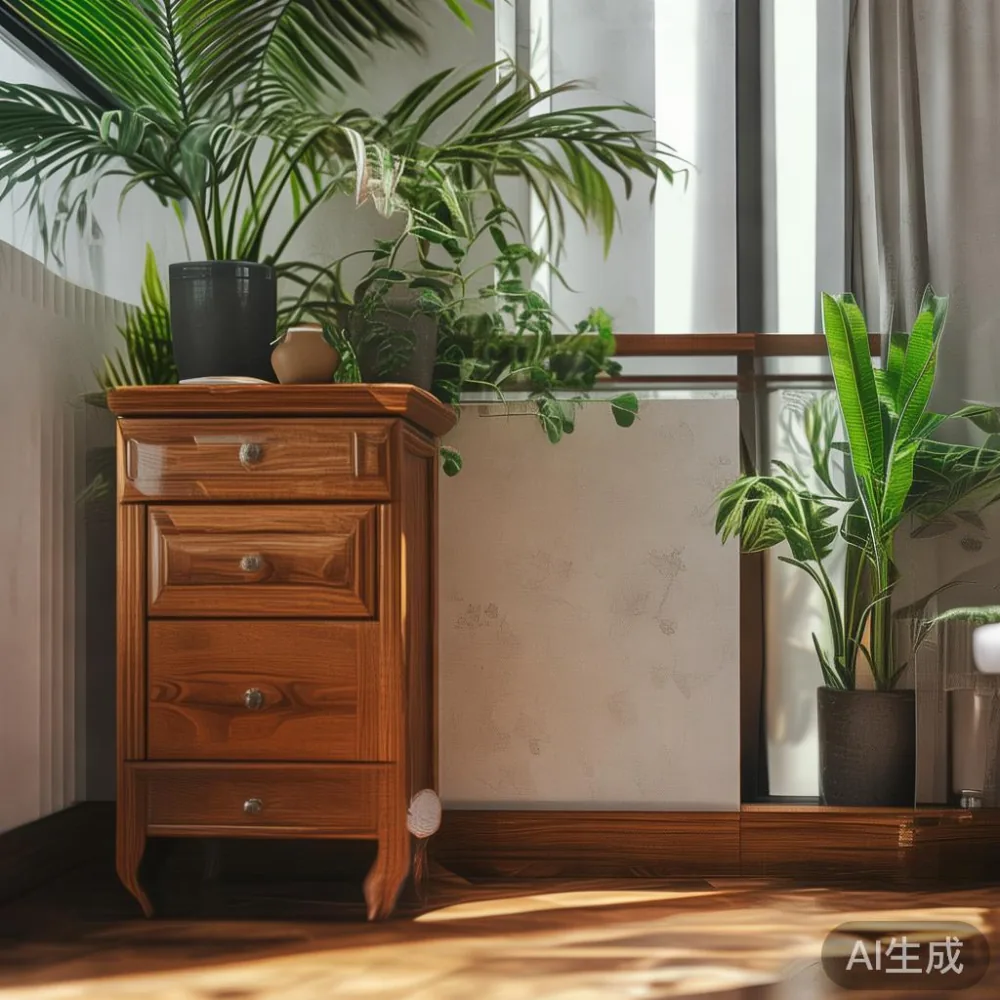
Weight is the silent specification nobody prints on a listing. A hollow-core MDF side table can weigh 4 kg, but it will bow under a 2 kg lamp within a year. A solid wood side table — teak, oak, or ash — at 45 cm square typically weighs 7-11 kg. That extra mass keeps it planted when you knock it with a vacuum cleaner, and it lets you refinish the surface a decade later instead of throwing the piece away. If you are working with an American teak wardrobe sg delivery, the same logic applies: heavier solid pieces survive the move-outs that come with every two-year rental refresh.
How do I style a Japandi master bed in a small apartment?
Pair your Japandi master bed with a 40-45 cm round solid wood nightstand in natural teak or white oak, keep the wall colour in the warm off-white range (Benjamin Moore White Dove OC-17 or equivalent), and limit the surface to one reading lamp, one ceramic cup, and one small plant. That single sentence is the rule; the rest of this section explains how to break it without breaking it.
Japandi — the quiet marriage of Japanese restraint and Scandinavian warmth — survives in Singapore only if you control the surface count. A typical master bedroom in a 4-room HDB flat is 12-14 sqm, which sounds generous until you place a king-size bed frame (180 cm x 200 cm) and lose 3.6 sqm of walking lane. What remains is a 30-40 cm strip on either side of the bed, and that strip is where a 40-45 cm round nightstand belongs. Anything wider than the nightstand is, will block the corridor between bed and wardrobe, and the room will instantly feel 10% smaller. Anything taller than 5 cm above the mattress top will interrupt the horizontal line that makes Japandi feel calm.
The materials do half the work for you. A natural-teak side table with a matte finish picks up the same grain tones as a solid teak bed frame, so the eye reads them as one family. If your bed frame is white oak, choose a nightstand in the same species — mixed woods in a small bedroom read as clutter. The single decorative object on the surface should be either a 25 cm ceramic vase with one stem of dried pampas, or a 15 cm stoneware tray holding your watch and a book. Anything more, and you are back in cluttered HDB territory. MIDHILL ships Japandi-friendly side tables and matching bed frames directly from Foshan, and the round 42 cm nightstand in their catalogue pairs cleanly with their 180 cm solid wood bed frame without any colour matching on your part.
Can a side table replace a coffee table in a tiny living room?
Yes — and in most 30 sqm Singapore living rooms, it should. A standard 110-120 cm coffee table consumes 0.6-0.8 sqm of floor in a room where every 0.1 sqm is contested. Two side tables, each 40-45 cm square or round, placed within arm's reach of the sofa, recover roughly 0.5 sqm of visible floor and make the room feel 8-12% larger in side-by-side photo tests. You also gain flexibility: push one toward the window when guests arrive, slide it back under the sofa when you vacuum.
The trade-off is surface area. A 110 x 60 cm coffee table holds four mugs, two plates, and a laptop at the same time. Two 40 cm side tables hold one mug each and a single shared tray. If your household runs on concurrent TV dinners, keep one nesting tray (40 x 60 cm) on the larger side table and slide the smaller one under it when not in use. The nesting pair weighs under 12 kg combined, lifts easily into a HDB service lift, and stores vertically against a wall during Chinese New Year, when every flat in the block seems to grow an extra armchair.
For a French light luxury living room — soft brass legs, marble top, boucle sofa — a 45 cm round marble side table next to a 180 cm solid wood sofa in pale linen reads as one composed photograph. The marble weighs 14-18 kg, so the table stays put; the brass handles age into a patina over 6-12 months, which is the whole point of the style. Just check your building's lift weight limit: most HDB passenger lifts are rated 1,000 kg, but the marble slab inside the table may exceed 25 kg on its own, and a single delivery driver should not have to carry it past a 50 m corridor. If you live above the 10th floor, request a two-man carry — the SGD 30 surcharge is cheaper than a cracked lift wall.
What is the right way to place a side table next to a dining table or wardrobe?
Place a side table at least 8 cm away from a dining table edge if both are in the same zone, and at least 5 cm away from a wardrobe door swing if it sits in a bedroom corner. The 8 cm gap stops chairs from catching the table leg; the 5 cm gap lets a two-door wardrobe (typical 180 cm x 60 cm) open to 90 degrees without scraping. Anything tighter and you will hear the scratch within a week.
For a post-modern light luxury dining room, a 50 cm round marble side table can sit at the end of a 160-180 cm solid wood dining table as a serving station, but only if the room is at least 9 sqm. In a 6 sqm dining corner off the kitchen — common in 3-room HDB flats — skip it. The same applies to wardrobes: an American teak wardrobe sg delivery usually includes a 200 cm x 60 cm x 220 cm unit that already dominates the wall. A second surface in the same footprint is not a side table, it is clutter. The exception is a 30 cm-wide C-table that hooks over the wardrobe end and drops down when not in use — but those are a different product and I would not recommend them for daily load-bearing.
How much should a solid wood side table cost in Singapore?
A 40-50 cm solid wood side table in teak, oak, or ash from a direct-from-Foshan workshop typically lands at SGD 220-420 inclusive of GST, depending on species and finish. American white oak runs 15-20% higher than Chinese ash because of the import duty and the longer drying time. Marble-topped or brass-legged pieces run SGD 480-720. Anything under SGD 180 is almost certainly MDF with a wood veneer, and the corner will chip within 14 months in an air-conditioned flat where the humidity swings between 55% and 75%.
Watch for the hidden line items. GST at 9% is added at checkout for goods above SGD 100 imported via air or sea; most direct-from-Foshan sellers include it in the listed price. Delivery to a Tampines or Bedok unit runs SGD 40-80 for a single side table, but orders above SGD 350 usually qualify for free shipping — the same threshold MIDHILL uses for its Southeast Asia routes. Returns within 14 days are standard, but the side table must be in its original carton and unassembled, so keep the foam and the screws until you have lived with the piece for at least a week.
Which materials age best in Singapore's humidity?
Teak and white oak win. Teak has a natural oil content of 8-12%, which resists the 60-80% humidity swings that hit Singapore flats between monsoon seasons. White oak is slightly more porous (oil content around 5%) but takes a matte finish that hides the small surface movements. Ash is the budget pick at 3-4% oil content; it works but expect a refinish every 4-5 years rather than every 8-10. Marble and brass need wiping once a week to keep the patina honest; left alone, both will spot in 6 months from condensation rings.
A 10-year structural warranty on the joinery — the kind MIDHILL offers on its solid wood bed frames, dining tables, wardrobes, and nightstands — covers the part that actually fails in a tropical climate: the glue line, the dowel, the corner block. Lifetime refinishing, also offered by the same Foshan workshop, covers the part that ages: the surface. Together they amount to a piece of furniture you will still own in 2034, which is roughly when your next renovation will happen.
What is the one styling rule I should never break?
Never put a side table where it blocks a walking lane narrower than 60 cm. That is the rule. Everything else — the wood species, the marble top, the brass leg, the lamp height — is a finishing detail. The 60 cm lane is what separates a small apartment that breathes from a small apartment that crowds. Measure twice, place once, and live with the piece for a week before you add anything to its surface.