Reading Solid Wood Warranty in Singapore: Buyer's Checklist
I spent a wet Saturday at the MIDHILL showroom in Foshan last month, sifting through warranty cards printed in three languages, and I realised something uncomfortable: most shoppers in Singapore — even the careful ones — read a furniture warranty the way they read the small print on a parking coupon. They skim it, miss the load-bearing clauses, and only discover the gap when the side table starts wobbling twelve months in. This guide is what I wish every Tampines and Bedok homeowner had on hand before signing for a 1.6 m solid wood dining table or a four-door wardrobe that needs to climb a 1.2 m-wide HDB lift.

A warranty is a contract about time, load, humidity, and who pays the lorry. Read it like one.
Why a 10-Year Structural Warranty on Solid Wood Is a Different Animal
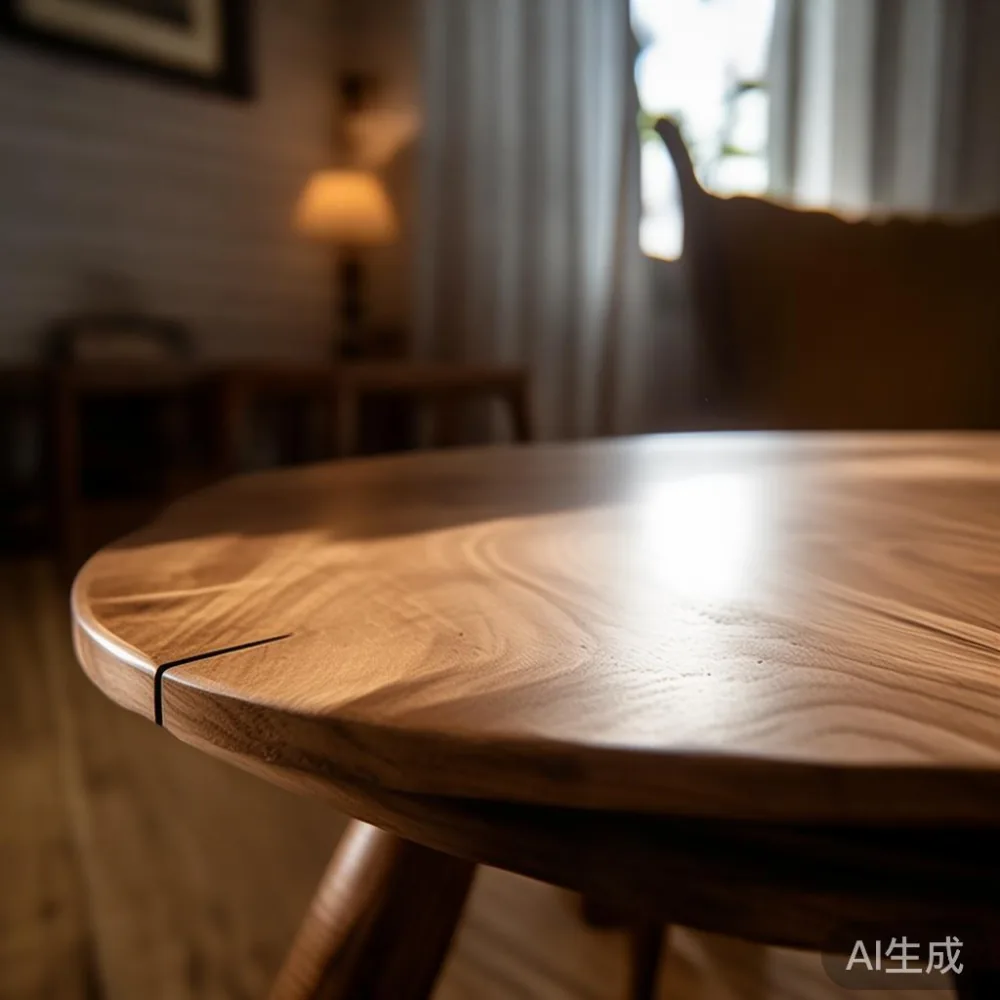
Solid wood furniture behaves differently from MDF or particleboard. A bed frame made from kiln-dried oak or ash moves with humidity — typically 2 to 4 mm across the width across a Singapore wet-dry cycle (relative humidity swings from roughly 65% in January to 90% in August). That movement is not a defect; it is the material doing its job. A well-written warranty from a Foshan solid wood maker distinguishes between structural failure (a joint cracking under load, a slat snapping) and cosmetic movement (a hairline gap opening in January, closing again in July). When I tested the side table samples at MIDHILL, the showroom manager ran a moisture meter over the oak and read 8 to 10% — the same range a serious workshop aims for before assembly.
A 10-year structural warranty should, at minimum, cover:
- Frame integrity of a solid wood sofa, bed frame, or dining table (no joint separation under normal domestic load).
- Drawer runners and hinges on wardrobes and nightstands (typically rated for 50,000 to 100,000 cycles).
- Warping beyond an agreed tolerance — for a 1.8 m table top, anything more than 5 mm of crown or cup is usually considered a structural event, not seasonal movement.
If the document uses the word "defects" without defining structural versus cosmetic, treat it as a red flag and ask the seller to specify in writing.
What "Lifetime Refinishing" Actually Covers (and What It Doesn't)
Lifetime refinishing sounds generous, and for solid wood it genuinely is — you cannot refinish a veneered MDF board twice without sanding through the face layer. But the phrase has a working definition that varies wildly between workshops. Before you buy that marble-top side table or French light luxury bed frame, pin the answer to these questions down:
- How many refinishes are included? A reasonable workshop offers 2 to 3 full sand-and-restore cycles across the life of a piece.
- Who pays freight? Sending a wardrobe back to Foshan is not a small thing. Container shipping to Singapore from Guangdong runs roughly SGD 280 to SGD 450 per cubic metre in 2026, and a four-door wardrobe occupies 1.2 to 1.6 m³. A warranty that promises "free refinishing" but charges return freight is not really free.
- Does colour matching hold? Stains oxidise. A piece refinished five years later will not match the original exactly. A responsible maker admits this; a careless one promises miracles.
When I visited MIDHILL's refinishing room, the team there keeps a swatch book of every production batch going back to 2008 — over 17 years of colour history. That archive is what makes a "lifetime" promise credible. Ask any seller the same question and watch what happens.
Reading the Small Print: Load, Humidity, and the HDB Lift Question
Two clauses catch Singapore buyers out more than any others. The first is the load clause. A side table rated for "domestic use" is typically tested to 15 to 20 kg static load on the top and 5 to 8 kg on a lower shelf. Stack it with hardback coffee-table books and a marble tray and you can exceed that easily. A dining table warranty will often cite a per-leg load — anything from 80 kg to 150 kg. Know the number before you let anyone lean on it during a Punggol dinner party.
The second is the environment clause. Singapore's climate is a stress test: 27 to 32°C, 65 to 90% RH, and air-conditioning that drops indoor humidity to 45 to 55% for eight hours a day. That cycle is harder on solid wood than a Beijing or Shanghai indoor climate. A warranty that excludes "damage from humidity" without specifying a range (for example, "damage from sustained ambient RH above 75%") is too vague to enforce — and too vague to honour.
Then there is the delivery clause, which in Singapore has its own quirks:
- Standard HDB corridor width is about 1.2 m; lift car interiors on newer BTOs in Punggol are roughly 1.1 m wide by 1.4 m deep. A four-door wardrobe flat-packed in a 2.3 m-long box will not fit. Make sure the warranty specifies what happens if access fails on delivery day — does the seller refund, redeliver, or charge a SGD 80 to SGD 150 re-attempt fee?
- Lift bookings in older Tampines and Bedok blocks require 2 to 5 working days' notice. A warranty that promises "next-day delivery" but ignores lift scheduling is a warranty you will argue with.
- Stair-only access (rare in HDB, common in some walk-up condos) usually attracts a surcharge of SGD 40 to SGD 90 per floor per item.
How do I style a French neoclassical bed in a small apartment?
Choose a French neoclassical bed frame with a low, clean footboard and tapered legs in solid ash or oak, keep the headboard under 110 cm tall, and pair it with a slim nightstand and a single round marble side table so the silhouette stays light rather than ornate.
French neoclassical design leans on proportion, not bulk — fluted legs, restrained carvings, muted brass or matte black hardware. In a 90 to 110 sqm HDB flat or a 50 to 70 sqm condo in Punggol, the trick is to let one piece carry the style and keep everything else quiet. A solid wood sofa in a pale linen, a four-leg dining table without a pedestal base, and one statement marble table near the window are usually enough. Skip heavy drapery; the look reads better with sheer curtains and a 2700K floor lamp. For fabric care for study of upholstered headboards or a study nook chair, vacuum weekly on low suction, rotate cushions monthly, and keep the room between 45 and 60% RH so the linen does not dry out or mildew — the same humidity range that protects your solid wood.
The GST, the 14-Day Return, and the Refund Timeline
From 1 January 2024, GST in Singapore sits at 9%, and a SGD 2,500 dining table plus delivery will show roughly SGD 2,725 on the invoice. A good warranty spells out whether GST is included in "free shipping" thresholds and whether refunds return the tax portion. Most do; some quietly deduct it.
On a 14-day return window, count carefully. In Singapore, the count usually starts on the day of delivery, not the order date, and the piece must be in "resalable condition" — original packaging, no assembly marks, no scratches. A flat-packed bed frame that you have already screwed together is, in practice, not returnable, even if the box is intact. MIDHILL's policy is similar to most Foshan exporters: 14 days, original packaging, full refund of the item value (delivery fee is typically non-refundable once the truck has rolled). Some sellers offer a longer 30-day window for ex-showroom pieces; treat that as a meaningful perk and weigh it against a small discount on a made-to-order item.
Free shipping over US$350 translates, in 2026, to roughly SGD 470 to SGD 490 at current exchange rates. Orders below the threshold usually pay SGD 60 to SGD 120 for HDB doorstep delivery on a regular route, or SGD 150 to SGD 250 for a timed slot or weekend booking. A warranty that buries this in clause 9(b) is one you will wish you had read.
What Voids the Warranty (Read This Bit Twice)
Almost every solid wood warranty carries the same exclusions. The trick is not to avoid reading them; the trick is to know which ones are reasonable.
- Outdoor use. Reasonable. Solid wood indoors at 45 to 65% RH behaves one way; the same table on a balcony at 90% RH and direct afternoon sun behaves another. A side table marketed for "patio use" should carry a marine-grade finish and a different warranty entirely.
- Commercial use. Reasonable. A wardrobe in a hotel room sees 10 to 20 times the door cycles of a home wardrobe. The 50,000-cycle hinge rating collapses inside three years.
- Self-assembly errors. Often unreasonable. If the instructions are unclear and a joint fails, the fault may lie with the maker. A reputable Foshan workshop offers video support and, where needed, an on-site handyman in Singapore for SGD 80 to SGD 180 per visit.
- Modification. Cutting a cable hole in a wardrobe back panel, sanding a dining table to refinish it yourself, or swapping drawer runners can void coverage. Document any change with the seller in writing first.
- Force majeure and flooding. Standard, but check the timeline — some policies require notification within 7 days, others within 30.
Post-Modern Light Luxury, Marble Tables, and the Aesthetic Fine Print
Style language matters when reading a warranty because it sets expectations. Post-modern light luxury and American light luxury both describe pieces that blend classic proportions with cleaner lines — a fluted marble side table on a brushed brass base, an ash wood nightstand with soft-close drawers and a 12 mm marble top. These combinations are popular in Singapore condos precisely because they photograph well and survive trend cycles.
The warranty fine print to watch here is the stone clause. Marble, sintered stone, and travertine are not covered for chipping, staining, or veining variation in most policies, because those are properties of the material, not defects. A 12 mm sintered stone top on a dining table will withstand heat to about 200°C; a marble top will not. If you plan to put hot pots on the table, you are reading the wrong warranty.
For a wardrobe with mirror panels, check whether "silvering" — the slow oxidation of the backing — is covered. Most policies exclude it after year 3; some offer 5 years; almost none cover it for the full 10.
A 7-Point Checklist Before You Sign
- Structural warranty length, written in numbers, not "limited" or "extended" weasel words. Ten years is the Foshan workshop standard for kiln-dried solid wood; less than five is a question mark.
- Load ratings on every load-bearing surface, in kilograms, on the spec sheet — not in the marketing PDF.
- Humidity tolerance, expressed as a relative humidity range, not "indoor use only."
- Refinishing scope: how many times, who pays freight, how colour match is handled.
- Delivery access policy for HDB corridors and lifts, including the re-attempt fee and any weekend surcharge in SGD.
- Return window, refund timeline (typically 7 to 14 business days), and whether the delivery fee is recoverable.
- Exclusions list, with the four big ones highlighted: outdoor, commercial, self-assembly damage, modification.
A warranty is not a marketing brochure. It is a list of promises measured in years, kilograms, and Singapore dollars, set against a climate that swings harder than almost any other market a Foshan workshop ships to. Read it the way you would read a tenancy agreement: slowly, with a highlighter, and with a direct line to someone at the workshop who can answer in writing. My colleague in Bedok learned this the hard way with a flat-pack wardrobe that arrived with a cracked side panel; the seller replaced it inside 11 days once the access photo and the warranty clause were on the same WhatsApp thread. That speed comes from preparation, not luck — and preparation starts with the seven points above.
If you are weighing a solid wood bed frame, a four-door wardrobe, a six-seater dining table, or a single marble side table this quarter, take the warranty PDF, the spec sheet, and this checklist into the showroom. A 20-minute read in a quiet corner will save you a SGD 400 to SGD 1,200 lesson at home — and a Saturday spent arguing with a delivery driver in a Tampines lift lobby.