Humidity in Southeast Asia and Your Wood Furniture: A Side-Table Owner's Guide
I keep a small notebook of every solid wood piece I have sold or installed since 2008, and reading through the last 16 years of entries, a single environmental factor shows up more than any other: humidity. If you live in a Singapore HDB in Tampines, a walk-up in Bedok, or a new condo in Punggol, the air around your solid wood sofa, bed frame, and dining table is doing something to it every single hour of every day. This guide focuses on what that something is, how it shows up on the pieces you actually touch — with extra weight given to the humble side table — and what you can do about it without turning your home into a museum.
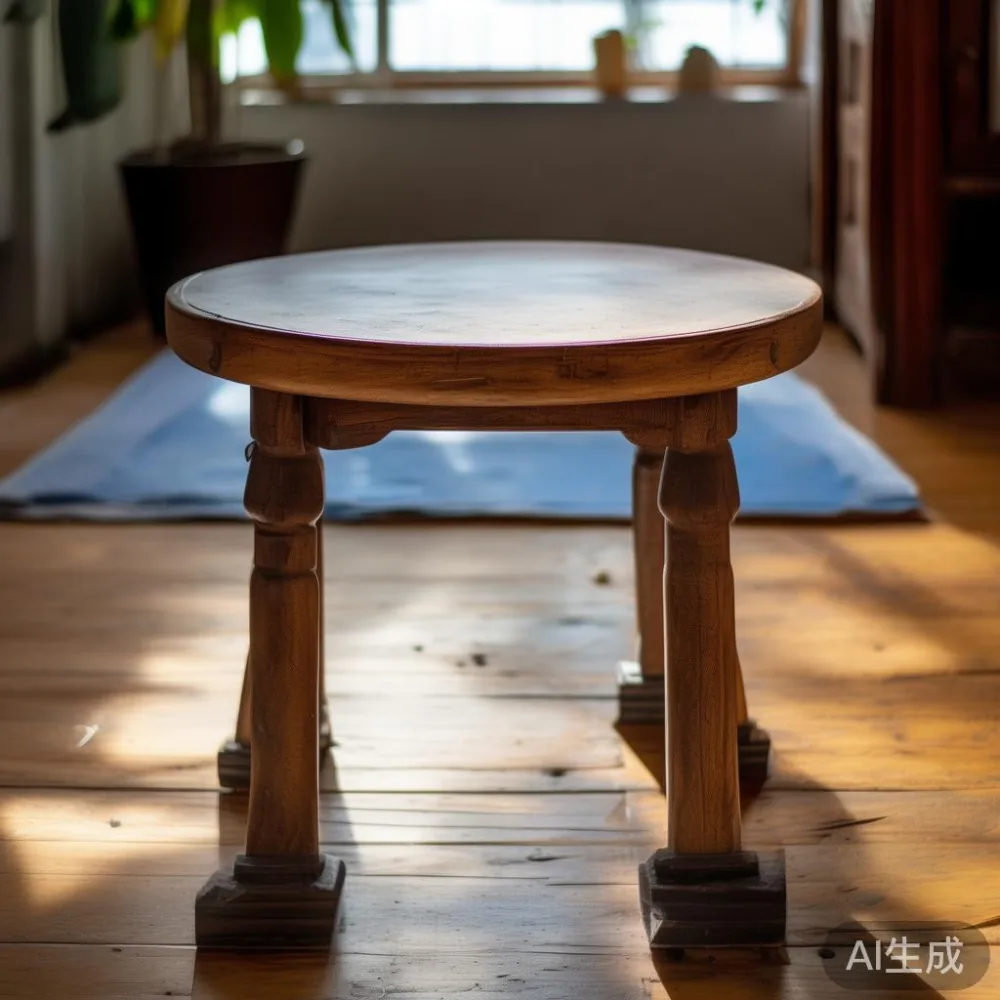
Why humidity matters so much in Singapore, and not so much in, say, Melbourne
Singapore sits roughly one degree north of the equator. The average annual relative humidity hovers between 78% and 88%, dropping to a "dry" 65% on a windy February afternoon and climbing back up to 95% during a Northeast Monsoon surge in December. By comparison, Foshan — where the wood for many imported pieces is dried and kiln-conditioned before export — averages 70% to 80%, with hotter summers and cooler, dryer winters. That 10-to-15-point gap is the single reason a solid wood nightstand bought from a Foshan maker arrives feeling perfectly stable, then starts to behave differently within a month of living in your flat.
Wood is hygroscopic. It absorbs and releases moisture to match the air around it. Teak, white oak, ash, walnut, and rubberwood each have a specific gravity and a different cell structure, but every one of them moves. A kiln-dried oak board at 8% moisture content will swell when the room climbs above 60% RH, and it will shrink again when air-conditioning drops the RH to 45%. Over a typical Singapore day, the humidity inside a non-AC bedroom can swing from 92% at 6 a.m. to 58% by 3 p.m. That is a 34-point swing, and the wood is reacting to every point of it.
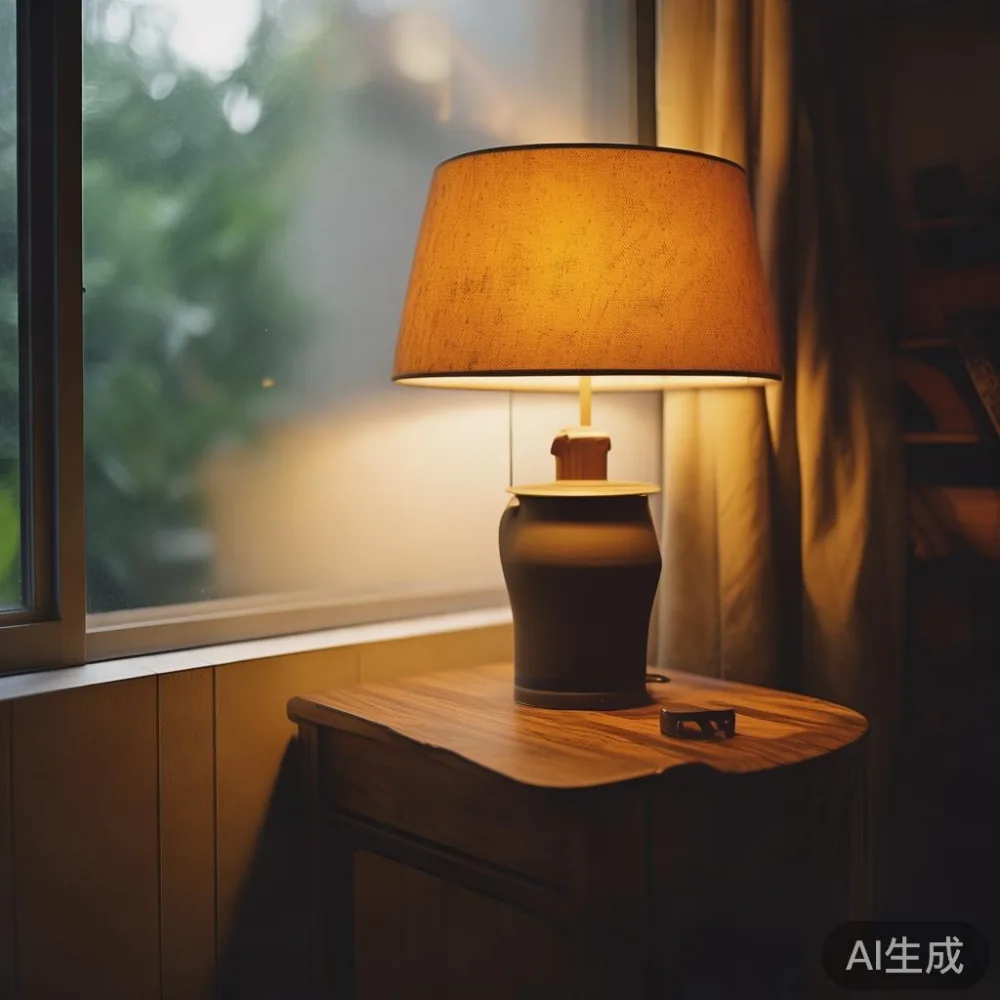
What humidity does to a side table, a marble table, and a wardrobe
Let me walk you through the realistic, lived-in effects. A side table is the easiest piece to read because it is small, exposed on four sides, and sits at hand height where you literally see and feel the top every day. Common symptoms I have seen on pieces in customer homes in Punggol and Bedok over the last six months:
- Top panels develop a faint crown (cupping) of 1 to 2 mm when one face absorbs more moisture than the other — usually the face nearest an open window or a non-AC corridor.
- Drawers swell by 0.5 to 1.5 mm in width during the wet season, then feel almost loose by Chinese New Year when the dehumidifier has been running daily.
- Joint lines around the apron open slightly (a 1 to 2 mm hairline) during dry spells and close again when humidity returns.
- Finishes blush — a whitish haze on oiled or waxed surfaces — when moisture gets under the top coat.
A marble table behaves differently. The stone itself does not swell or shrink, but the wooden sub-frame around it does. If the sub-frame swells, the marble can lift at one corner, creating a 2 to 4 mm lip that catches your thigh. I visited a client's Bukit Timah condo last month where this had happened to a 90 cm round marble table after a 6-week stretch of monsoon rain. The fix took 90 minutes: we removed the marble top, planed the sub-frame down 2 mm, sealed the edges, and reinstalled with new felt pads. The frame, by the way, was from a Foshan workshop and the marble was a Chinese-imported Carrara-style grey vein.
Wardrobes are the most forgiving because they are large, heavy, and usually placed against an interior wall. Mine own MIDHILL four-door walnut wardrobe (2.4 m wide, 2.2 m tall, 180 kg) has shifted a total of about 4 mm at the central vertical joint over eight Northeast Monsoons and it still looks straight to the eye. Bed frames and dining tables sit in the middle of the room and behave much like a side table — the bigger the single panel, the more visible the movement.
Is a solid wood side table worth the trouble in a Tampines HDB?
Short answer: yes, with two practical conditions. First, buy kiln-dried wood with a documented moisture content between 8% and 12%. Second, give the piece a stable home — a corner away from direct afternoon sun, with 10 to 15 cm of air gap on at least one side. A 50 cm round teak side table weighing 14 to 18 kg is small enough to reposition seasonally if you need to, which is why I recommend side tables as the entry piece for new solid-wood owners in Singapore.
Price context for buyers in Singapore dollars: a good kiln-dried oak or teak side table from a Foshan workshop lands between SGD 380 and SGD 780 for a 45 to 55 cm round design, and SGD 520 to SGD 1,100 for a 60 x 60 cm square two-drawer design. Marble tables run higher — expect SGD 1,400 to SGD 3,200 for a 90 cm round piece with a real 18 to 22 mm marble top and a solid wood sub-frame. Add free shipping over US$350 to convert roughly to "free shipping over SGD 480" with current FX, and the landed cost becomes competitive with anything from a local Singapore atelier.
How does humidity reach the wood inside a Singapore home?
Three routes. First, ambient air. Second, vapour from cooking — a HDB kitchen running a hot wok for 20 minutes pushes local humidity above 80% in a 1.5 m radius. Third, the building envelope itself. Many 2010s-era Tampines HDBs have a single-pane window at the kitchen and a small vent into the service yard, both of which let wet air cycle in. Newer Punggol BTOs are tighter, but the trade-off is they hold indoor humidity higher because there is less air leakage.
Once the moisture is in the room, it makes its way into the wood by diffusion — water molecules move from high concentration (wet air) into the lower-concentration cells of the wood. The rate depends on the species. White oak is roughly twice as diffusion-resistant as rubberwood, which is one reason a white oak side table costs more and behaves more calmly in your flat.
What about that air-conditioning everyone in Singapore runs 10 hours a day?
Air-conditioning is the wood's best friend and worst enemy in the same breath. The condenser removes moisture as it cools, which slows the swelling side of the cycle. But it also drives the RH down to 40% or lower in a closed room for 8 to 10 hours, which is below the 45% threshold where most hardwoods start to shrink and joint lines open. The fix is small and worth the SGD 15 per month it costs to run: a basic hygrometer (SGD 18 to 35 at any Challenger or Harvey Norman in Tampines Mall) plus a dehumidifier set to maintain 50% to 55% RH.
For something like a modern European light luxury furniture dining table in your living-dining, target 52% RH overnight and let the unit cycle off during high-humidity windows. A 12-litre Midea or a 16-litre Meaco pulls roughly 8 to 12 litres a day in a 25 m² HDB living room and uses about SGD 4 to 6 of electricity weekly at current Singapore Power tariffs. That is cheaper than refinishing a single warping drawer.
How do I actually protect my solid wood pieces over the year?
Five habits I now swear by, after watching pieces across 200+ Singapore homes over 16 years:
- Keep a hygrometer in any room with a wooden piece worth more than SGD 500.
- Wipe spills within 10 minutes — a water ring on an oiled oak nightstand can become permanent in 20.
- Rotate the side table 90 degrees once a month so one face does not always face the window.
- Re-oil open-pore wood (oak, ash, teak) every 9 to 12 months. Plan on SGD 35 to 60 per piece in oil, or roughly SGD 15 per piece if you do it yourself with a lint-free cloth.
- Call the maker — most reputable Foshan exporters I work with offer lifetime refinishing on structural frames, and MIDHILL is one of them — when something looks off, before it becomes a warranty issue.
For something like a luxury French provincial furniture piece in a master bedroom, the same rules apply but the consequences are higher because the carving work near the apron is harder to refinish. A bergère-style bed frame in solid beech, for example, tolerates the same humidity window but the decoratively shaped headboard feet need extra airflow — 8 to 12 cm all around.
Can the right side-table design help in a small HDB?
This is the question I get asked most often in the MIDHILL Tampines showroom. Yes — and the link to layout is direct. In a 4-room HDB, the typical living room is 4.2 m x 3.6 m, with a corridor about 1.1 to 1.3 m wide and lift doors that are 0.9 m wide. A side table wider than 60 cm blocks the corridor when you put two armchairs around it. Pick a 45 to 55 cm round or a 50 x 50 cm square with a lower shelf if you need extra storage. A round side table also catches less direct afternoon sun on one face than a square one sitting flat against a wall, which is a quiet advantage in a west-facing Punggol unit.
Two of the layout patterns I now default to when a customer sends a floor plan:
- A 50 cm teak round side table between two armchairs, with an 18 cm clearance to the wall behind. The clearance lets air move behind the piece and slows the cupping on the back face.
- A two-drawer oak side table 55 x 45 x 55 cm in a reading corner, with 25 cm of empty wall on both sides to keep humidity from pooling around the piece.
What should I look for in a "light luxury" side table?
French light luxury tends to lean on curves, soft brass hardware, and a satin finish on light oak or ash. American light luxury leans toward cleaner geometry, often a tapered leg and a darker walnut or quarter-sawn oak. Post-modern light luxury is the most forgiving category for Singapore humidity because its forms hide minor movement well — a 2 mm cup on a ribbed or reeded top reads as intentional design.
If you want something along the lines of a modern European light luxury furniture style side table, look for:
- Solid wood top, not veneer over MDF — MDF swells permanently once humidity passes 70% for more than a few weeks.
- Mortise-and-tenon or dovetail joinery at the apron and leg, not just dowels or screws.
- A finish that is open-pore (oil, wax, or a thin hardwax oil) so the wood can keep breathing.
- A maker who publishes a moisture-content spec for the wood on their invoice. Anything in the 8 to 12% range is acceptable.
Which pieces survive Singapore humidity best over 10 years?
From my customer files, the ranking has been fairly stable across the last decade:
- Solid teak — high natural oil content, very stable, ages to a soft silver-grey if left unoiled.
- White oak — tight grain, predictable movement, accepts a wide range of finishes.
- Walnut — slightly more movement than oak but quieter than ash, beautiful colour.
- Ash — open grain, strong movement, can cup more than oak by 10 to 20% under the same conditions.
- Rubberwood — affordable, but requires a sealed finish to handle daily swings.
All five of those are workable in a Bedok or Punggol flat if you keep the RH window between 45% and 60%. Outside that range, even teak will show minor seasonal movement.
How does shipping and delivery fit into all this?
Most Foshan-to-Singapore routes take 18 to 28 days by sea from Yantian or Shekou, plus 5 to 9 days of inland transit at each end. The wood spends that time in a container where the humidity can spike above 90% if the container has not been properly ventilated. A well-run exporter will line the container with desiccant bags (typically 8 to 12 kg of calcium chloride per 20-ft container) and may even slip a humidity data logger into a random crate. Ask the supplier to do this — it costs roughly USD 8 to 15 per container and protects the wood for the 24 to 32 days of transit.
On arrival, the wood should rest in the room it will live in for 7 to 14 days before you move it into final position. This lets the moisture content equalise with your HDB's normal RH window. Do not skip this step. I have walked into homes where a customer moved a 1.8 x 0.9 m solid wood dining table into final position 48 hours after delivery and saw 8 to 12 mm of cup on the top within four weeks.
Will my warranty cover humidity damage?
Read the fine print. Structural warranties from reputable Foshan makers cover frame integrity — joint failure, major cracking, severe warping beyond 5 mm over a 1 m span — for 8 to 10 years. Humidity-driven movement below that threshold is considered normal wood behaviour and sits outside the warranty. Refinishing, on the other hand, is usually offered at low or no cost for the life of the piece. A well-run exporter will refinish an oiled nightstand or side table for around USD 40 to 90 (roughly SGD 55 to 120) including return shipping, which compares very favourably with a local Singapore quote that can run SGD 250 to 450 per piece.
Can I refinish a side table myself, or do I need a pro?
A weekend job is realistic for most side tables. You need 80-, 120-, and 220-grit sandpaper, a tack cloth, a lint-free rag, and a tin of hardwax oil (SGD 28 to 55 for 750 ml at Home-Fix or Seletar hardware). Plan on 3 to 4 hours including drying time. For something like a bedroom piece designed around how to style French provincial bed in bedroom principles — where the nightstand is meant to carry the same visual weight — keep the finish consistent. If you sand and oil one nightstand but not the matching dresser, the room reads as inconsistent even if both look fine on their own.
Two warnings. First, never refinish a piece under direct sun — the oil flashes too quickly and you get lap marks. Second, ventilate. Hardwax oils are pleasant-smelling but the solvents need 30 to 60 minutes with a fan running to clear. A HDB corridor is not a workshop.
What about bedroom sets and sofas in the same humidity?
A solid wood bed frame lives a quieter life than a side table because it is usually up against a wall and the headboard acts as a buffer against direct airflow. Upholstered pieces — solid wood sofa frames with linen or velvet covers — care about humidity differently: they care about mould on the fabric and on the foam, not about wood movement. A solid wood sofa from a Foshan workshop, properly kiln-dried, behaves more like a bed frame than a side table in seasonal terms.
The category that worries me most in Singapore is the wardrobe placed against an exterior wall. A north-facing HDB wall in Punggol, for example, can run 2 to 4°C cooler than the room during a wet spell, which means the back panel of the wardrobe is sitting in cooler, wetter air than the front. After two or three Northeast Monsoons I have seen back panels bow outward by 5 to 8 mm. The fix is simple: 10 to 15 mm of foam or cork insulation behind the wardrobe before installation, and a 20 mm air gap to the wall. This is one of the things a good supplier will mention if you ask — and a number like +86 188 2788 2512 will get you to an export desk that has answered this question hundreds of times.
How do I pick a side table that suits a small living room?
A small living room asks for three things from a side table: a footprint under 0.3 m², a height within 5 cm of the sofa arm, and a finish that does not darken the room. A 50 cm round teak piece at 55 cm tall fits all three. Storage is a bonus but not a must — a lower shelf gives you somewhere for two magazines and a cup of tea without making the piece feel bulky. If the phrase rustic for small living room is on your moodboard, lean toward pieces with a hand-planed top and a slightly distressed edge; the rustic surface hides seasonal movement even better than a satin-smooth modern finish.
So, putting together a small living room anchored by a side table that handles Singapore humidity well, your shortlist looks something like this:
- A 50 cm round teak side table, oiled, with a 5 cm skirt and three tapered legs, between SGD 480 and 720.
- A 55 x 45 cm oak two-drawer side table with brass cup pulls, between SGD 620 and 980.
- A 45 cm round marble-top side table with an ash sub-frame in a satin finish, between SGD 720 and 1,100.
How does a light-luxury sideboard compare to a side table in humidity?
A modern light luxury sideboard has a wider top (typically 1.5 to 2.0 m) and so it has more total moisture movement across the surface — but the movement per square centimetre is the same as on a side table. The visual symptom shows up as a long, shallow bow across the top rather than a localised cup. The same 50-to-55% RH window handles both. The main practical difference is weight: a 1.8 m solid wood sideboard runs 60 to 90 kg, so plan your floor load (a standard HDB slab allows 150 kg/m² for residential use) and your delivery path (corridor turns, lift door width) before you commit.
What if I am buying a French provincial sofa for the same room?
The wood on a French provincial frame is the same story as a side table — kiln-dried beech or oak with a fabric or leather cover. Buyers searching for the best French provincial sofa for 2026 should ask the same moisture question as for any other piece: what was the kiln schedule, what was the moisture content at packing, and how was the container vented. A sofa frame has the advantage of being able to mask minor movement inside the upholstery, so it tolerates a slightly wider humidity window than a side table. The disadvantage is that a 2.2 to 2.4 m sofa frame cannot be carried into a HDB corridor that is 1.1 m wide, so plan your access route before paying.
So how should I think about humidity going forward?
Treat humidity as a parameter you tune, not a problem you defeat. A hygrometer at SGD 25 and a dehumidifier at SGD 280 to 380 control a problem that, uncontrolled, would cost four figures in refinishing, refinishing again, and replacement. The pieces themselves — a solid wood side table, a marble table with a solid sub-frame, a bed frame, a dining table, a wardrobe, a nightstand — are all workable in Singapore. Buy kiln-dried wood, give the piece a stable microclimate between 45% and 60% RH, and rotate heavy pieces twice a year so no single face absorbs all the seasonal load. The wood will move a little, and that is part of why you chose solid wood over MDF in the first place.