Side Table Costs Over 5 Years: Veneer vs Solid Wood for Singapore Homes
A 60 cm side table may look inexpensive at checkout, but its five-year cost depends on more than the sticker price. Veneer can offer convincing oak or walnut grain at a lower entry cost, while solid wood usually provides greater repairability and a more substantial feel. For Singapore households—especially those in compact HDB flats and condos in Tampines, Bedok, and Punggol—the practical choice depends on moisture exposure, lift dimensions, family habits, and whether the table will be refinished rather than replaced.
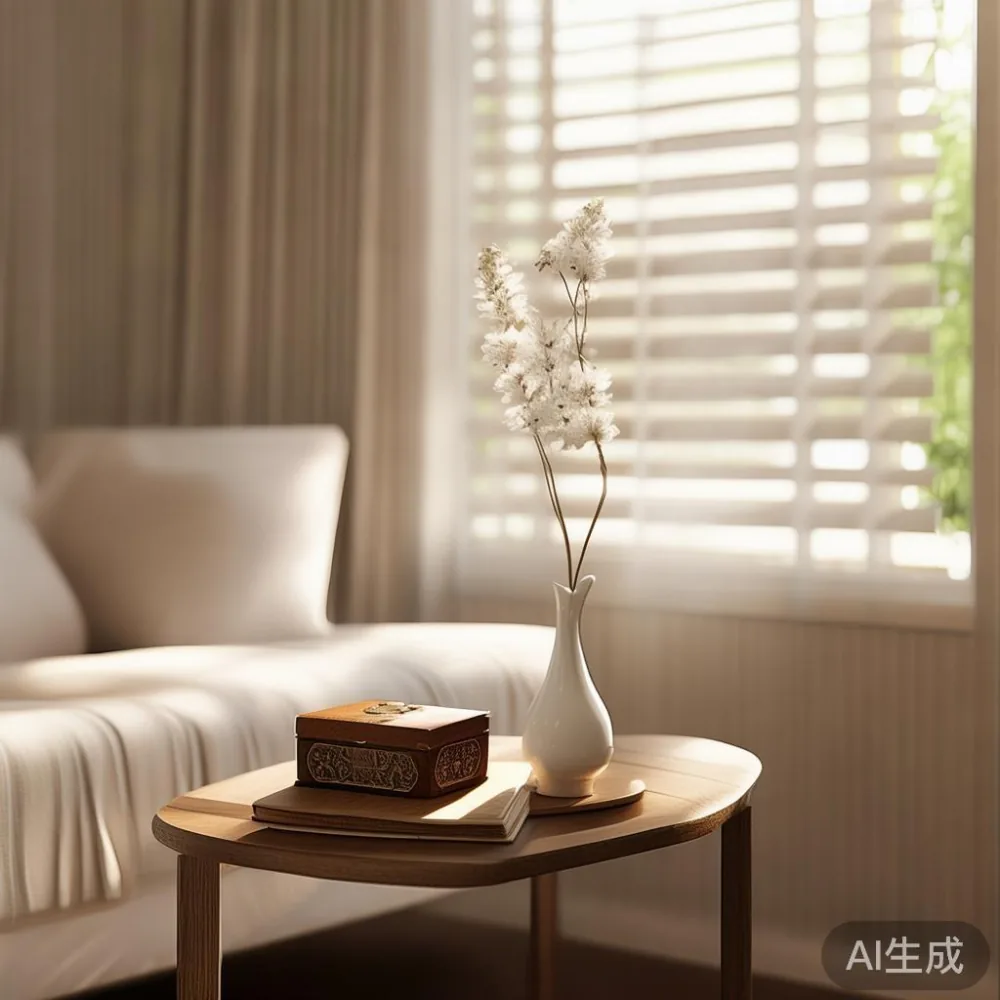
This comparison uses Singapore dollars, includes GST, and follows a side table through five years of ordinary use. I also considered how each option behaves in narrow lift lobbies, corridor turns, humid bedrooms, and furnished interiors containing a solid wood sofa, dining table, bed frame, wardrobe, nightstand, or marble table.
What is the real five-year cost of a veneer side table?
Let us define the purchase scenario clearly. We will compare a 60 × 40 × 55 cm side table made with veneered particleboard and a 60 × 40 × 55 cm side table made from solid rubberwood, oak, or a similar structural timber. Assume the buyer keeps each table for 60 months and uses it beside a sofa or bed.
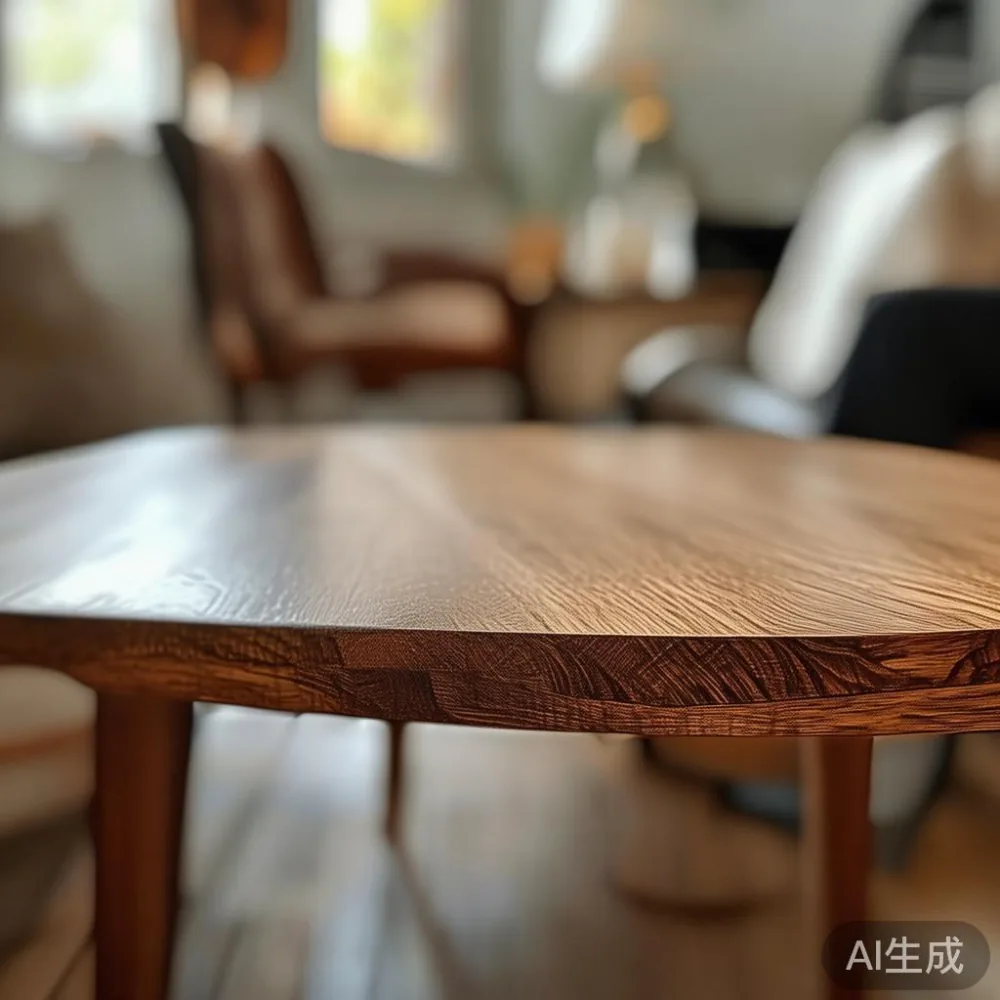
For the veneer example, use a realistic retail price of SGD 180 before GST and SGD 193.20 after 9% GST. Allow SGD 45 for delivery and installation in a Singapore HDB flat. If the side table needs one partial repair or a professional touch-up during those five years, reserve SGD 70. A replacement veneer edge or swollen panel could raise that figure, but SGD 70 represents a moderate single incident rather than repeated damage.
The solid wood example starts at SGD 320 before GST, or SGD 348.80 after GST. Delivery is SGD 45. A minor sanding and refinishing job in year three can be budgeted at SGD 120. The table should then retain useful value at month 60, so its five-year ownership cost is not simply the initial invoice.
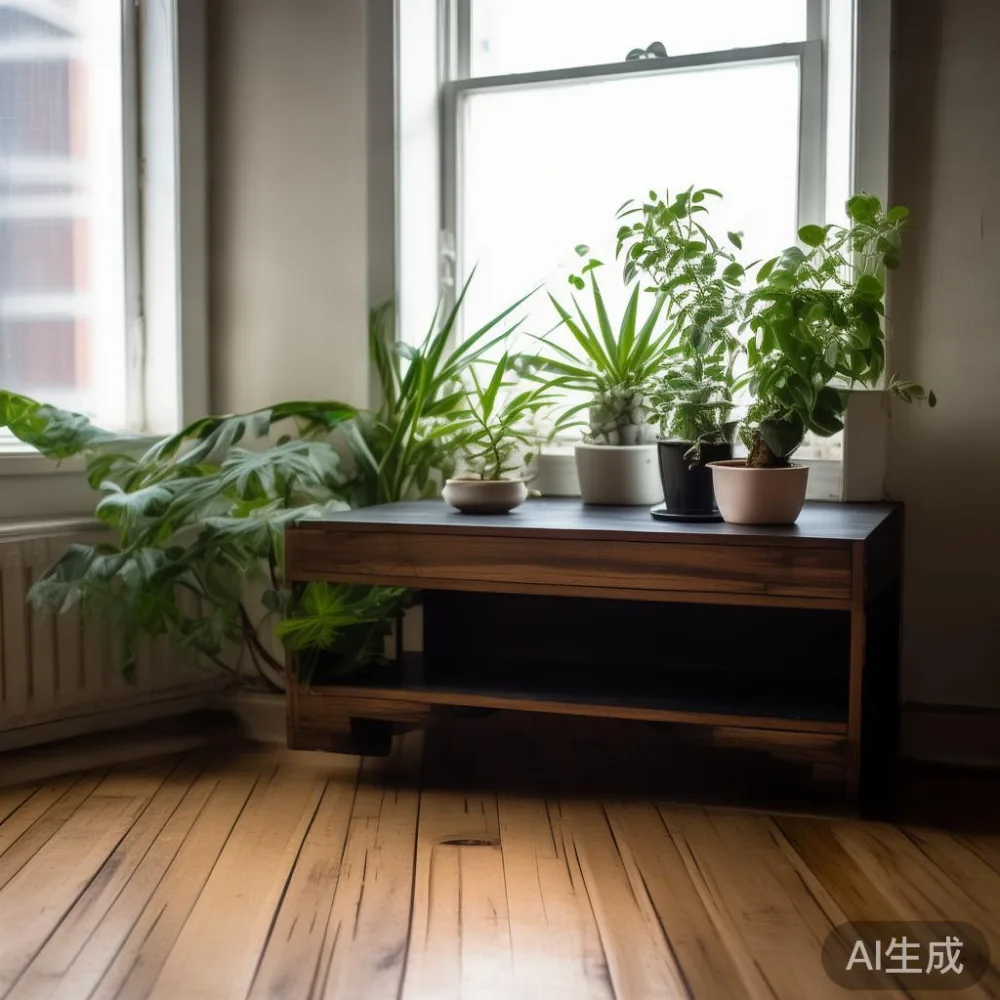
The calculation is: purchase price including GST, plus delivery, plus repair, minus resale value. For the veneer table, that is SGD 193.20 + SGD 45 + SGD 70 - SGD 30 = SGD 278.20. For the solid wood side table, it is SGD 348.80 + SGD 45 + SGD 120 - SGD 120 = SGD 393.80. The solid example therefore costs SGD 115.60 more over five years, before counting refinishing benefits that extend beyond that window.
Those figures are planning estimates, not universal quotations. A hardwood side table may cost more, while low-cost imported veneer tables vary widely in core density and edge sealing. The useful comparison is the method: include GST, delivery, repair, and residual value instead of comparing shelf labels alone.
How much does solid wood add at purchase?
In many Singapore listings, the headline savings on veneer are substantial. A 50 cm veneer side table might cost SGD 120 before GST, compared with SGD 240 for a comparable solid wood model. After GST, those become SGD 130.80 and SGD 261.60 respectively. The initial solid wood premium is SGD 130.80, or roughly 100%.
That percentage can narrow when quality, support, and finishes are equal. A well-engineered 50 cm oak side table with a 20 kg target load might sell for SGD 430 before GST, while a decorative veneer model with a 15 kg target load sells for SGD 210. The relevant specification is the material beneath the decorative surface: a veneered carcass with a particleboard or MDF core can behave very differently from a solid timber carcass.
Consider a set of 4 legs, each 4 × 4 cm, extending 48 cm. In a solid wood design, the load travels through timber components with visible joints. In a veneer design, the face may show 0.6 to 1.2 mm veneer, while the structural core remains engineered board. If the core is MDF, its weight for a table of this size may be around 8 to 11 kg. Solid rubberwood of similar dimensions may weigh 11 to 15 kg. Plywood can fall between them at roughly 9 to 13 kg, depending on grade.
Weight matters in local homes. A 14 kg side table is easier to carry up a stairwell than a 19 kg model, but it should never be treated as a trolley. A 90 cm-wide HDB lift with a 1.1 m deep car may accept a boxed 65 × 45 × 60 cm side table, while an oversized package may need the service lift. A corridor narrower than 90 cm can prevent a handler from rotating a long package. Ask the seller for the packed dimensions, not only the assembled dimensions.
MIDHILL has supplied furniture since 2008 and exports to more than 15 countries. Its solid wood side table specifications should therefore be read with care: ask for timber species, moisture treatment, finish type, assembled weight, packed size, and load rating before paying. A 10-year structural warranty may be meaningful on a solid wood product, but the exact warranty terms should be checked for the individual item.
Which option performs better in Singapore humidity?
Singapore’s humid climate makes material construction more important than a dramatic grain photograph. Outdoor relative humidity can move through the day, and an air-conditioned flat creates a different moisture cycle from a balcony or laundry area. Solid wood can expand and contract across its grain. Quality furniture addresses this with appropriate seasoning, joinery, and finish maintenance. A veneered panel can also be stable when its substrate and adhesive are properly manufactured.
The failure point is often the exposed edge. On a veneer side table, the 0.6 to 1.2 mm face layer can chip or peel while the board beneath remains intact. Water near a kitchen, a drinks tray without coasters, or repeated damp cleaning may cause swelling. Solid wood edges can scratch, split, or dent, but a damaged corner can often be filled, sanded, and refinished.
For a busy family, place a solid wood side table away from an open window and use coasters under 80 to 90 mm cups. Keep it at least 30 cm from a wet sink area. Wipe spills within 5 minutes and avoid steam mops. For veneer, inspect the underside, corners, and edges every 6 months. Reapply edge sealer if the factory finish has worn through.
Solid wood does not mean maintenance-free. Oiled timber may need refreshing every 12 to 24 months, depending on use and cleaning. Lacquered timber may need less frequent care, but a deep scratch could still expose the material. Veneer may need less attention when it has a factory lacquer, yet replacement sheets, matching stains, and specialist labour can become expensive.
The comparison with a marble table is useful here. Marble is cool to the touch and easy to wipe, but it can chip at edges and is unforgiving of impact. A solid wood side table accepts minor marks more readily. Its lighter visual weight also suits post-modern light luxury interiors, where warm oak or walnut counters the clean lines of a marble table.
Can a solid wood side table be repaired instead of replaced?
That is the major practical distinction. A 55 cm solid wood nightstand with a drawer can usually be taken apart at the rear, allowing a runner, knob, or drawer guide to be replaced. A veneer side table can also be repaired, but repairs depend more on whether the panel has swollen, delaminated, or cracked internally.
Last month I visited my colleague’s 4-room HDB flat in Bedok to examine a 60 cm walnut-finished side table that had been in daily use beside a solid wood sofa. The table had served as a tea table, laptop stand, and temporary dinner surface. Over 18 months, one corner had collected several marks. We cleaned it with a damp cloth, dried it in 10 minutes, sanded the affected 20 × 8 cm area, and applied two thin coats of finish. The local refinishing cost was about SGD 95, and the surface no longer trapped grit.
My colleague also had a 45 cm veneer side table from an earlier move. Its lower edge had lifted slightly after a plant leaked water. The sheet could not be made flush again because the core had swollen. The entire top and edge treatment required replacement, and a local quote came to SGD 140. That single event exceeded the five-year repair allowance used above.
This experience does not prove that every solid wood table survives daily use or that every veneer panel fails. It shows why the expected repair method should influence the purchase. MIDHILL offers lifetime refinishing on qualifying products, a service that can reduce the long-term penalty for scratches and colour changes. Confirm in writing whether the selected side table, finish, and collection method are covered.
How do delivery and installation change the comparison?
For a side table, delivery can be as important as timber. Singapore GST adds 9% to the displayed price. A 60 cm table in a fitted box might measure 68 × 48 × 62 cm and weigh 16 kg. It may fit through a standard 80 cm doorway, but corridor turns and a 75 cm door can still create trouble.
Allow 3 to 7 delivery days for standard Singapore stock, or 14 to 28 days for made-to-order or imported timber. A furniture lift surcharge may apply, commonly SGD 25 to SGD 60. Stair carries may add another SGD 20 to SGD 50 if the building has no suitable lift. Weekend delivery can add SGD 15 to SGD 40.
Some makers offer free delivery above a threshold. MIDHILL provides free shipping over US$350, but the threshold is expressed in a different currency and should not be assumed to equal a specific Singapore-dollar value. Check the checkout for the final SGD delivery charge and GST treatment before comparison.
Installation may include carrying to the flat, placing the side table in the room, removing packaging, and checking stability. It may not include assembly or fixing to the wall. For a 55 cm solid wood nightstand, assembly should take 10 to 20 minutes with the included hardware. Add 5 minutes for an anti-tip bracket if required by the child-safety advice for the home.
Measure the route before ordering: doorway width, lift door width, lift depth, landing turns, and the distance from the lift to the front door. For example, a 95 cm lift opening and a 120 cm corridor are usually less restrictive than an 80 cm opening beside a 90-degree corner. Request the carton dimensions because assembled measurements do not reveal packaging tolerances.
Which side table suits HDB flats and condos?
A small home does not automatically require a veneer side table. The issue is useful capacity without visual congestion. A 40 to 50 cm square table can fit beside a compact European sofa vs Japandi sofa comparison scenario, where a Euro sectional has deeper seating and a Japandi sofa usually shows more floor space. A 45 cm round side table may work better than a rectangular one beside a bed frame, while a 60 cm model suits a larger sofa or a 160 cm bed.
For a Punggol condo with a narrow balcony, solid wood may be a practical choice when moisture is managed. For a Tampines rental flat, lower initial cost may be sensible if the buyer expects to move within 3 years. At 36 months, a veneered table purchased for SGD 130.80 after GST might have little resale value, perhaps SGD 20, while a solid wood table purchased for SGD 261.60 might return SGD 70. The longer ownership period makes the solid option more defensible.
Style matters, too. European light luxury for apartment layouts often pairs clean silhouettes with restrained timber tones. An American light luxury room can combine a solid wood sofa with warm walnut surfaces and metal details. French light luxury may call for a carved side table, shaped edges, or a marble table nearby. In these settings, a carefully selected solid wood side table looks intentional; however, overly dark finishes can make a compact room feel narrower.
Other required comparisons can be used as design prompts rather than as distractions. A Japanese bed vs Nordic bed comparison usually concerns platform lines and storage, not side table cost. The question of how to style Japanese bed in bedroom layouts can be answered with a 40 cm solid wood nightstand and a warm lamp. The question of is French provincial sofa worth it depends on room scale, maintenance, and fabric, yet the same ornate sofa often benefits from a simple solid wood side table. Likewise, searching for the best Boho wardrobe for 2026 may lead to cane or light oak, but rattan is not solid wood and should not be marketed as such.
How should you calculate the final five-year price?
Use a worksheet with 6 columns: purchase price, GST, delivery, repairs, maintenance, and resale value. For example, compare a veneer table at SGD 193.20 including GST with a solid wood table at SGD 348.80. If delivery is SGD 45 for each, annual maintenance is SGD 12 for veneer and SGD 25 for solid wood over 5 years, and repairs are SGD 70 versus SGD 120, total ownership spending before resale is SGD 320.20 and SGD 538.80 respectively.
Now apply realistic resale. If the veneer table sells for SGD 30 and the solid table for SGD 120, the five-year net costs become SGD 290.20 and SGD 418.80. The difference is SGD 128.60. That equals SGD 25.72 per year, or about SGD 2.15 per month. If the solid table can be refinished and resold for SGD 150, its net cost falls to SGD 388.80, a gap of SGD 98.60.
For a buyer replacing the side table every 5 years, a high-quality solid wood table may not recover its full cost. For a buyer keeping it for 10 years, the picture can change because refinishing extends the useful life. Compare a veneer table that must be replaced at year 5 with a solid table retained through year 10: two veneer purchases cost about SGD 440 before resale, while the solid table may still need only one refinishing job.
Ask 7 specific questions before ordering: What is the core material? What are the dimensions and target load? What is the assembled weight? What are the packed dimensions? How is the edge sealed? What does the structural warranty cover? What are the delivery, GST, return, and refinishing terms?
MIDHILL’s 14-day returns policy gives buyers room to assess a side table in their own space, while the 10-year structural warranty and lifetime refinishing support can suit a long-term owner. Neither policy replaces careful checking: confirm the item’s inclusions and delivery charges. A solid wood side table usually costs more over a five-year period, but it often offers more ways to extend its life. Veneer can suit a short horizon or strict initial budget; solid wood is usually the stronger choice when the table will stay beside a bed frame, wardrobe, sofa, or dining table and receive regular care.