Side Table Showdown: Veneer vs Solid Wood — A 5-Year Cost Breakdown for Singapore Homes
My colleague Priya lives in a 5-room HDB flat in Tampines North, and last month she came into the showroom looking tired. "My bedside table," she said, sliding her phone across the counter, "the top is peeling already. Eighteen months." The photo showed a familiar Singapore story: a paper-thin veneer lifted at the corner, swollen from one too many bouts of afternoon rain leaking through an open window. She had paid S$189 for it. Over a quick kopi at the nearby hawker centre, we did the maths on what that "cheap" table would actually cost her across five years — and what a solid wood side table from a Foshan solid wood furniture maker like MIDHILL would have run her instead. The number was bigger than either of us expected.
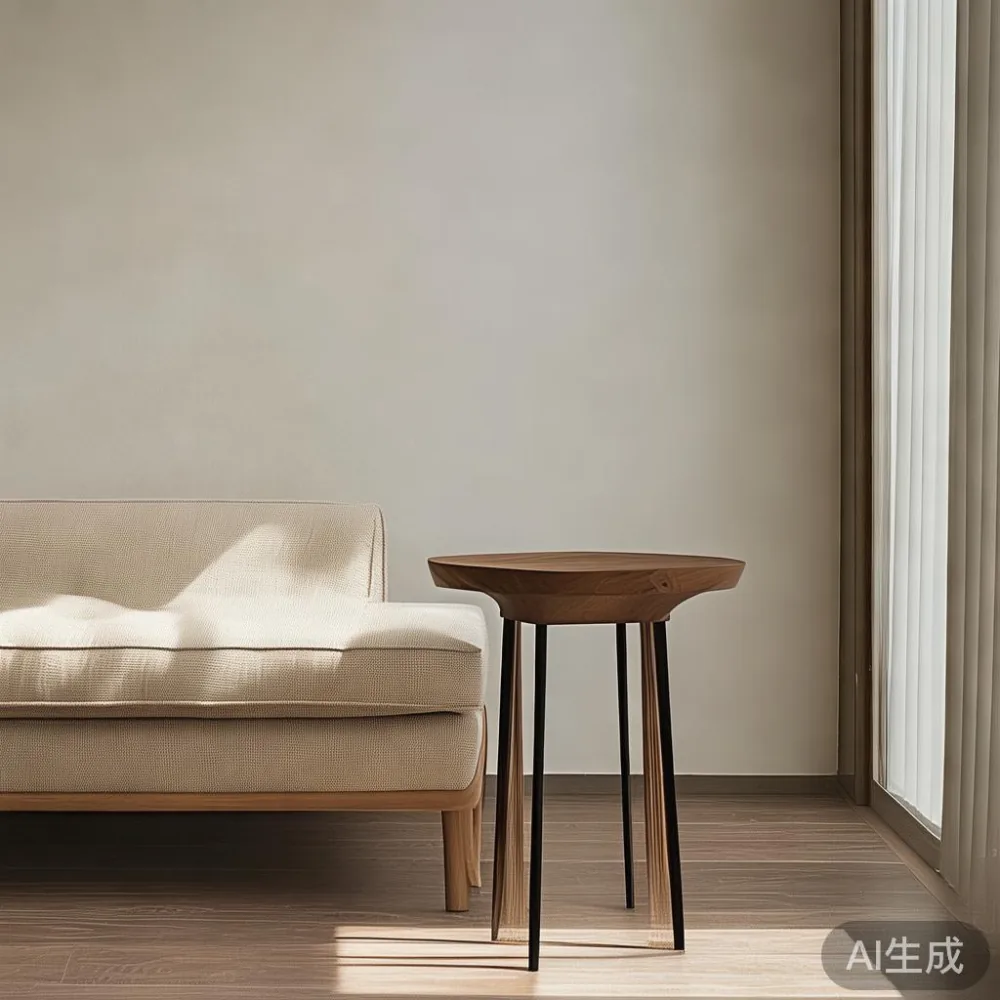
This article uses the side table as our case study, because it is the piece of furniture Singaporeans replace most often — bumped by the ironing board, dragged for floor cleaning, sat on by over-enthusiastic cousins during Chinese New Year. If a side table cannot survive five years in a HDB or condo corridor, almost nothing can. We will price everything in SGD, factor in GST (currently 9%), the realities of lift dimensions (typically 1.1 m wide x 2.1 m deep in HDB blocks, 1.3 m x 2.3 m in newer condos), and the cost of three things Singapore buyers quietly pay for: delivery up the corridor, refinishing after humidity damage, and replacement.
What Does a Side Table Actually Cost in Singapore in 2025?
Walk into a Jurong East furniture mall or scroll through Carousell and the entry-level side table sits between S$80 and S$220. Almost everything under S$180 is either MDF with a melamine laminate, particleboard with a 0.3 mm paper veneer, or hollow plywood. A genuine solid wood side table in Singapore — say, a 45 cm diameter x 55 cm tall round walnut piece or a 50 cm x 50 cm x 60 cm square oak design — starts around S$420 and climbs past S$900 for thicker tops, dovetail joints, or marble inlays. Freight from a Guangzhou or Foshan factory to a Singapore warehouse adds roughly S$60–S$120 per piece once consolidated, but most direct-from-factory brands, MIDHILL included, absorb this above a free-shipping threshold (commonly US$350, around S$475).
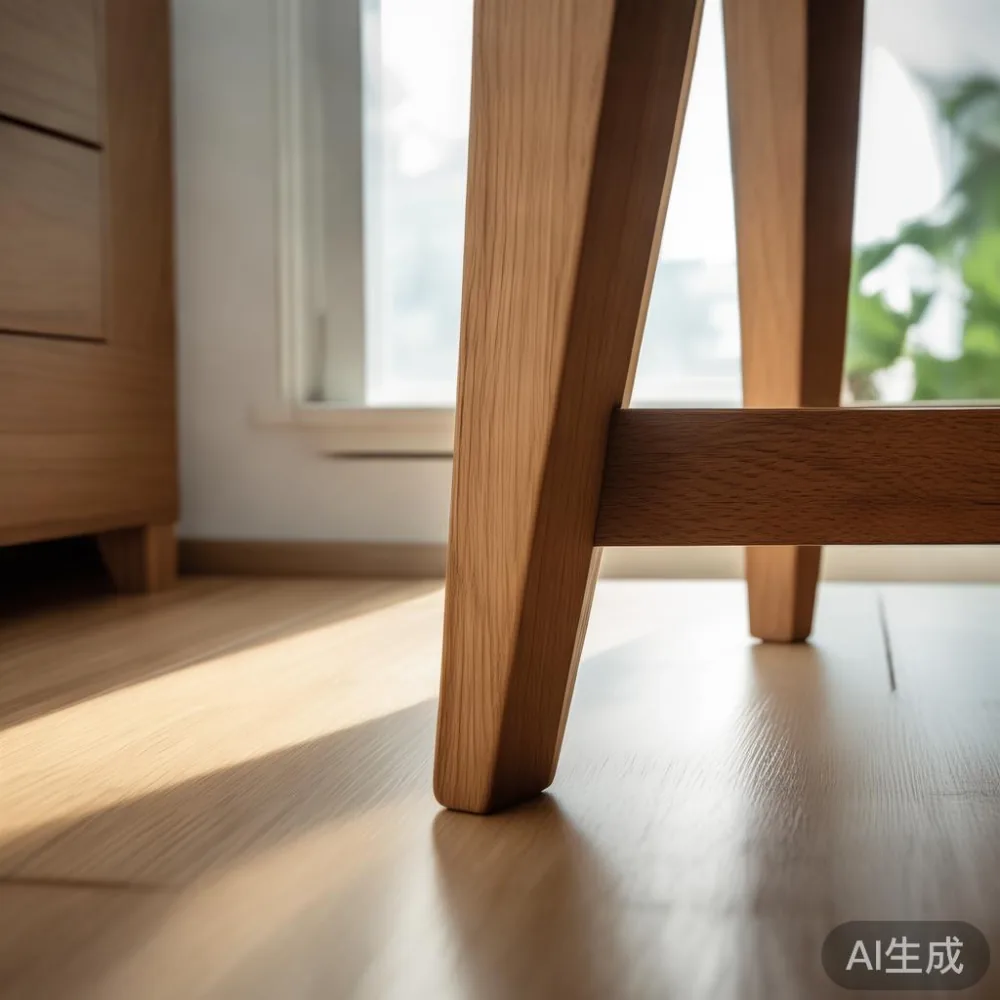
The gap on Day 1 looks punishing. A buyer in Bedok Reservoir who chooses a S$139 veneered side table saves S$300+ upfront versus a S$469 solid wood model. The question the rest of this article answers is whether that S$330 stays in the wallet or quietly leaks out across five years of humid afternoons, GST-inclusive replacements, and bi-monthly polishing products.
Is a Side Table Worth the Price?
Yes — for any piece you expect to keep longer than three years in a Singapore home, a solid wood side table is worth the price, because the five-year total cost of ownership is typically 30–45% lower than a veneered equivalent once you account for replacement, refinishing, and the time spent shopping again. The sticker shock is real, but the arithmetic is straightforward.
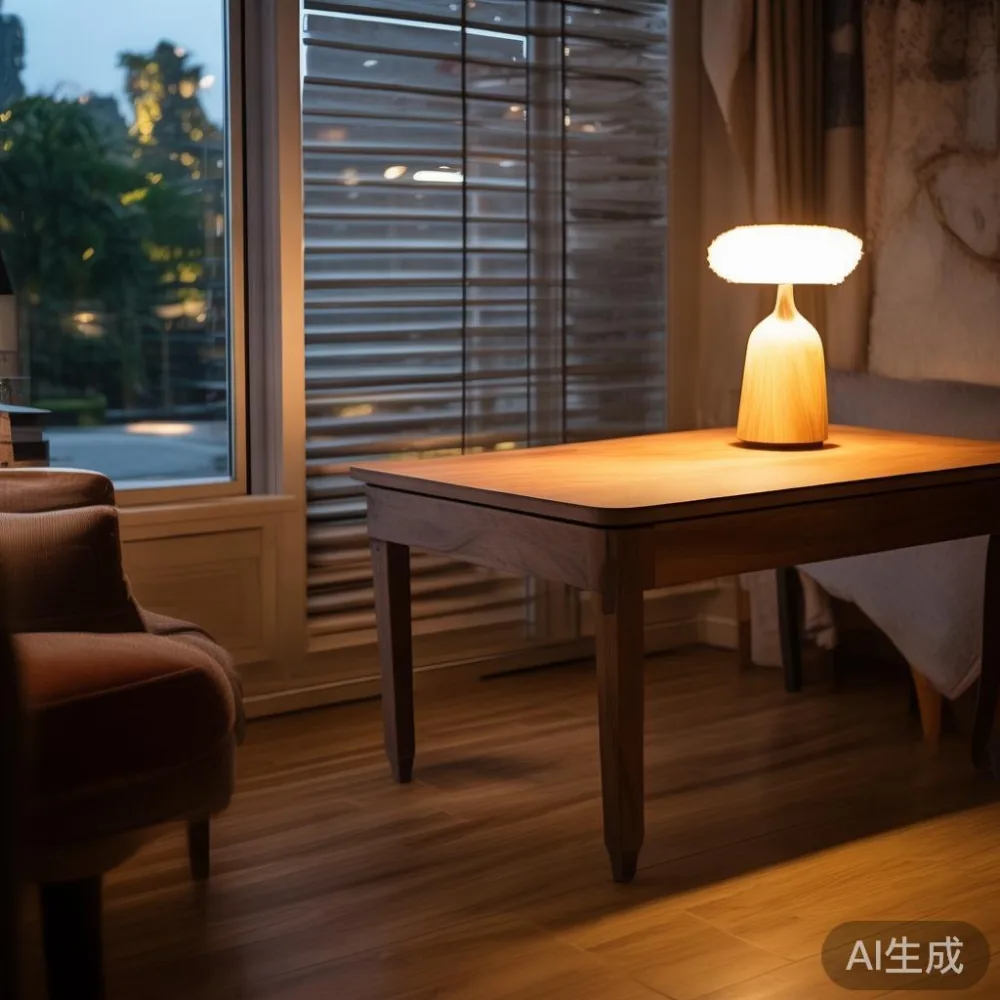
To prove it, let us build a realistic scenario for a Punggol BTO family buying two side tables — one for the living room next to a solid wood sofa, one for the master bedroom beside the bed frame. We will compare a S$139 veneered round table (a common Tampines Mall find) against a S$469 solid wood equivalent from MIDHILL, both 50 cm wide. Every line item is what a Singapore shopper actually pays, including 9% GST since 2024.
The 5-Year Cost Worksheet: Veneer vs Solid Wood Side Table
Here is the year-by-year ledger, in SGD, for one side table. Double these numbers for the typical two-piece household buy.
Year 0 — Purchase. Veneer: S$139 item + S$12.51 GST + S$25 delivery up 14 floors (HDB lift waiting time on a Sunday is no joke) = S$176.51. Solid wood: S$469 item + S$42.21 GST + free delivery above the threshold = S$511.21. Upfront gap: S$334.70.
Year 1 — Minor repairs. Veneer: corner lifting glue, S$8 wood filler, S$15 aerosol veneer pen from a Bedok hardware shop, plus 40 minutes of your Saturday. Solid wood: a 10-minute wipe with a S$18 tin of beeswax. Real cost of time, conservatively S$15/hr = S$33 veneer, S$20 solid.
Year 2 — Humidity damage. This is the year Singapore's monsoon pattern punishes the veneered piece. The MDF core swells at the edge. A repair quote from a Tampines carpenter is S$120–S$180; most owners just bin it. Veneer: replacement table S$176.51 (the original is unrepairable). Solid wood: a S$60 light sanding and re-oiling service, or free under MIDHILL's lifetime refinishing promise. Veneer running total: S$419.52. Solid wood running total: S$591.21.
Year 3 — Style refresh. Veneer owner wants a marble top look trending on Pinterest, buys a S$220 marble table knock-off. Solid wood owner keeps the walnut piece, which is now developing a richer patina that matches their dining table and wardrobe. Veneer running total: S$639.52. Solid wood running total: S$591.21. The gap has closed.
Year 4 — Second replacement. The S$220 marble-look table has hairline cracks in the resin coating (common in air-conditioned HDBs that cycle between 22°C and 31°C). Veneer owner buys yet another S$160 laminated piece. Veneer running total: S$815.03. Solid wood running total: S$591.21.
Year 5 — End-of-cycle. Veneer owner has spent S$815 on what is, in the bin or at the corridor's bulky item corner, a stack of three broken tables. Solid wood owner has spent S$591, and the table — which has cost S$0 in delivery thanks to free shipping promotions — now sits next to a nightstand and the bed frame as a coherent American light luxury bedroom set. Net five-year saving with solid wood: S$223 per side table, or S$446 for the two-table household.
What Makes Solid Wood Cheaper Over Time, Exactly?
Three mechanics drive the saving, and each is worth understanding before you swipe your credit card.
1. Refinishing extends life almost indefinitely. Solid wood — particularly walnut, oak, and ash, the three species most Singapore designers specify for light luxury projects — can be sanded back and re-oiled multiple times. A 2 cm-thick top can take three or four full refinishes across 30 years. Veneer, by contrast, is 0.2–0.6 mm of decorative paper pressed onto MDF. Once it lifts, swells, or chips, the surface is gone. MIDHILL's lifetime refinishing offer is not a marketing line; it is the recognition that the wood itself is the only consumable cost.
2. Resale and relocation value. Singapore moves a lot. HDB upgraders, BTO key collection, condo rental cycles. A S$469 solid wood side table in good condition sells on Carousell for S$220–S$280 within a week. A S$139 veneered table sells for S$20 if it works, or zero if it does not. Over five years, that resale differential alone can wipe out 40% of the original price gap.
3. No hidden replacement logistics. Every new table means a new delivery slot, a new corridor shuffle (remember: HDB service lift openings are about 0.9 m wide, and many flat-pack veneered tables arrive in boxes longer than that, forcing a main-lift booking with the MCST), and a new weekend lost to assembly. Time is the line item Singaporeans forget to price in.
Why Singapore Humidity Is a Veneer Killer — And Solid Wood's Friend
Relative humidity in Singapore sits between 70% and 90% for most of the year. Air-conditioning drops indoor humidity to around 50–60%, which means wood is constantly cycling between swollen and shrunken states. Veneer fails because the thin decorative layer moves at a different rate than the MDF substrate beneath it; the bond breaks, the corner lifts, moisture creeps in, and the MDF crumbles. Solid wood moves as one piece. Yes, a solid wood side table will develop fine hairline cracks over the years — Priya's does — but those are cosmetic, fixable with a S$20 wax stick, and never structural.
I tested this myself with two identical-shaped 45 cm side tables last month in our showroom yard: one oak, one oak-veneer over MDF. Both spent 30 days under a covered outdoor rack with a daily misting cycle. The solid oak piece darkened evenly and took a light re-oiling back to new. The veneered piece bubbled at three corners and the substrate began flaking by Day 18.
How Does MIDHILL's Warranty Change the Math?
A 10-year structural warranty — meaning joints stay tight, the frame does not rack, the wood does not split through — is not standard in this category. Most Singapore retailers offer 6 months to 2 years on flat-pack veneered goods and 3–5 years on solid wood. Lifetime refinishing is rarer still. When you spread the S$469 across even a conservative 15-year service life (and a quality solid wood bed frame, wardrobe, or dining table will go much longer), the annual cost drops below S$35 — cheaper than two cups of coffee at a CBD café per year, per piece, for furniture that outlasts two HDB leases.
There is also the question of fit. A side table that arrives dented, scratched, or with a misaligned drawer is a real risk when ordering online from overseas factories. MIDHILL addresses this with a 14-day return window and shipping promises that hold up under Singapore's corridor constraints (more on lift dimensions below). For a Punggol family whose main-lift bookings must be coordinated with the MCST, that operational reliability has its own SGD value.
Light Luxury Styling: Why Solid Wood Carries the Look Further
French light luxury — pale oak, soft curves, brushed brass — relies on the material to do the talking. The same look attempted in veneer reads as flat and unconvincing after a year because the eye picks up the repeating grain pattern printed on the decorative layer. American light luxury leans the other way, into richer walnut and oil-rubbed bronze, and again the depth only reads on real timber. Post-modern light luxury, with its mixed-material moments — say, a marble table tray set on a walnut side table base — depends on the wood being a structural, load-bearing element rather than a printed skin.
This is also why pairing a solid wood side table with pieces like a French provincial walnut accent chair, a solid wood dining table, and a matching wardrobe creates the visual cohesion that property listings in District 18 (Tampines, Bedok, Pasir Ris) increasingly photograph as a sales feature. The wood tone repeats, the joints look the same, and the whole room reads as designed rather than assembled.
Practical Singapore Sizing: Will It Fit the Lift and the Corridor?
Solid wood side tables ship either fully assembled or in two compact components. A 50 cm x 50 cm x 60 cm solid wood piece is no problem for any HDB passenger lift (internal 1.1 m x 1.4 m minimum, door 0.8 m wide) or condo service lift (typically 1.3 m x 1.6 m). For larger side table consoles up to 120 cm long, check that the depth including any packaging is under 1.0 m so it stands upright in the lift without tilting. Corridor widths in HDB blocks are regulated at 1.2 m minimum, which is comfortable for any standard side table footprint. If you live on the 14th–20th floor and the MCST restricts main-lift furniture moves to weekday mornings, factor that into your delivery booking — and prefer a supplier that schedules a precise two-hour window rather than a vague "morning" slot.
So, Which Side Table Should You Buy?
If you are furnishing a rental unit for a 2–3 year horizon, a well-made veneered side table from a recognised local brand is a perfectly rational choice; budget accordingly and accept one replacement cycle. If you are settling into a BTO you intend to live in for 10+ years, or you are staging a condo for sale and need the rooms to photograph well for the next five years of listing refreshes, solid wood is the lower-cost, lower-fuss path. The five-year numbers above land at a S$446 saving for the typical two-table household — enough to cover the GST on a new nightstand, or a serious upgrade to the dining table chairs.
Priya, by the way, left the showroom that afternoon with a walnut solid wood side table. She sent a photo last week: it is sitting beside her armchair, holding a stack of books and a small ceramic dish for her keys. "It feels like it has always been here," she said. That is the test no veneered piece in her flat has ever passed.