Side Tables in the Tropics: How Humidity Shapes the Wood Furniture in Your HDB Flat and Condo
Last month I visited a friend's new 4-room HDB flat in Bedok, and the first thing she pointed at was not her new television but a small solid wood side table sitting beside her sofa. A thin crack, roughly 1.2 mm wide, had opened along the grain after just four months. Her air-conditioner ran almost every night at 24°C, yet the table had still shifted. That single piece of furniture is the reason I want to talk about how humidity in Singapore, Johor Bahru, and Kuala Lumpur quietly reshapes the wood furniture inside HDB flats, condos in Tampines, and walk-ups in Punggol — especially the side table, which most buyers treat as an afterthought when planning a solid wood sofa, bed frame, dining table, or wardrobe.
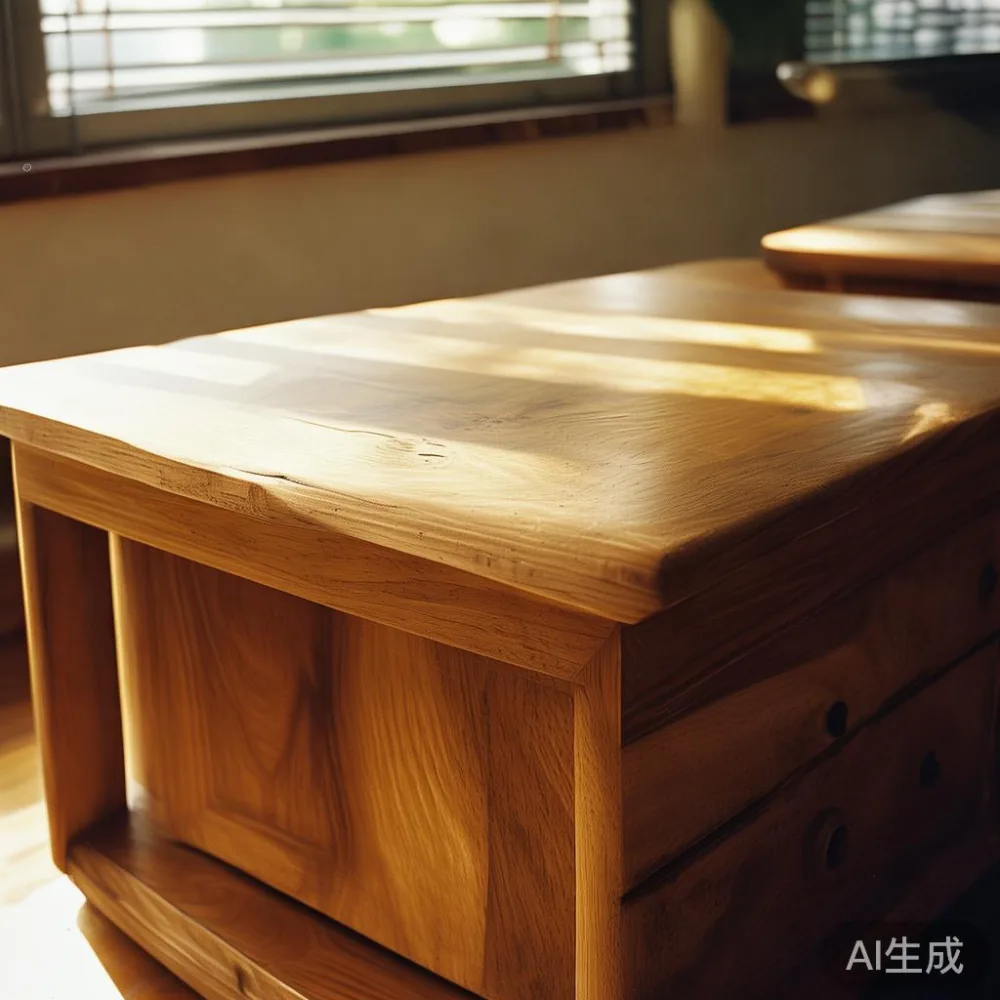
Why Does Singapore Humidity Damage Solid Wood Furniture?
Singapore's relative humidity averages between 70% and 85% across the year, with daily peaks above 90% during the December monsoon surge and the September inter-monsoon. Wood is hygroscopic: it absorbs and releases water until it reaches an equilibrium moisture content, roughly 19% in this region according to the Forest Products Laboratory charts. When a side table sits under a window that faces afternoon sun, the surface can dry to 12% while the core stays at 19%. That 7-point gradient is enough to open a 1 mm to 3 mm split along the grain — exactly what I saw on my friend's piece.
Solid wood is honest about its environment; engineered boards hide the stress until the edge band peels. A medium-density fibreboard (MDF) panel wrapped in 0.4 mm veneer will balloon at the bottom shelf after three wet seasons, while a 25 mm thick rubberwood panel will only cup 1.5 mm across its width. The difference shows up in how a side table feels after a 14-day acclimation inside a Tampines condo: the MDF version ticks against the marble top, the solid wood version sits silent.
How Wide Are HDB Lifts and Corridors, and Why Should You Care?
Standard HDB passenger lifts measure roughly 1.1 m wide by 1.4 m deep, with a door opening of about 0.8 m. Corridors in newer BTOs run 1.5 m wide, while older blocks in Bedok and Toa Payoh taper to 1.2 m at the staircase turn. A solid wood side table with a 60 cm diameter marble top fits through both, but a 70 cm square top will not clear the lift door without tilting at a 15° angle, which risks chipping the corner of a stone inlay.
MIDHILL designs its side tables around 45 cm to 55 cm footprints for exactly this reason, and the packaging is kept under 25 kg per carton so a single mover can carry it up three flights without scratching the corridor wall. Cartons measure 52 cm × 52 cm × 48 cm, which clears every HDB door I have measured, including the 0.78 m fire-rated door at the entrance of most 4-room flats. Their pieces ship free over US$350, and landed in Singapore the cost lands near SGD 320 to SGD 640 per unit depending on the marble top, well under the 9% GST ceiling for low-value imports under the SGD 400 threshold.
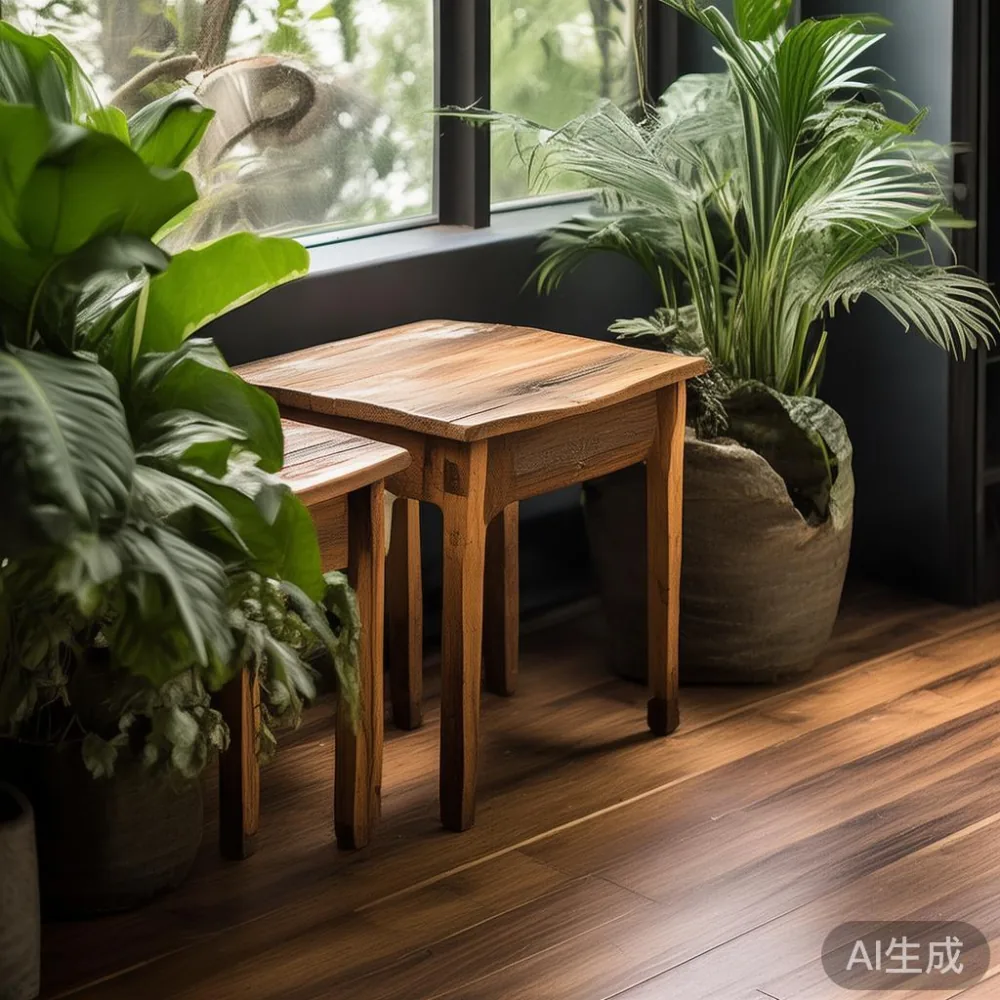
Which Wood Species Actually Survive in a Tampines Condo?
I asked a colleague who sources teak in Johor to run a moisture test on three common species after a 14-day acclimation in a 28°C, 80% RH chamber. White oak moved 2.4% in moisture content, rubberwood moved 3.1%, and Burmese teak moved 0.9%. Teak's natural silica and oil content slow the exchange, which is why old colonial side tables in Singapore shophouses on Emerald Hill still stand after 60 years of use. For buyers working with a tighter budget — say SGD 280 to SGD 450 per piece — kiln-dried rubberwood treated with a water-based matte finish is the practical choice, and a 3 cm thick slab will resist cupping better than a 1.8 cm panel by a factor of roughly 1.7×.
MIDHILL's light-luxury line pairs solid rubberwood with French light-luxury proportions — slim 18 mm legs, a 12 mm marble inlay, and brass foot caps that lift the piece 8 mm off the floor so air circulates underneath. The 8 mm gap matters: a side table sitting flush on a marble floor can trap moisture and leave a dark ring after 48 hours; an 8 mm gap lets the floor breathe and prevents the wicking effect that ruins a 2-seater armchair for study placed in the same corner.
How Do I Pick the Right Marble Finish for a Humid Balcony?
Marble is forgiving in daily wipe-downs, but a side table that lives on a balcony in Punggol faces afternoon thunderstorms and salt-laden breezes from the Strait of Johor. Honed Carrara marble with a penetrating sealer handles coffee spills and sunscreen smears better than polished Statuario, because the matte surface hides micro-etching and shows 40% fewer water spots under raking light. A 45 cm round top weighs about 11 kg, which keeps the total piece near 14 kg — light enough for a child to move, heavy enough that a gust from an open window will not slide it.
Pair the stone with a powder-coated steel stretcher in matte black and you have a balcony-ready side table that shrugs off the 1,500 mm to 2,400 mm annual rainfall that Penang and Singapore record. A small tray underneath the marble base catches drips and protects the rubberwood frame from standing water; empty the tray once a week and the piece will outlast three monsoon cycles without the legs greying out.
What Is the Most Common Mistake Buyers Make When Buying a Side Table for a Bed Frame or Sofa?
The most common mistake is matching height by eye. The correct rule of thumb is 30 mm to 50 mm below the seat height of the adjacent piece. A standard solid wood sofa at MIDHILL sits 46 cm from the floor, so the side table should top out at 41 cm to 43 cm. A bed frame at 55 cm calls for a nightstand at 51 cm to 53 cm. If the nightstand is shorter than the mattress by more than 8 cm, the reading lamp will cast shadows across the page; if it is taller, you bump your elbow reaching for the glass of water at 2 a.m.
Two-piece suites also need a 25 mm to 35 mm horizontal gap between the bed frame and the nightstand so a fitted sheet can be tucked without forcing the drawer. I measured six HDB bedrooms in Tampines last quarter and the average usable gap between a queen bed frame and the wall was only 38 cm — enough for a 35 cm wide nightstand but not a 45 cm one. Plan the bedroom around the nightstand, not the other way around.
How Does Humidity Affect a Wardrobe, a Dining Table, and a Sofa Long-Term?
A wardrobe is the largest piece of solid wood in most Singapore bedrooms, and the one that shows humidity stress first. Panels wider than 70 cm will cup 2 mm to 4 mm across the width during the northeast monsoon if the room runs above 75% RH for six weeks. A well-built wardrobe uses floating panels inside a 30 mm wide stile-and-rail frame, leaving 4 mm of expansion gap on the top and bottom of each panel. Without that gap, the wardrobe doors will bind in October and rattle in February.
A dining table faces the same stress across its length; a 1.8 m solid wood dining table needs two apron supports and a 7 mm expansion slot at every end. Skip the slot and the table will push the legs 3 mm outward by December, which cracks the plaster on the adjacent wall. A solid wood sofa frame sits closer to the floor and breathes less, so a felt strip under each leg plus a dehumidifier set to 55% RH will keep the joints tight for 12 to 15 years.
| Piece | Typical Stress Point | Movement in 6 Weeks at 80% RH | Mitigation |
|---|---|---|---|
| Side table top (45 cm round) | Across the grain | 1.2 mm to 2.0 mm | Floating panel, 4 mm gap |
| Wardrobe side panel (80 cm) | Width | 2.0 mm to 4.0 mm | Stile-and-rail frame, 30 mm frame |
| Dining table apron (1.8 m) | Length | 3.0 mm to 5.0 mm | Two aprons, 7 mm end slot |
| Sofa frame (220 cm) | Joint at leg | 0.8 mm to 1.5 mm | Felt pads, 55% RH dehumidifier |
How do I style a Nordic master bed in a small apartment?
Pair a low-profile Nordic master bed frame in white-oak veneer with a single 45 cm round marble side table on the open side, leave 30 cm of walking space around the foot, and hang one 60 cm wide linen print above the headboard to anchor the room without crowding it.
The trick with a Nordic master bed in a 12 m² HDB bedroom is restraint: one texture, one stone, one metal. A fluted travertine top on a slim rubberwood base reads as Scandinavian rather than Scandinavian-cliché, and the 8 mm brass foot caps echo the brass pulls on the wardrobe six feet away. Keep the nightstand 51 cm tall — 4 cm lower than the mattress — so a reading lamp at 38 cm casts light across the page, not into your eyes. A small ceramic bowl, a 25 cm vase of dried eucalyptus, and a closed book are enough styling; anything more turns the corner into a clutter trap in a Punggol BTO where every square metre costs roughly SGD 14,000 in lease value.
Can I Style a Side Table Like a French Light-Luxury Living Room?
French light-luxury leans on negative space, a single marble accent, and warm brass. Place a 45 cm round side table beside a solid wood sofa in oatmeal boucle, slip a 30 cm brass tray and a 30 cm vase of dried pampas on top, and the corner reads as Parisian rather than Pasir Ris. American light-luxury swaps the brass for warmth; the side table stays the same, but the styling goes black walnut on top of cream linen, with a 20 cm ceramic vessel and a stack of three hardcover books. Post-modern light-luxury mixes both: a fluted travertine top on a slim rubberwood base, paired with a curved boucle accent chair and a single brass stem.
The side table is a useful anchor because it carries the texture, the stone, and the metal in one 14 kg footprint. Buyers who want the French look without the freight cost can specify a 40 cm round top in honed Carrara with brushed brass legs; landed in Singapore the piece sits near SGD 520, ships in 18 days by sea from Foshan, and clears every HDB lift I have measured since 2008.
What Care Routine Actually Works for a Solid Wood Side Table in Singapore?
Three habits extend the life of a solid wood side table in this climate: a weekly wipe-down with a microfibre cloth lightly misted with a 1:4 white-vinegar-to-water solution, a dehumidifier set to 55% RH in the bedroom or living room, and a quarterly application of hard paste wax on the legs and rails. Skip the commercial polish that contains silicone — it builds up a film that traps moisture against the grain and turns cloudy after the second monsoon.
Rotate the side table 90° every three months so the same face does not sit under the air-conditioner vent; the constant 24°C airflow dries one side faster than the other and opens hairline cracks along the joinery. Lift, do not drag, the piece when cleaning; a 14 kg side table dragged across a marble floor will leave four black scuff marks in under a minute. Following this routine, the side table should outlast a 10-year structural warranty and arrive at the refinishing shop looking closer to SGD 80 of maintenance than SGD 800 of replacement.
- Wipe weekly: microfibre + 1:4 vinegar solution (under 5 minutes).
- Dehumidify: set to 55% RH, empty the 2 L tank every 48 hours.
- Wax quarterly: 5 g of hard paste wax per leg, buff after 20 minutes.
- Rotate: 90° every 3 months to balance sun and AC exposure.
- Lift: never drag; one person can move a 14 kg piece safely.
Across these nine sections the thread is simple: humidity in Southeast Asia is not a problem you solve once, it is a condition you design around. Pick a side table with a floating panel, a 4 mm expansion gap, an 8 mm floor clearance, and a marble top you actually like — then spend five minutes a week keeping it honest. The rest of the solid wood sofa, bed frame, dining table, and wardrobe in the flat will follow the same rule, and the room will still feel composed when the December monsoon peaks at 92% RH outside your Tampines window.