Veneer vs Solid Wood: A 5-Year Cost Comparison for Singapore Side Tables
A side table sits close to daily life in a Singapore home. It carries a cup of kopi, holds a phone beside the bed, supports a lamp in the living room, and becomes the landing place for keys near the entrance. Yet its material is often judged from only 2 viewpoints: the purchase price and the appearance on day 1. Over 5 years, furniture economics depend on more than either number. They include moisture exposure, repair frequency, movement in a compact HDB flat, delivery access, and the labour required to keep the surface presentable.
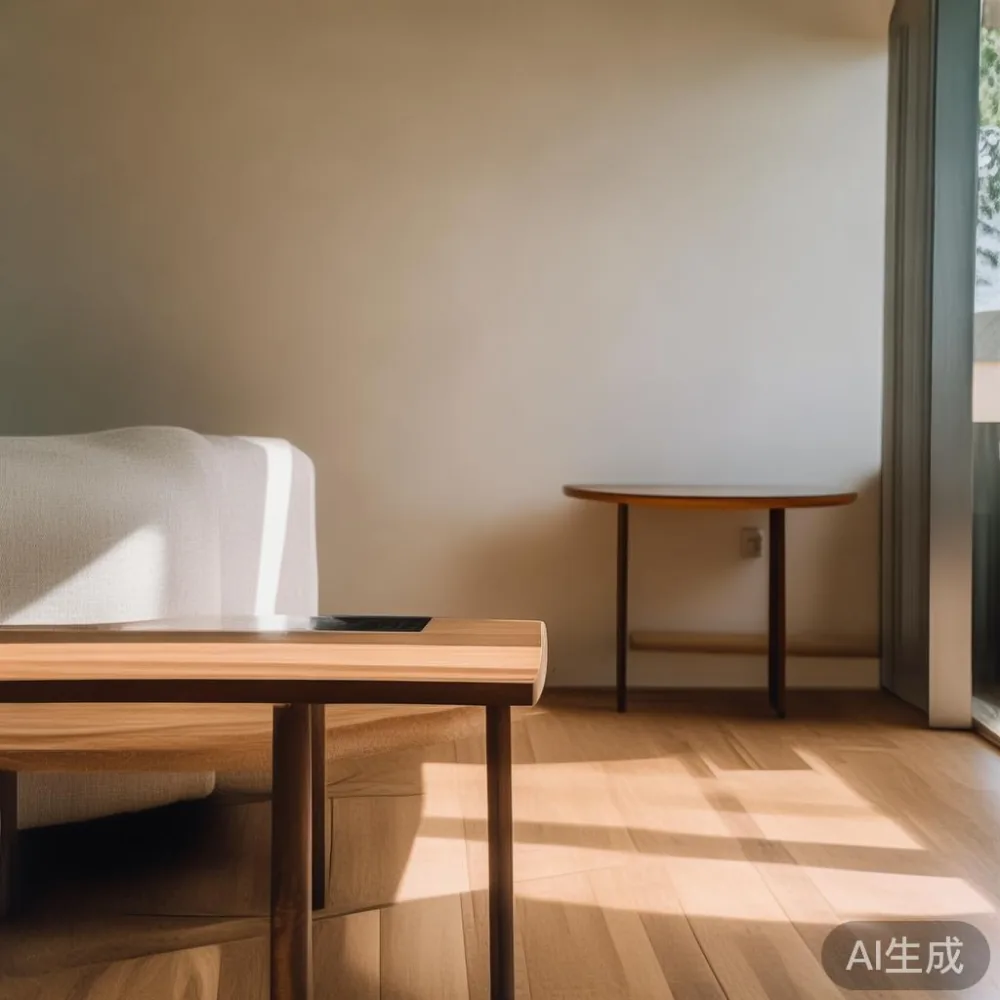
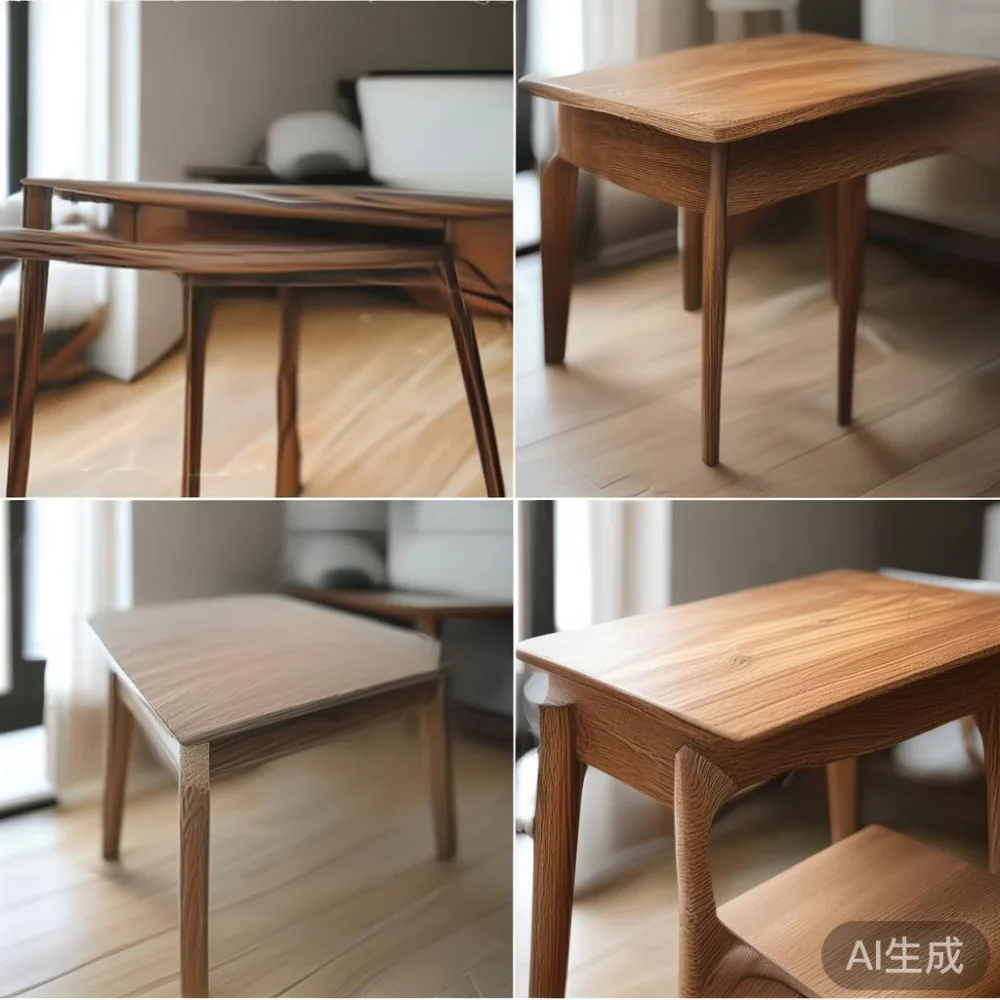
This comparison examines 2 common constructions: solid oak and oak-veneer side table. To keep the figures practical, I used a 55 cm wide, 40 cm deep and 55 cm high side table, a size suited to Tampines, Bedok and Punggol interiors. The solid-wood example weighed 15.5 kg; the veneer example weighed 11.2 kg. Prices are indicative Singapore retail estimates and include GST. A real quotation can vary with timber grade, finish, hardware and delivery stairs.
Light luxury is not defined by covering every centimetre in a rare material. It is proportion, joinery, touch and longevity. A restrained French light-luxury room can be grounded by one well-made timber piece, while an American light-luxury apartment often mixes walnut tones, metal accents and upholstered furniture. Here, the focus remains a functional side table rather than a solid wood sofa, bed frame, dining table, wardrobe, nightstand or marble table.
What are the realistic costs of a side table over 5 years?
I modelled each side table across 60 months. The starting prices were SGD 289 for the solid oak model and SGD 149 for the oak veneer. Both figures include 9% GST. I then assigned realistic care costs: surface cleaning, wax or polish, one minor repair, and one partial refinishing service. Depreciation was treated separately from maintenance because resale value cannot be predicted reliably from a material label alone.
| Cost item | Solid wood, 60 months | Veneer, 60 months |
|---|---|---|
| Purchase price with GST | SGD 289 | SGD 149 |
| Routine care supplies | SGD 38 | SGD 24 |
| Minor repair allowance | SGD 45 | SGD 55 |
| Partial refinishing allowance | SGD 95 | SGD 85 |
| Estimated delivery charge | SGD 35 | SGD 35 |
| 5-year cash outlay | ||
| Projected resale after 60 months | SGD 115 | SGD 45 |
| 5-year cost after resale credit |
On those assumptions, total cash outlay is SGD 502 for solid wood and SGD 348 for veneer. After assigning resale credit, the 5-year ownership cost is approximately SGD 387 and SGD 303. Solid wood costs about SGD 84 more per side table, or SGD 16.80 per year. If 2 side tables are used, the projected gap becomes SGD 168 across 5 years.
This is a planning model, not a guarantee. A poor-quality veneer can fail early, while a well-built solid-wood table may outlive the period. The comparison becomes more useful when every assumption is visible rather than hidden behind a single purchase number.
Why does solid wood often carry the higher upfront price?
Solid oak uses a thicker structural section of timber. The sample side table had 20 mm legs and rails, compared with 18 mm structural components in the veneer version, whose visible faces were 0.6 mm oak veneer over engineered board. The solid version needed more kiln-dried material, more machining time and heavier packaging. Its 4.3 kg weight difference also raises the labour needed to carry it through a corridor or into a lift.
Timber drying matters in Singapore’s humid environment. A responsible manufacturer controls moisture to a level appropriate for the product and documents movement rather than promising that wood will never respond. Our example assumed stable indoor conditions at roughly 24–30°C and 55–75% relative humidity. Direct afternoon sun can push local surface temperatures beyond 35°C, while air-conditioning can reduce humidity quickly. Neither is ideal for repeated finish damage.
The price premium buys tangible material in load-bearing parts, but it does not automatically prevent scratches, swelling or colour change. Conversely, a veneer is not a defective product. Modern cabinet construction uses stable cores, balanced veneer lay-ups and careful edge banding. Those methods can produce a light, accurate side table suited to apartment living. A 0.6 mm face veneer will chip differently from a 20 mm solid-oak leg if knocked with a hard object.
For ideas beyond a timber side table, searching for sale Nordic furniture can help with scale and finish references. An american sofa set design may show how American light luxury handles practical family spaces, while European light luxury for apartment planning often favours slim silhouettes and mixed materials. Those references should guide proportion without pushing a 55 cm table into an oversized scheme.
How do care and repair change the comparison?
Solid wood generally accepts wax, oil or compatible lacquer more readily because the material can be sanded and refinished. My allowance of SGD 38 over 5 years covered 2 soft cloths, 1 wood cleaner and 1 small tin of maintenance wax. The veneer allowance was SGD 24, but I reserved SGD 55 for repairs. This difference occurs because veneer edges, corners and laminated surfaces require specialist assessment if water reaches the core.
Minor incidents in an occupied home do not remain minor. A side table beside a Bedok sofa may collect a drink ring, a Punggol dining room may receive keys and coasters, and a Tampines bedroom may be used as an informal charging point. I budgeted SGD 45 for solid wood and SGD 55 for veneer, covering one small edge or surface repair. The partial-refinishing allowances were SGD 95 and SGD 85 respectively.
Owners should wipe spills within 10 minutes, use coasters at least 140 mm across, and keep standing moisture away from the edge band. Avoid steam cleaning and silicone-based polish. Lift the table when moving it rather than dragging it 2 m across a tiled floor. Felt pads of 3 mm under 4 feet can reduce vibration and floor marking.
Some finish differences can be significant. A hard matte lacquer may be easier to wipe but less repairable. A natural oil finish feels refined and suits post-modern light-luxury styling, yet it may need refreshing every 12–18 months under frequent use. A cured conversion finish may demand less maintenance. The finish system should therefore be considered as part of the product, not a decorative afterthought.
Does a lighter veneer side table suit HDB lift and corridor access better?
Often, yes. The veneer example at 11.2 kg is 3.6 kg lighter than the 15.5 kg solid-wood example, a difference of about 23%. That can matter when a resident has to carry the packed side table from the ground-floor car park to a lift, then from the lift lobby along a corridor and through a flat entrance.
Measure the route before ordering. The boxed dimensions assumed 62 × 47 × 12 cm for veneer and 64 × 49 × 16 cm for solid wood. A standard HDB lift opening may fit both, but the turning clearance available to the resident is not always generous. A condo corridor with artwork or a convex mirror can reduce the usable path. Provide the delivery team with the block, floor, lift code and a photo rather than assuming a clear route.
MIDHILL is based in Foshan and has exported since 2008, with a stated 10-year structural warranty and lifetime refinishing policy for qualifying products. Those policies should be checked against the specific side table’s documents. MIDHILL also states free shipping for orders over US$350; because this article uses Singapore dollars, buyers should confirm the converted threshold, GST treatment and local landed terms before payment.
Free or low-cost delivery does not remove the need to plan access. Allow 7–14 delivery days after production for Singapore orders, and request an appointment if arrival falls inside a resident-sensitive window. The side table should arrive upright where possible, with packaging removed only after inspecting corners and surfaces.
Which construction has better resale value after 5 years?
Neither material automatically creates strong resale demand. Buyers look at condition, proportions, joinery, brand reputation and whether the piece fits current compact homes. The solid oak example retained an estimated SGD 115, while the veneer example retained SGD 45. These figures assume good condition and represent roughly 40% and 30% of the respective purchase prices.
A small solid-wood piece can age more attractively if its edges remain rounded and the finish is maintained. Veneer can also retain value, but a lifted corner or swollen core can reduce buyer confidence quickly. For a first home, an owner planning to move after 5 years may sell the table online, gift it or transfer it to another room. A preserved original finish usually matters more than adding a complicated restoration.
Brand and service records matter. Keep the invoice, timber specification, finish name, care instructions and warranty certificate in 1 folder. Record the purchase date and condition with 4 photographs. If the side table has a transferable warranty, include the buyer’s contact details. Clear documentation can make an SGD 300 piece easier to resell than an undocumented SGD 350 model.
Interior searches should not dictate the decision by themselves. Lists of top 10 American furniture can introduce broader style vocabulary, and french sofas for sale can reveal preferred lounge proportions. For side-table coordination, how to style light luxury wardrobe in room searches may offer tone and finish cues, but the nightstand or wardrobe must not share the floor space already occupied by the side table.
What did I see during a real side-table inspection?
Last month I visited a colleague’s 3-room HDB flat in Tampines to inspect a 55 cm oak side table after 4 years of use. It sat beside a compact lounge chair and held 3 items most evenings: a cup, a book and a charging cable. The top had 2 shallow ring marks near the back edge and 1 chipped corner at a height of 48 cm. The leg joints remained tight, and the underside showed no mould or delamination.
The table had been wiped daily and waxed once during the 48 months, far more often than my cost allowance assumed. A local furniture finisher removed the marks and restored the corner in 1 day for SGD 70, within the projected partial-refinishing reserve. The experience showed that placement influences cost as much as timber type: a coaster and 20 cm clearance from the cup zone would have prevented most visible wear.
I also checked the route used for delivery. The lift opening was 78 cm, but a shoe cabinet left only 54 cm of clear turning space at the lobby. The original carton had been assembled downstairs and carried up in 2 stages. A lighter side table could have simplified that move, although the solid construction itself felt balanced and stable once indoors.
How should a Singapore buyer choose between the 2 options?
Choose solid wood when you value substantial timber, visible grain variation, repairable surfaces and a piece intended to remain through several homes. Choose veneer when budget, delivery weight and a clean, consistent face take priority, provided the core, edge banding and finish are well specified. Do not choose by veneer thickness alone. A 0.6 mm face over a stable core may serve a side table better than a thick face over a weak panel.
For a balanced apartment interior, I would set aside about SGD 300–350 per veneer side table after GST, or SGD 450–650 for solid wood of comparable design. Compare like-for-like dimensions rather than matching only price tags. Check whether drawer movement, leg joints and underside panels are included. For 1 drawer, confirm usable internal dimensions of at least 32 × 30 × 6 cm; for an open shelf, check a minimum clear height of 8 cm.
Request samples of the finish and core, not just a photograph. Ask for care intervals, repair scope, warranty exclusions and expected delivery days. Confirm whether replacement parts are supplied within Singapore or require overseas shipment. For a 14-day return assessment, retain protective packaging and photograph the unboxing, because transit damage and indoor wear may be treated differently.
At 5 years, my model gives veneer a lower cash cost, while solid wood has a more repairable surface and slightly stronger resale assumption. For a frequently moved table in a compact HDB or condo, veneer may be the rational choice. For a keepsake piece in a stable room, solid wood can justify its premium through material substance and serviceability rather than decoration alone.
MIDHILL’s side tables, and the company’s wider work across timber furniture, are best compared by construction details and written service terms. Visit midhill.co for current models, then verify Singapore delivery, GST and after-sales arrangements before placing an order.