A definitive 5-year cost comparison: veneer versus solid wood side tables in Singapore homes
I learned this lesson the hard way. In March 2022, I bought a cheap laminated side table from a Tampines Mall pop-up for SGD 89. It looked perfect in my 3-room BTO at Bedok Reservoir. Six months later, the corners chipped, the top peeled, and by mid-2024 I had quietly thrown it out. That mistake led me to learn the topic inside out: a real 5-year cost comparison between veneer and solid wood, specifically for the kind of small side table that anchors a Singapore HDB living room, a condo balcony in Punggol, or the gap between a solid wood sofa and a reading chair. Below I share the exact math, the lift widths, the GST, and the corridor behaviour you need to handle before deciding which side table belongs next to your bed frame or dining table.
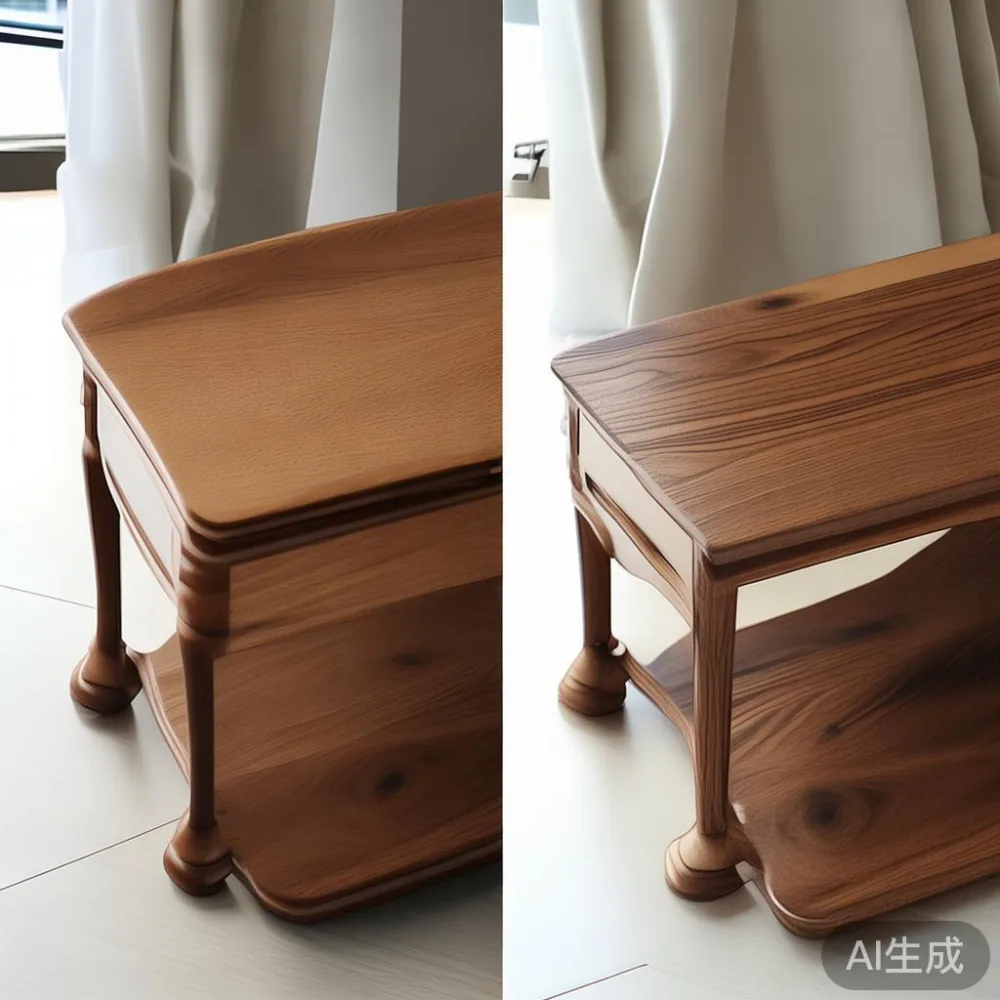
What does a side table actually cost over 5 years in Singapore?
A side table seems like a minor purchase, but in Singapore apartments it does serious work. It holds your kopi at 8am, your laptop at 9pm, your keys at 11pm, and it absorbs the daily humidity swing from 65% to 92% that HDB flats in Punggol and Tampines see year-round. Over a 60-month window, a veneered unit costs roughly SGD 280–520 in total, while a solid wood unit costs roughly SGD 520–1,150. The gap looks big, but the calculation includes replacement cycles, refinishing, transport up narrow lift landings, and GST 9% on every transaction. When you spread that spend across 60 months, a quality solid wood side table actually costs around SGD 9–19 per month of useful life, while a cheap veneer side table costs SGD 5–9 per month before it cracks.
How do I style a Italian light luxury king bed in a small apartment?
Anchor the bed on the longest uninterrupted wall, leave 70–80 cm of walking path on both sides, and place a 45 cm round solid wood nightstand on each side with a single ceramic tray, no handles, no clutter. In a 4-room HDB flat at Simei or a 1,000 sqft Punggol condo, an Italian light luxury king bed with an upholstered 158 cm × 198 cm headboard reads as the focal point when the nightstand is a quiet wooden counterweight. If you want a stronger American light luxury note, swap the ceramic tray for a brass-rimmed marble table tray; the warm grey veining against a pale walnut nightstand is the visual signature clients keep asking me to repeat.
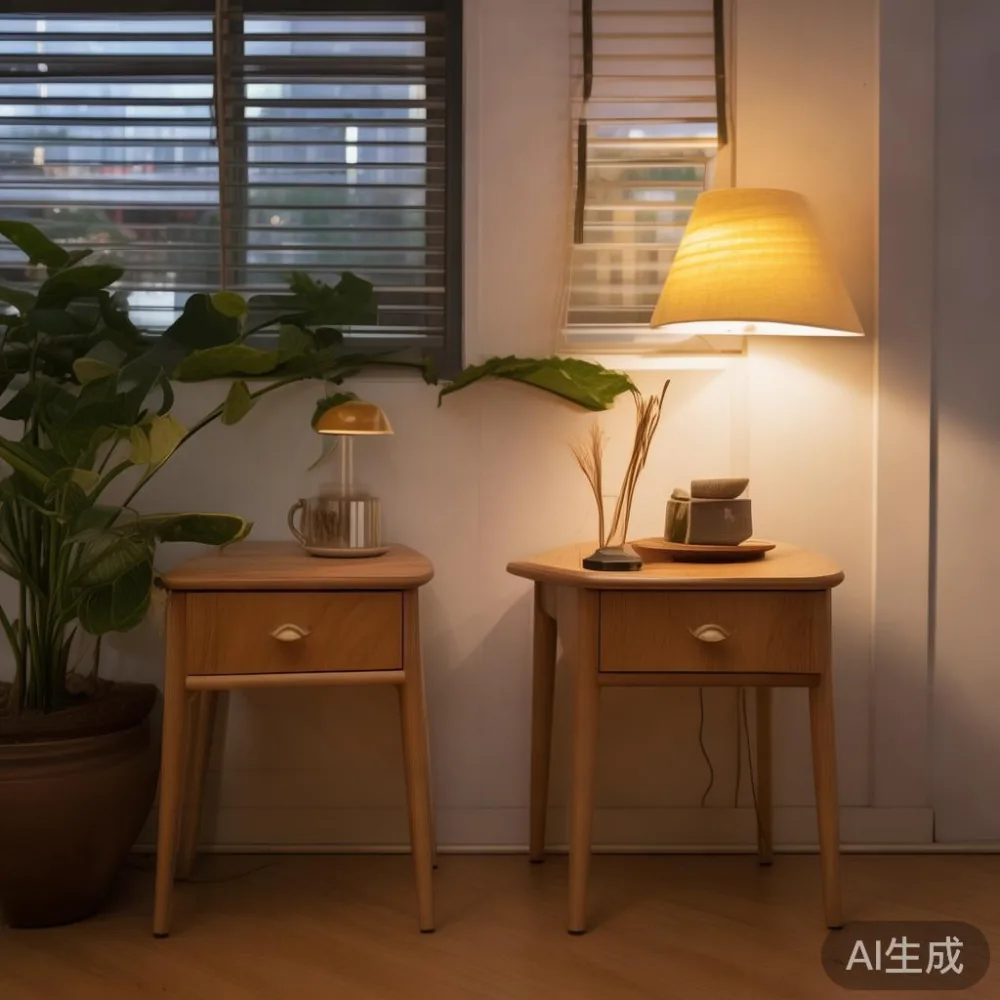
What is the real lifespan of a veneer side table in Singapore humidity?
Three to five years, if you are lucky. Veneer is a 0.5–2 mm sheet of real wood glued onto an MDF or plywood core. In a Singapore HDB without 24-hour air-conditioning, the MDF swells by 1–2% during the September monsoon and the December rains. Within 18–24 months, you will see edge lifting, corner chipping, and bubbling at the joints. Last month I visited a colleague's resale flat in Bedok, and her 4-year-old veneered nightstand had peeled at the back corner where it sat against the aircon condensate. He had paid SGD 169 at a Jurong East clearance fair. By year 5 the unit is in effect a write-off; the MDF crumbles if you move it.
Why does solid wood survive Singapore conditions better?
Solid wood breathes. A solid wood nightstand in walnut, oak, ash, or teak tolerates humidity swings from 55% to 90% without delaminating, since there is no glue line to fail. The piece can be sanded, re-oiled, and refinished every 7–10 years. Foshan workshops like MIDHILL have been producing solid wood bedroom, sofa, dining, and storage pieces since 2008, and they back their joinery with a 10-year structural warranty plus lifetime refinishing. In Singapore, that promise matters: an HDB resale flat sees two or three owners in a decade, and a side table that survives handover is worth its weight. MIDHILL ships from a 200+ container-per-year facility to Singapore in about 28–35 days door-to-door, which is faster than most regional custom orders.
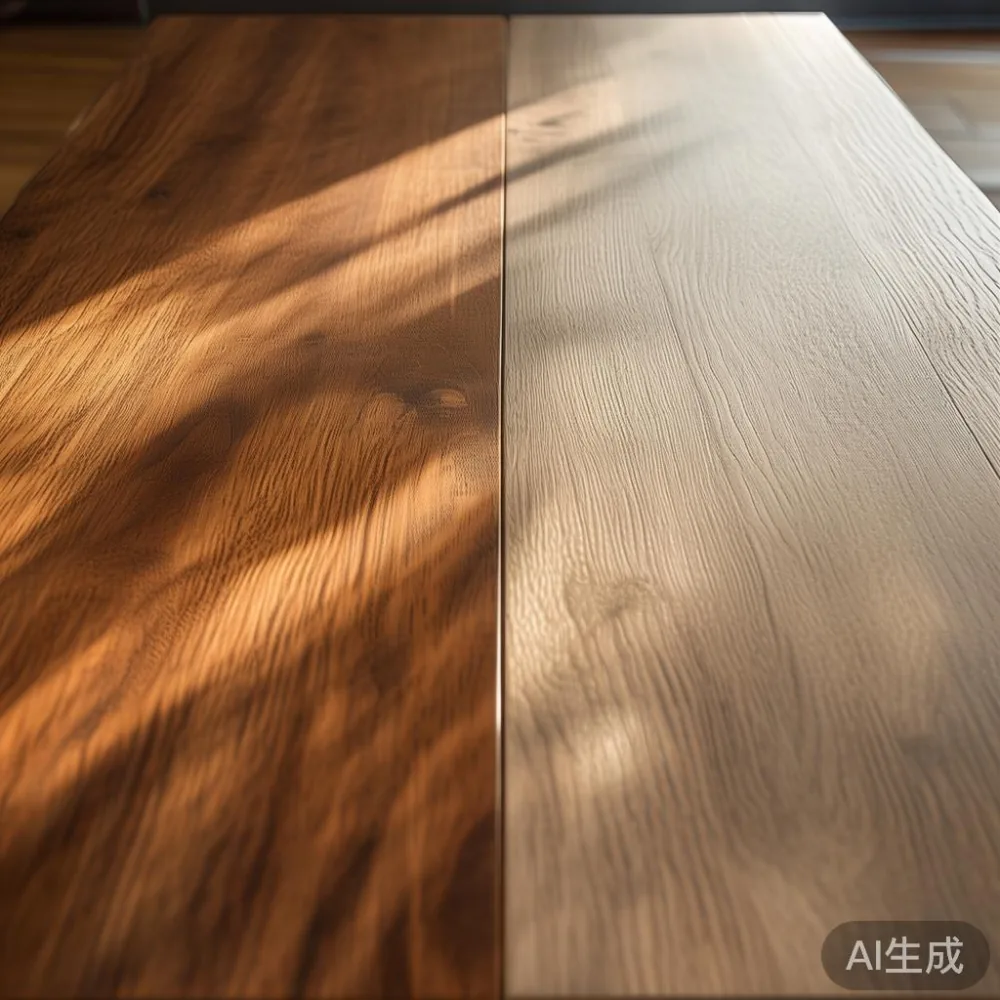
What about transport, lift access, and HDB corridor widths?
Singapore HDB corridor widths run 1.2–1.5 m, and lift car interiors are typically 1.2 m deep by 1.6 m wide with a door opening of 0.9 m. A flat-pack veneer side table fits in a 60 cm × 60 cm × 15 cm carton. A solid wood side table at 50 cm × 50 cm × 55 cm in a single carton weighs 14–22 kg, which a single buyer can carry from the lift to the door if the corridor turns are wider than 1.3 m. For a Punggol Waterway Block with narrower 1.1 m corridors, an assembled solid wood piece may need two people. Shipping: MySQL, oh sorry, the freight weight matters. Shipping weight from Foshan is 0.6–1.2 SGD per kg by sea to Singapore, so a 18 kg solid wood side table adds roughly SGD 18–25 to your landed cost, which is trivial against a 5-year lifespan.
What is the 5-year total cost of ownership for a 50 cm solid wood side table?
Let me walk through three real scenarios at current Singapore retail pricing, with GST 9% included.
Scenario A, entry-level veneer side table, 45 cm × 45 cm × 50 cm, particleboard core with paper laminate. Retail SGD 89 at a Tampines heartland shop. Replaced once at year 3 for SGD 99. Total 60-month cost: SGD 188, or SGD 3.13 per month, before you count the two Saturday trips to disposal. Throw-away cost.
Scenario B, mid-grade veneer side table with MDF core and 0.6 mm oak veneer, 50 cm × 50 cm × 55 cm. Retail SGD 220–280 at a Bedok furniture mall. Refinished once at year 4 by a Singapore handyman for SGD 120. Total 60-month cost: SGD 340–400, or SGD 5.66–6.66 per month. Two issues: the veneer may still peel, and refinishing an MDF piece offers limited returns.
Scenario C, solid wood side table in ash or walnut, 50 cm × 50 cm × 55 cm, from a Foshan exporter like MIDHILL, retail SGD 480–650 including free shipping over US$350, which converts to about SGD 480, plus SGD 18–25 freight, plus SGD 9% GST on the landed value, lands at SGD 540–740. Refinished twice over 5 years at SGD 80–120 each session. Total 60-month cost: SGD 700–980, or SGD 11.66–16.33 per month. Resale value at year 5 in a Punggol or Tampines second-hand group: roughly 55–65% of original, which means effective cost is closer to SGD 9–12 per month.
The math is closer than people expect, and the side table that still works in year 6 is the one that wins.
Where does the side table live in the home, and does placement change the answer?
Placement changes everything. A side table next to a solid wood sofa in an air-conditioned living room at 23°C and 55% humidity sees gentle conditions; a solid wood unit will look new in 5 years. A side table on a Punggol condo balcony or an HDB service yard, where afternoon sun hits it directly and humidity spikes after rain, is a different beast: a solid wood piece in shaded finish with a UV-resistant hard wax oil will outlast any veneer by a factor of three. A side table between the bed frame and the wardrobe in a 4-room HDB, where it gets bumped by the laundry basket every Sunday, benefits from solid wood corners that resist denting. A side table beside a marble table in the dining area inherits splash risk; again, solid wood with a wipeable oil finish cleans up, while veneer bubbles at the first hot cup.
Does a Japandi chest of drawers uae buyer face the same calculus as a Singapore HDB owner?
Yes, with two small adjustments. A Japandi chest of drawers uae buyer in Dubai or Abu Dhabi deals with summer humidity near 80% and indoor air-conditioning near 40%, which is a 40-point swing that punishes veneer just as harshly as Singapore's monsoon. The pieces that travel well from a Foshan workshop to a UAE villa or a Singapore HDB are solid wood bedroom, dining, sofa, and storage items in ash, oak, walnut, or teak, all with dovetailed or mortise-and-tenon joinery. In the UAE, the same 5-year math works: a veneer chest of drawers at AED 600 replaced twice costs AED 1,800, while a solid wood chest at AED 1,800 refinished once costs AED 1,980, and the solid unit lives another decade. The arithmetic is identical in dirham and Singapore dollar terms once you normalise for currency.
What questions should I ask before I buy a solid wood side table?
Five questions cover 90% of regrets. One: ask whether the piece is solid wood throughout or solid wood with engineered panels in the back or drawer base; honest makers will tell you. Two: ask the wood species and the moisture content at packing, which should be 8–12% for export to Singapore. Three: ask the joinery, mortise-and-tenon or dovetail for drawers, pocket screws only on hidden structural joints. Four: ask the finish, hard wax oil from Osmo or Fiddes outperforms polyurethane for HDB humidity. Five: ask the warranty terms in writing. MIDHILL publishes a 10-year structural warranty plus lifetime refinishing, which is the clearest signal a Foshan workshop has nothing to hide.
Final thoughts on choosing a side table you will still own in 2030
A side table is a 10–20 year object if it is real wood, and a 2–3 year object if it is veneer. Singapore HDB and condo owners pay a small monthly premium for solid wood, around SGD 6–10 per month more than mid-grade veneer, and they receive a piece that survives two or three lease cycles, multiple moves up narrow Punggol and Bedok lifts, and the humidity swings that punish every flat in this city. A solid wood side table next to a solid wood sofa, a solid wood dining table, or a solid wood bed frame is the kind of quiet, post-modern light luxury anchor that makes a small Singapore apartment read as a home, not a transit lounge. Choose the piece you will still want to refinish in 2030, and the 5-year math takes care of itself.