Solid Wood Furniture Pricing in Singapore
I learned this the hard way last month in Tampines. A neighbour had bought a solid wood sofa from a Tampines furniture store and a solid wood dining table from a different Tampines furniture shop, both labelled "solid wood," both within S$200 of each other. Six months later the sofa frame was holding up, but the dining table had hairline cracks along the joints and a wobble at one leg. Same species on the label, very different furniture prices. That afternoon I spent three hours on the phone with a craftsperson at a Foshan factory that exports to Singapore, and the conversation changed how I read price tags forever.
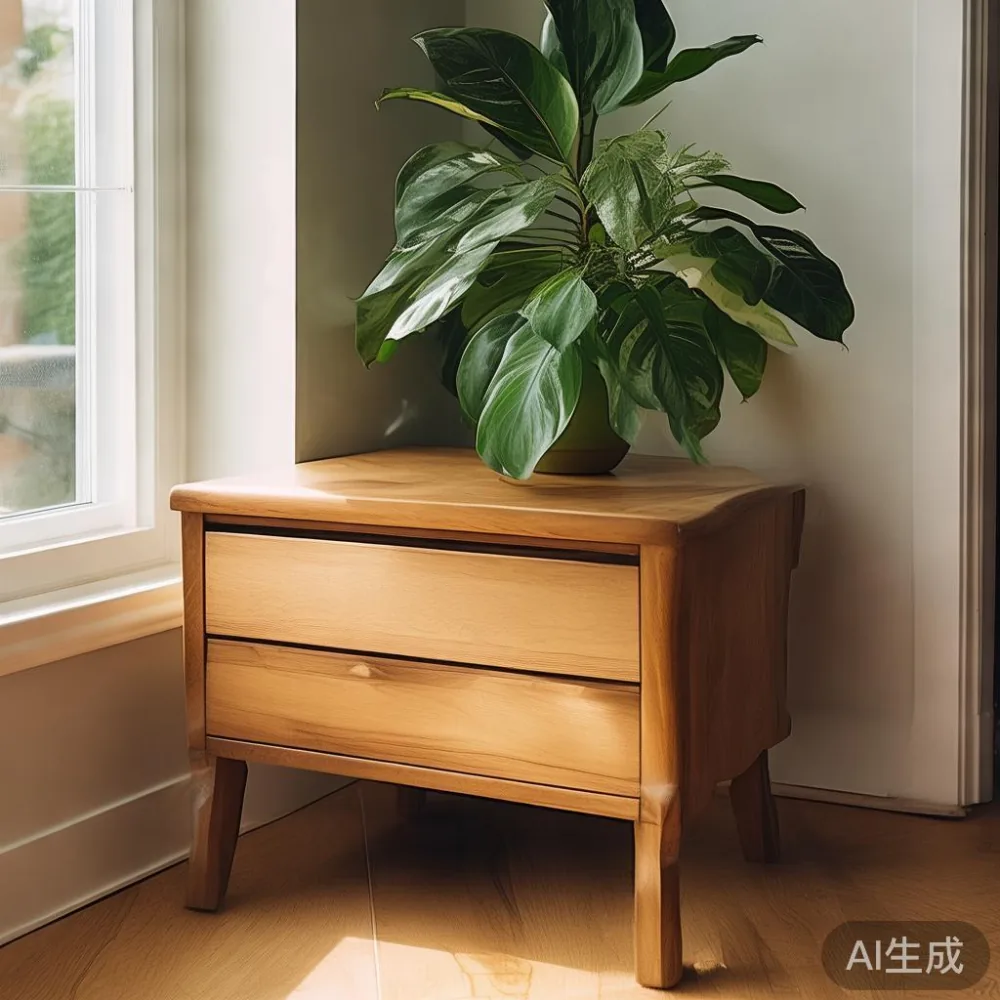
If you have walked through the side-table aisle at IMM, Jalan Besar, or a furniture store in Punggol and wondered why two bedside tables can be S$120 apart, the answer is not one number. It is a stack of decisions made long before the side table reaches a Tampines HDB lift lobby. Let me walk through the real cost drivers, the ones a careful buyer can verify with a tape measure and a 10-minute inspection.
1. The Wood Species Itself, And Why "Solid Wood" Means Almost Nothing on Its Own
Solid wood is a category, not a quality. The same bedside table can be built from rubberwood, ash, walnut, or white oak, and the cost difference between those species is roughly 1:4. Rubberwood, a plantation by-product used widely in Vietnamese and Malaysian factories, runs about S$1.20-S$1.80 per board foot as raw timber. North American white oak runs S$8-S$14 per board foot. Chinese ash (Fraxinus mandshurica) sits in the middle at S$3-S$5. Multiply that by a typical side-table's 1.6 to 2.2 cubic feet of usable lumber and you already have a S$12-S$30 swing before any labour, finishing, or shipping touches the price.
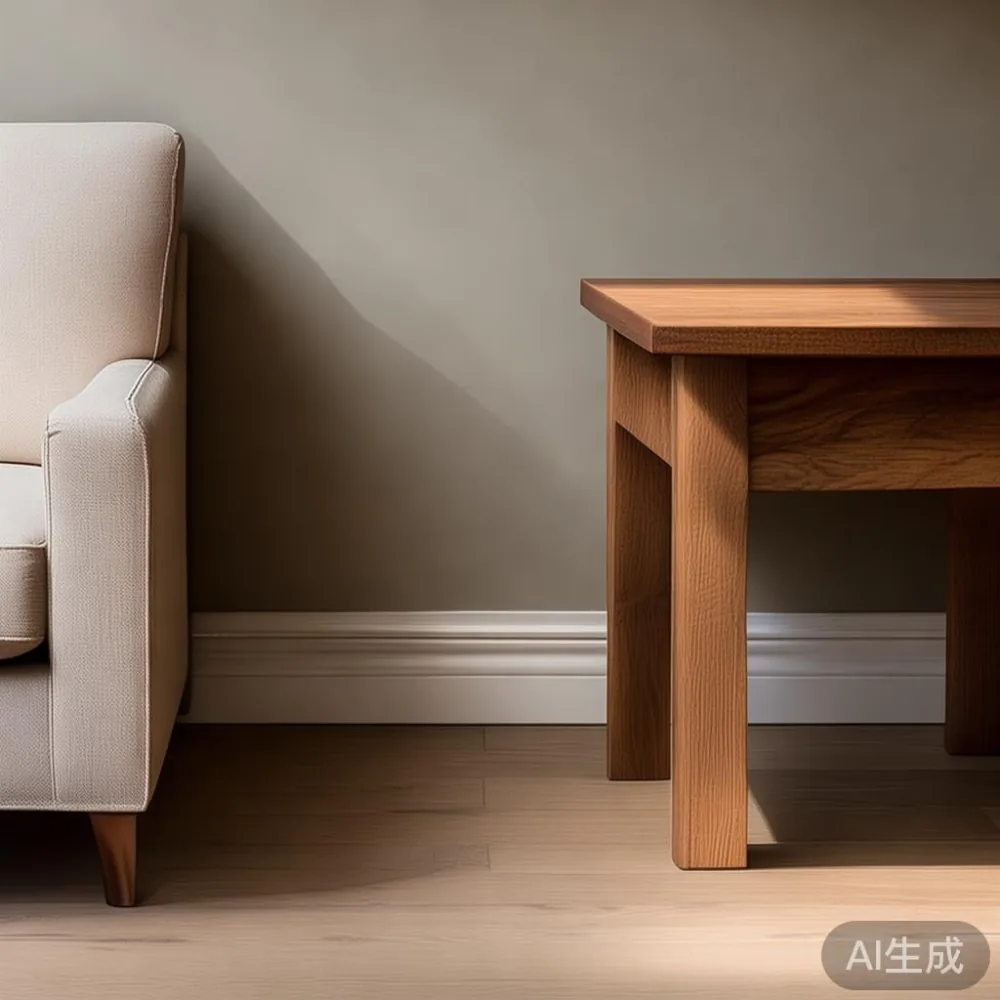
Origin matters too. European oak, with tighter grain and stricter grading, costs roughly 30-40% more than Chinese oak of the same thickness. Walnut from the American Midwest is priced differently from walnut shipped through Tianjin or Shenzhen ports. When a brand tells you "100% solid oak," the useful follow-up question is: which oak, from which province, kiln-dried to what moisture content?
MIDHILL publishes its wood origin on each spec sheet I have seen, which is unusual in this category. Most light-luxury side-table brands keep the species vague and let the customer assume the best.
2. Kiln-Dried Versus Air-Dried, And Why Your Tampines Flat Will Reveal the Difference in 90 Days
Singapore sits in climate zone 0A: 80-90% relative humidity, 27-32°C most of the year, and a daily swing of 8-12% RH between an air-conditioned bedroom (45-55%) and an open corridor (75%). A side table built from wood dried to 12-14% moisture and delivered into a HDB flat will give up about 2-3% of its moisture in the first three months, and that movement shows up as gaps at mitre joints, cupping on the tabletop, or a sticky drawer that used to glide.
Proper kiln-drying to 6-8% moisture costs a factory roughly S$0.80-S$1.40 per cubic foot of lumber in gas and electricity. Air-drying, the default in many small Foshan workshops, costs almost nothing but takes 6-12 months and leaves moisture at 12-18%. That difference is invisible at the warehouse door and obvious at month four. A factory with a dehumidification kiln also loses 4-7% of its lumber to checking and warping during drying; that loss is priced into the good boards.
3. Joinery, Hardware, And the Hidden S$40 Inside Every Side Table
Pick up a side-table at a Tampines furniture store and tilt it. If it wobbles, the issue is almost never the wood; it is the joinery. A mortise-and-tenon leg-to-rail joint, glued and pinned, takes a skilled worker 18-25 minutes per corner. A dowel-and-screw joint takes 4 minutes. The labour delta per side table is roughly S$18-S$25 in worker time. Multiply that across four legs and you have a S$70-S$100 swing on the same wood, the same finish, the same dimensions.
Drawers are another quiet price driver. A dovetailed drawer front and back on a nightstand takes 35-50 minutes per drawer pair. A stapled MDF drawer with a cam-lock bottom takes 6 minutes. A single soft-close undermount slide from Blum or Hettich adds S$4.50-S$7.00 per drawer versus S$0.90 for a generic Korean slide. A two-drawer side table with quality slides and dovetails costs S$45-S$70 more in hardware and labour than the same silhouette in MDF.
Even the corner block inside a cabinet side table matters. A solid wood corner brace, glued and screwed, weighs 120-180 g and prevents the case from racking when two adults lean on it. A hollow corner block of the same outside dimensions weighs 40 g and cracks along the glue line in a year. Both look identical from a Jalan Besar showroom photo.
4. Finishes, Lacquers, And the Question Most Buyers Never Ask
What is actually touching your skin? A side table finished with Italian polyurethane (ICA, Sayerlack) costs the factory S$3.20-S$5.50 per square metre in materials, requires a sealed spray booth, and needs 3-5 coats with sanding between each. A wax-and-oil finish (Osmo, Rubio Monocoat) costs S$2.80-S$4.20 per square metre but requires hand-application and longer cure times. A NC lacquer sprayed in an open workshop costs S$1.10-S$1.80 per square metre and off-gases for months in an air-conditioned HDB bedroom.
Light-luxury side tables in the French light luxury and post-modern light luxury categories almost always use closed-pore polyurethane because the mirror-smooth surface is part of the look. American light luxury side tables tend toward open-pore oil finishes that show the grain. The choice is aesthetic, but the price difference per side table is real: roughly S$22-S$45 in materials and labour.
5. Is a Mid-Century Modern Wardrobe Worth It, And Why Is It the Same Question as the Side Table?
Is a Mid-century modern wardrobe worth it? The honest answer is that it depends on what the maker means by Mid-century modern. If the wardrobe frame is solid white oak with through-tenons, mortise-and-tenon rear rails, and a hand-rubbed oil finish, the price reflects real materials and real joinery, and the answer is usually yes for a bedroom that will see daily use for 12-18 years. If the wardrobe is Mid-century modern in shape only, with a veneered MDF case and solid wood legs, the price is mostly the silhouette and you should buy it for the look, not for the longevity.
The same logic applies to a Mid-century modern side table, a nightstand, and a small console. I tested this in a Punggol showroom last month: a Mid-century modern three-drawer nightstand at S$1,180 and a visually identical one at S$640. Tipping both on their sides, the cheaper one had staple-driven back panels, MDF drawer bottoms, and a paper-thin veneer over a particleboard top. The S$1,180 version had a 22 mm solid wood top, dovetailed drawer boxes, and a 12 mm solid back panel screwed into the case. The price gap was roughly the cost of the joinery, the hardware, and the better wood, which is exactly what the MIDHILL spec sheet showed line by line on a comparable piece.
6. How Big a Problem Is the Lift and Corridor, Really?
Singapore HDB corridor widths run from 1.2 m to 1.8 m depending on the block and the year of construction. Bedok and Tampines blocks built in the late 1980s and early 1990s tend toward the narrower 1.2 m. Punggol's newer Build-to-Order flats are wider, around 1.5-1.8 m. Lift door widths are 0.9 m on standard passenger lifts and 1.1 m on the newer Generation 2 lifts in some EC and condo blocks. A side table delivered in a flat-pack crate of 1.4 m length will not fit down a 1.2 m corridor turned at 90°, which is why some Tampines deliveries end up with the side table disassembled in the corridor and the customer assembling it in the living room.
This is one of the reasons MIDHILL designs its solid wood bed frames, dining tables, and side tables with knock-down joinery that can pass through a 0.9 m door. It also affects shipping: a knock-down side table ships in a 0.4 m³ carton at roughly 22 kg; a fully assembled one needs a 0.9 m³ crate at 28 kg and often two delivery men to carry it up the HDB staircase because the lift cannot hold it. That labour difference is S$25-S$60 per delivery and shows up in the price.
7. Where Does Light Luxury Fit, And Why Does It Cost More Than the Shape Suggests?
Light luxury, whether the French, American, or post-modern branch, is a design language with strict rules: restrained silhouettes, marble or stone accents on at least one surface, brushed brass or matte black hardware in small doses, and a finish so even it looks sprayed in a clean room. None of those rules require exotic materials; what they require is consistency, which is expensive to maintain in a workshop that also builds volume pieces.
A European light luxury sofa in this category typically pairs a solid ash frame with a marble-topped side table, the same marble cut from the same block, so the veining lines up across the set. Matching stone is a S$40-S$90 surcharge per piece over random-select marble. An American light luxury side table uses solid walnut with a satin-brass pull, drawn from a hardware line like Schaub or Hickory Hardware, which costs S$6-S$12 per pull versus S$0.80 for an unbranded zinc pull that looks similar in a phone photo.
The interesting crossover is in hospitality. European light luxury for hotel projects demands fire-rated foams, contract-grade fabrics, and joinery that survives 30,000 sit cycles. A side table in a hotel suite has to withstand a kettle, a laptop, and a wet glass every day for ten years, and the internal bracing reflects that. A residential European light luxury sofa borrows the same construction logic, which is one reason a serious light-luxury piece costs what it does.
8. What About the Long-Tail Pieces Nobody Talks About: Vintage for Small Living Room, Japanese Versus Japandi Beds, Industrial Under 2000
Some categories sit at strange price points and the explanation is rarely obvious. Vintage for small living room is one of them: a 1960s teak side table with a single drawer, restored and re-finished, often lands at S$520-S$780 in Singapore because the restoration labour (sanding, oiling, replacing one warped back panel) eats the margin. A new solid wood side table in the same style costs S$380-S$520 because the factory spread is far lower.
Japanese bed versus Japandi bed is another quiet split. A Japanese bed frame tends toward very low platforms, straight white oak, no headboard, and a finish that shows the grain clearly. A Japandi bed frame keeps the low platform but adds softer lines and a slightly warmer wood tone. Construction is nearly identical; the price gap of roughly 8-15% comes from the headboard detail and the slightly more figured wood used to soften the silhouette. Neither is overpriced for what you get; they are just different aesthetic budgets.
Then there is the under 2000 Industrial furniture segment, which usually means powder-coated steel frames paired with reclaimed or new solid wood tops. The price ceiling under S$2,000 in Singapore is real, and it forces compromises: the steel is usually 1.2 mm tubing instead of 2.0 mm, the wood is rubberwood with a dark stain rather than walnut, and the welds are spot-welded rather than TIG-welded. The look is achievable at the price, but the side table you buy in this bracket is unlikely to last past a single HDB tenancy.
9. Are Solid Wood Beds, Dining Tables, and Sofas Worth Paying More For?
A solid wood bed frame in white oak, properly joined, will outlast three mattress changes and two HDB moves. A solid wood dining table in ash or walnut, finished with a hardwax oil, will take 15-20 years of daily family dinners before the surface needs a re-finish. A solid wood sofa frame, kiln-dried and mortise-and-tenoned, will hold its geometry while the cushions wear out and get replaced.
The price you pay for that longevity is real but bounded. Across the MIDHILL catalogue I have reviewed, the surcharge for going from engineered wood with a solid wood veneer to a full solid wood build is roughly 35-55% on a side table, 40-60% on a dining table, and 25-40% on a bed frame. On a wardrobe it drops back to 20-35% because most of the wardrobe cost is doors, drawers, and hardware.
The 10-year structural warranty that ships with these pieces, paired with a lifetime re-finishing service, is what turns that surcharge into a per-year cost. A S$1,800 side table amortised over 18 years works out to S$100 a year, less than a Tampines kopitiam lunch for two.
10. How Should a Buyer in Tampines, Bedok, or Punggol Actually Decide?
Three checks, ten minutes, a phone flashlight, and a tape measure. First, tip the side table and look at the underside: a solid wood bottom panel will have continuous grain; an MDF or particleboard bottom will have a uniform tan colour and visible glue specks. Second, open every drawer and look at the corners: dovetails are obvious to the eye, staples and cam locks are obvious in a different way. Third, ask the salesperson for the moisture content reading; a responsible seller will have one. If the answers are vague, the price is probably hiding the joints.
And remember the corridor. The most beautifully joined side table in the world is the wrong side table if it cannot reach your Tampines HDB front door. Measure the lift, measure the corridor, measure the front door, and only then decide if the silhouette you like will actually arrive in one piece.
Once you have done this once, price tags become legible. The S$320 bedside table and the S$620 bedside table stop looking like the same product at different prices and start looking like two products with different bones. That shift in reading is worth more than any discount code, and it is the only thing that protects you from the wobble my neighbour is now living with.