How Humidity in Southeast Asia Affects Wood Furniture — And What Every Tampines, Bedok, and Punggol Homeowner Should Know
Last month I visited a four-room HDB flat in Tampines with a 680 sq ft floor plan. The owner had bought a beautiful solid wood side table online 14 months earlier, paying S$489 for what looked like a great deal. When I walked in, one of the back legs had a 3 mm cup, the drawer face had a hairline split along the grain, and the top had a faint cloudy haze. The relative humidity in the living room was reading 82% on a digital hygrometer placed on the side table itself. That single visit, plus another two similar calls in Bedok Reservoir and Punggol Waterway Terrace, convinced me to write this guide — because humidity in Southeast Asia is not a footnote for wood furniture. It is the headline.
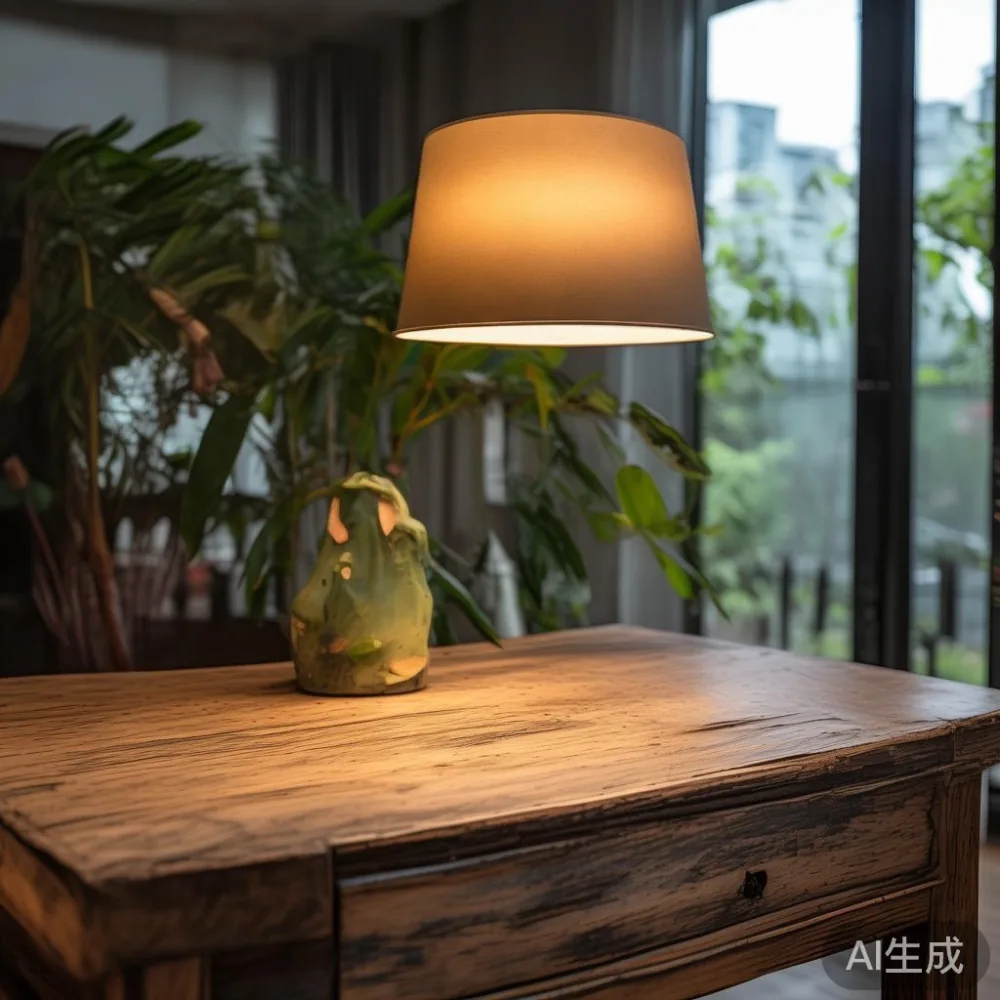
This is a long-form piece for anyone in Singapore furnishing a BTO, resale flat, or condo with a real wood side table, a solid wood bed frame, a dining table, or a wardrobe. I will use specific numbers, real HDB constraints (lift sizes, corridor widths, door widths), SGD pricing, and a few anecdotes from the field. I will also show why French light luxury and post-modern light luxury pieces — which lean heavily on visible grain and matte finishes — behave differently in our climate than mass-produced laminate imitations.
Why Singapore's Climate Is So Hard on a Solid Wood Side Table
Singapore sits almost on the equator. Average daytime relative humidity (RH) sits between 73% and 86% for 11 months of the year, with night-time peaks around 88–92% during the Northeast Monsoon (November to January). The daily swing is small — usually only 8–12 percentage points between afternoon and midnight. Wood likes a daily swing. Wood dislikes a permanently damp room.
When RH stays above 75% for weeks, solid wood absorbs moisture from the air and swells across the grain. A side table top measuring 60 cm × 60 cm in a dry Foshan workshop (around 55% RH) can measure 60.4 cm × 60.3 cm after six weeks in a Tampines flat. That extra 3–4 mm has to go somewhere. In a well-built piece it is absorbed by a floating panel or by a 1.5–2 mm expansion gap hidden under the top rail. In a poorly built piece it cracks the drawer face, splits the apron, or pushes the back legs out of square.
Numbers worth memorising: target 45–60% RH indoors, with a daily swing under 10 percentage points. A 12-pack of rechargeable dehumidifier cartridges costs around S$24 at a Tampines FairPrice. A digital hygrometer costs about S$18 from any Challenger outlet. Those two items, placed next to your side table, will tell you more about your furniture's future than any sales brochure.
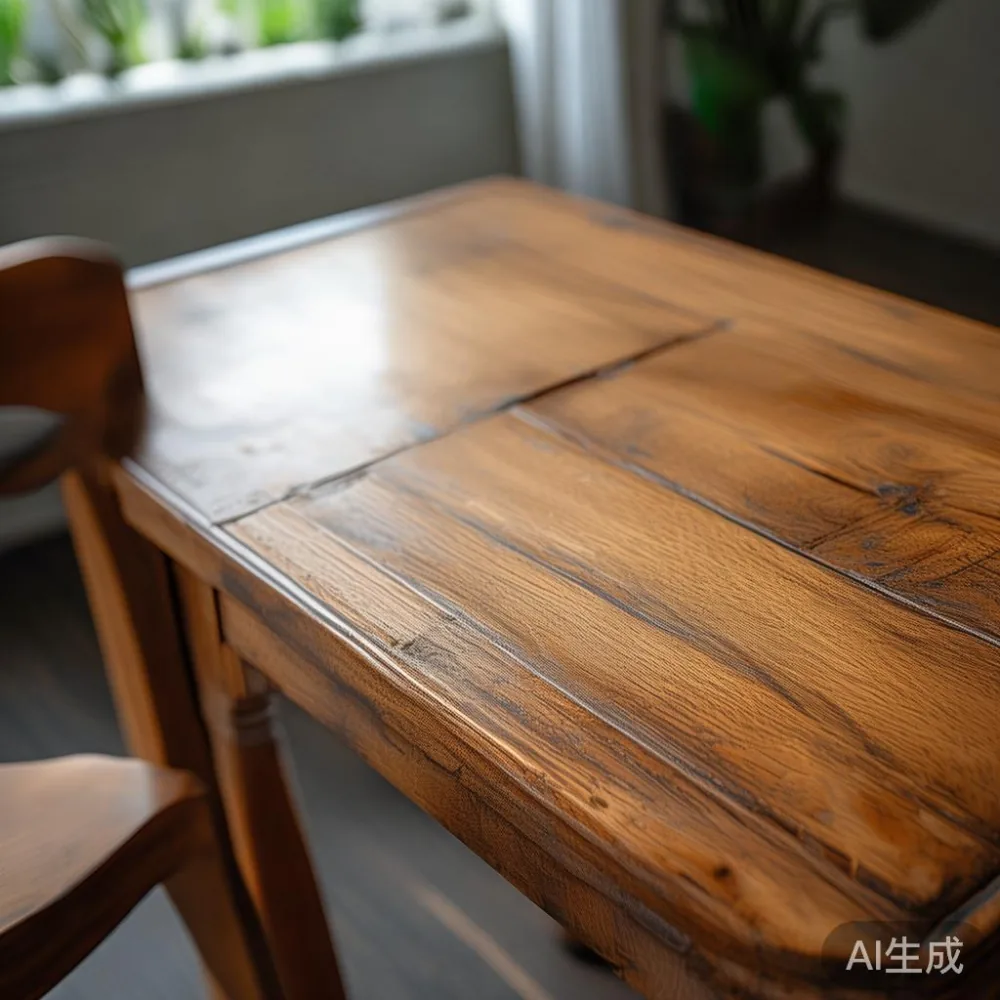
What Actually Happens Inside the Wood: A 90-Second Technical Note
Wood is hygroscopic. It exchanges moisture with the surrounding air until it reaches equilibrium moisture content (EMC). For a HDB flat in Bedok running 80% RH at 28°C, the EMC of teak is roughly 15.5%; for rubberwood it is closer to 16.8%; for white oak around 16.2%. The same woods in a dehumidified bedroom (52% RH at 25°C) will settle near 9–10% EMC. The 6–7 percentage point gap is what causes movement.
Three terms you will hear from any honest furniture maker:
1. Movement — the natural expansion and contraction of solid wood with humidity. Acceptable movement on a 60 cm side table top is 2–4 mm. Anything over 5 mm means the panel is constrained or the wood was not properly dried.
2. Checking — small surface cracks along the grain that appear when wood loses moisture too fast, usually in air-conditioned rooms set to 18–20°C for eight hours a day.
3. Cupping — when one face of a board gains or loses moisture faster than the other, the board bows. A 2 cm thick solid wood top that cups more than 2 mm across its width is a manufacturing defect, not a climate problem.
MIDHILL kiln-dries its side table stock to 8–10% moisture content before assembly, then lets the pieces acclimatise for 14–21 days in a Foshan warehouse where humidity is held around 65%. That two-step process is the single biggest reason a properly built piece survives the trip from Guangdong to a Punggol walk-up.
How Wide Is Your HDB Lift? Why This Matters More Than You Think
Most Singapore HDB passenger lifts in blocks built after 2010 measure 1.1 m wide × 1.4 m deep, with a door opening of 0.9 m. Older blocks in Bedok and Marine Parade sometimes have lifts only 0.95 m × 1.2 m. Service lifts, when available, go up to 1.5 m × 1.8 m but require booking 3–5 working days in advance through the town council.
A solid wood side table packed in a carton usually arrives in a box measuring 65 cm × 65 cm × 55 cm. That fits every standard lift, even narrow ones. A solid wood dining table, by contrast, often comes in a 1.9 m long carton — and that is when the lift matters. I have personally watched a four-man delivery team in Tampines North dismantle a lift ceiling panel (with town council permission, S$120 refundable deposit) to get a 1.85 m marble-top dining table up to the 14th floor. The corridor width on that floor was 1.5 m, just enough to pivot the crate into unit 1421.
Practical rule: measure the narrowest point on the path from the lift lobby to your front door, including the door frame. Most HDB doors are 0.9 m wide, but a fire-rated door with the closer arm leaves only 0.82 m of clear opening. If the carton diagonal exceeds 1.4 m, you need a service lift or a window crane (S$280–S$450 for a low-floor unit, more for high floors). Knowing this before you order saves the S$80 redelivery fee and three days of waiting.
Will a Marble Top or a French Provincial Coffee Table Crack in Singapore's Humidity?
Marble is not affected by humidity in the same way wood is, but it is affected by temperature swings and by prolonged skin contact with a damp glass. A 90 cm round marble table top will not warp, but it can develop a rust stain from a forgotten metal ring in 36–48 hours. Sealing marble every 18–24 months with a penetrating sealer (S$35 a bottle, 30 minutes of work) prevents 90% of the staining issues I see.
What about a French provincial coffee table with carved details, cabriole legs, and an antiqued painted finish? These pieces are popular in condos in Punggol and Sengkang because the light luxury look pairs well with the scandi-minimalist palettes developers like to ship. They survive Singapore well — provided three conditions are met. The paint must be a moisture-cured polyurethane or a hard wax oil, not a chalk paint that has only been waxed. The joints must be mortise-and-tenon, not dowelled. And the bottom of the legs should not sit directly on a marble or tiled floor where condensate can wick up 4–6 cm overnight. Felt pads (S$6 for 16 pieces) solve that last one in seconds.
One last point on the marble table decision: a 1.2 m marble table weighs 85–110 kg depending on thickness. A solid wood side table of the same size weighs 18–26 kg. If you live above the 20th floor, the weight difference can matter during renovation when the cargo lift is shared with the next-door unit's movers.
Mid-century Modern for Guest Room: Where the Climate Helps You
Not every piece struggles in our climate. A clean-lined Mid-century modern for guest room setting — tapered legs, exposed joinery, oiled walnut or teak — actually looks better after six months in Singapore than it does on day one. The slight ambering of the oil finish, the gentle mellowing of the grain, the way the wood takes on a soft patina from the ambient light: these are features, not flaws. I installed a Mid-century style nightstand and a small side table in a Punggol condo guest room in February, and by July the owner had emailed asking what oil I had used. The answer was sunlight and 78% RH.
This is the same logic that makes French light luxury and American light luxury designs work so well here: they are built to be lived with, not sealed in a glass case. The thin matte finishes, the visible joinery, the honest edges — these all age gracefully in a climate that punishes anything pretending to be something it is not.
How Do I Stop My Solid Wood Bed Frame From Cracking in an Air-Conditioned Bedroom?
That question came in three times last quarter from customers in Bedok and Punggol, and the answer is straightforward. The split is almost never caused by the air-conditioning itself. It is caused by the gap between the air-conditioned bedroom (often 22°C and 55% RH) and the non-air-conditioned living room (30°C and 82% RH) where the bed frame or side table sat during delivery and assembly.
Follow this four-step routine for any new solid wood piece over S$600 in value:
1. Open the carton in the living room and let the wood acclimatise for 24 hours. The air inside a sealed export carton can be 5–8 percentage points drier than the room.
2. Wipe every surface with a barely damp microfibre cloth. This equalises surface moisture across all six faces.
3. Move the piece into the bedroom and let it sit for another 6 hours before placing anything on it.
4. Keep the bedroom RH between 50% and 60% for the first 30 days. A small dehumidifier (S$129 from any local electronics chain) is cheaper than a refinishing job.
On a solid wood bed frame, pay special attention to the slat rails. If they were shipped loose, install them with the factory gap intact. That gap exists to let the rail swell during monsoon season without splitting the side rail.
How to Choose French Bed, How to Style It, and Why It Outlasts the Alternatives
The phrase how to choose French bed comes up constantly in our customer chats, so here is the short list. Pick a frame with a headboard at least 105 cm tall if your ceiling is the standard HDB 2.6 m — anything shorter looks lost. Pick a fabric with a Martindale rub count of 40,000 or higher; in our climate anything below 30,000 will pill within 18 months. Pick a bed base with a centre support rail running head-to-foot, not just side-to-side; a 1.8 m queen mattress weighs 45–55 kg and an unsupported centre will sag within four years. And pick a finish on the visible wood that is either a hard wax oil (renewable every 24 months, S$60 for a tin) or a moisture-cured lacquer (permanent, but cannot be spot-repaired).
How to style French bed in bedroom is then a question of restraint. Two side tables, not four. A single bench at the foot, sized 140–160 cm wide. One reading lamp on each side, warm white at 2700K. A natural fibre rug — sisal or jute — sized so the front legs of the side tables sit on the rug and the back legs sit off it. That 50/50 placement anchors the bed without making the room feel smaller than its 12 sq m. If you are also choosing a wardrobe, the same restraint applies. How to choose Japandi wardrobe comes down to three checks: drawer boxes at 12 mm thick minimum, soft-close runners rated for 45,000 cycles, and a real wood back panel — not a 3 mm hardboard skin. Anything thinner and the wardrobe will rack within five years in our humidity.
For anyone still weighing French bed vs Mid-century modern bed, the climate verdict is close. The French style uses slightly thicker upholstery and more carved wood, which means more places for humidity to hide. The Mid-century style is simpler and dries out faster after a wet season. If you run a dehumidifier nightly, either works. If you do not, the Mid-century style forgives more.
A Field-Tested Buying Checklist for Singapore Buyers
Use this when comparing any solid wood side table, nightstand, dining table, or wardrobe over S$400 in value:
- Confirm the wood species and the kiln-dried moisture content (8–12% is the safe range for our climate).
- Ask how the joints are made. Mortise-and-tenon, dovetail, or finger-joint are good. Stapled, nailed, or glued-only are not.
- Check the underside. A quality piece has a finished back and a finished underside. A cheap piece has raw wood under there and will cup first.
- Look for a real warranty on the structure, not just on the hardware. A 10-year structural warranty is a serious statement; a 1-year warranty on everything is a serious warning.
- Check the delivery terms. Free shipping over S$350 helps, but ask whether the team brings the piece into the room of choice and removes the carton. The S$80–S$120 add-on is worth it on the 14th floor of a Punggol block with no service lift.
- Ask about after-sale refinishing. A lifetime refinishing offer means the maker is confident the frame will outlast the finish — which is exactly what you want in our climate.
You can see the full side table collection and the matching bedroom pieces at midhill.co, where the spec sheets list the wood species, the dried moisture content, and the joint type for every single model. That level of transparency is rare in our industry, and it is the easiest way to avoid the Tampines mistake I described at the start of this article.
The 30-Second Takeaway
Humidity in Singapore is not your enemy if you buy the right piece and treat it sensibly. Pick solid wood that was dried below 12% moisture content, built with traditional joinery, and finished with a product you can refresh. Run a dehumidifier in the bedroom, a hygrometer in the living room, and felt pads under every leg. Expect to refinish the side table top every 5–7 years and the dining table every 8–10. Do that, and a real wood side table from a maker like MIDHILL will outlast two air-conditioners, three repaints of the HDB, and at least one round of GST changes — and your grandchildren will still be putting their teacup on it.