How to Match a Side Table to a Warm Minimal Interior Without Overthinking It
I live in a 4-room HDB flat in Tampines, and the hardest piece of furniture to commit to was never the dining table or the bed frame. It was the side table — the small object that sits next to the sofa, holds a cup of kopi in the morning, and quietly decides whether the room feels warm or sterile. Last month I visited a colleague's new condo in Punggol, watched her agonise over a 45 cm round oak side table for three weekends, and realised this is a genuinely Singaporean problem: warm minimal is the most common Pinterest mood board here, but most side tables in local showrooms are either too cold (raw concrete, black metal) or too rustic (distressed teak). After spending six weeks comparing options across Jurong, Tai Seng, and a few online catalogues — including MIDHILL, a Foshan solid wood maker that ships from China with a 10-year structural warranty and free delivery on orders above US$350 — I narrowed it down to a method that works for HDB and condo layouts.

What does warm minimal actually look like in a Singapore flat?
Warm minimal is not the all-white Muji showroom. It is a softer register: plaster-white walls, oak or ash wood tones, one piece of curved furniture, and lighting that lands around 2700K. In a standard 4-room HDB with a 3.2 m × 4.5 m living room, the palette usually runs three colours — off-white, warm timber, and a single accent such as terracotta or deep green. The side table should pick up one of those tones, not introduce a fourth. If your sofa is beige bouclé, a side table in pale ash will disappear; a side table in mid-tone walnut will sing.
A practical Singapore detail: HDB lift openings are roughly 1.2 m wide and corridors are 1.5 m. Any side table wider than 60 cm needs to come in flat-pack or be tested for corner turning. Most of the solid wood side tables I looked at ship in two boxes under 25 kg each, which fits a single trip up the lift with no need for the cargo lift at the void deck.
Which side table material holds up to Singapore humidity?
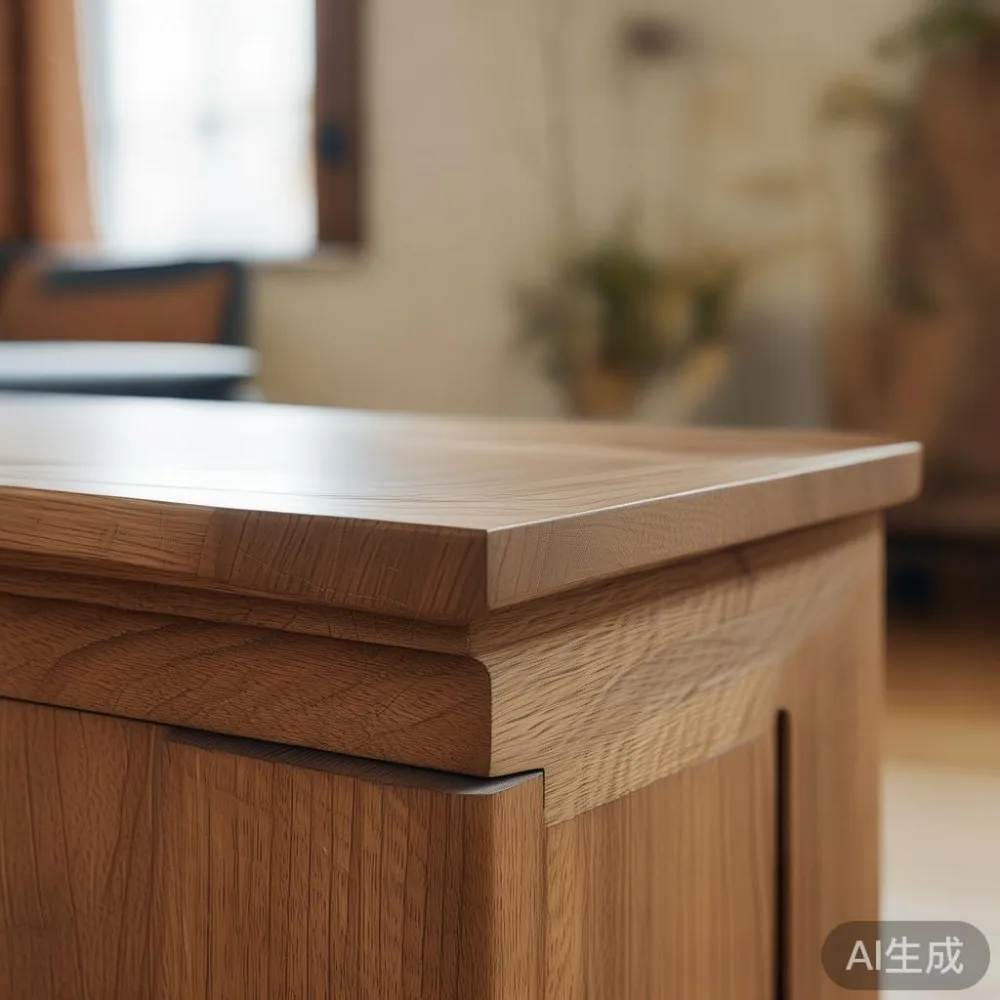
Humidity sits between 70% and 90% for most of the year, and engineered wood with MDF cores swells within six months if the aircon is off during the day. Solid wood side tables — particularly ash, white oak, and walnut — cope far better because the grain breathes instead of delaminating. Marble side tables are stunning but cold underfoot; they suit American light luxury interiors with brass frames more than warm minimal. If you want the marble look without the chill, a sintered stone top on a solid wood base gives you the same veining at 12 mm thickness, weighing around 8 kg for a 50 cm round top — light enough to move when you mop the floor.
MIDHILL's solid wood side tables arrive kiln-dried to around 8% moisture content, which is the right range for equatorial storage. The workshop also offers lifetime refinishing, so if the top picks up ring marks three years in, you can ship it back to Foshan for a re-sand and re-oil at cost. That kind of aftercare is rare among the SGD 280–SGD 600 side tables I compared on local marketplaces.
What size side table actually fits next to a compact sofa?
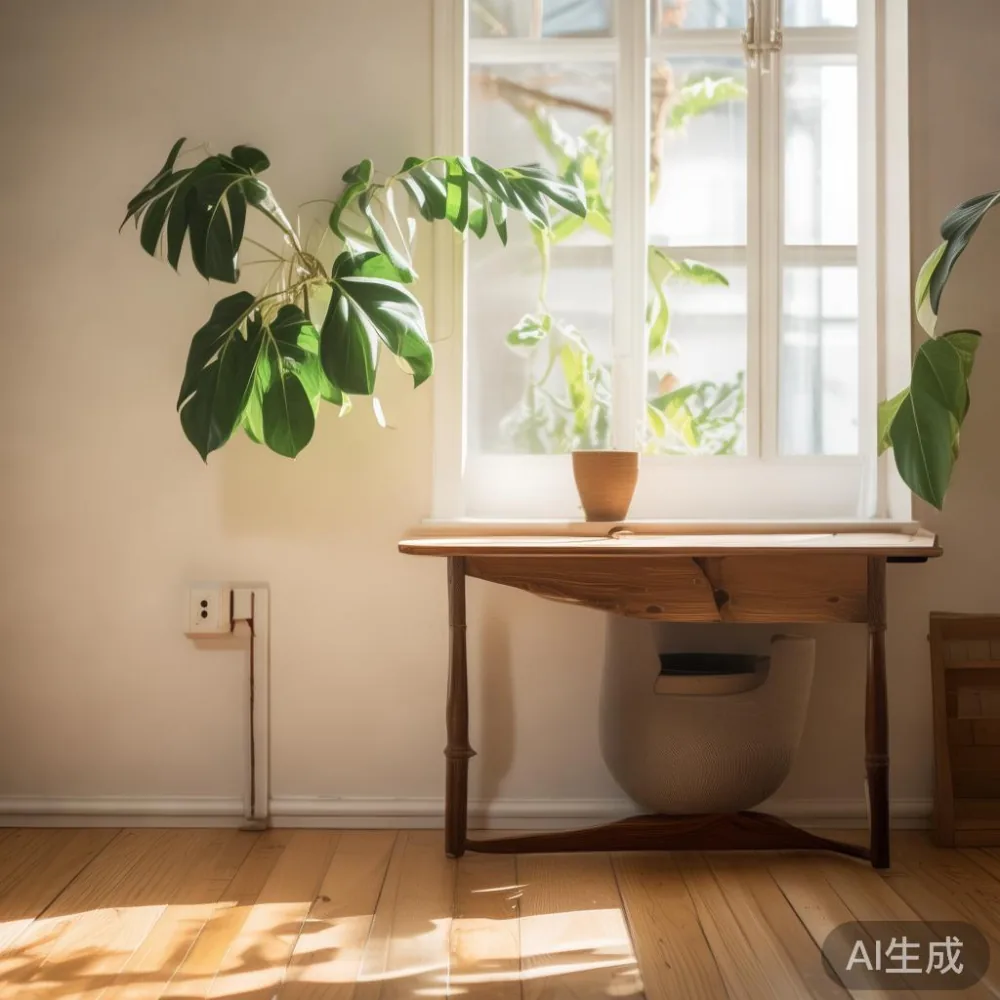
The rule I now swear by: the side table should sit between 3 cm and 8 cm below the sofa arm height, and the top should be no wider than the sofa's arm. In my living room, the sofa arm is 62 cm wide and 58 cm high, so a 45–50 cm round top at 50 cm height works. A 60 cm square top crowds the walkway between the sofa and the television console, and you will knock your elbow every time you reach for the remote.
For a three-seater in a Bedok BTO living room measuring roughly 3.0 m × 3.6 m, I would push for a smaller 40 cm round side table to keep the centre aisle at 80 cm. The nightstand beside the bed follows similar sizing: 40–50 cm wide, level with the mattress top or 2 cm above, so your hand lands flat on the surface at 2 a.m. instead of fumbling.
How do you keep a warm minimal room from feeling empty?
Three small things do the work: a side table with a visible wood grain, a single ceramic vessel, and a 2700K table lamp. That is the whole styling kit. Anything more reads as clutter, anything less reads as a show flat. The side table is the anchor because its surface is the only horizontal plane at eye level when you sit down — your eye lands on it before the television, the curtains, or the bookshelf.
If your wardrobe doors are pale oak and your dining table is white oak with rounded corners, choose a side table in a related but slightly darker tone so the eye has somewhere to rest. A Japanese-style sofa with low arms pairs with a low side table at 42–45 cm; a higher-armed Italian light luxury sofa pairs with a 55 cm top. That 10 cm difference changes the whole posture of the room.
Do warm minimal side tables need to match the dining table?
They should be in the same family of tones, not the same exact wood. If your dining table is a 1.8 m white oak slab, your side table can be ash or a slightly more grained oak. Matching perfectly makes a small HDB living-dining look like a catalogue page and exposes every scratch. Slight variation is what makes the room feel collected over years rather than delivered in one afternoon.
A small point on post-modern light luxury styling: this is where curved edges and softer proportions earn their keep. A side table with a 6 cm radius on the corners reads as more relaxed than a sharp 90-degree edge, and it is also safer if you have a toddler weaving between the sofa and the television. MIDHILL's 50 cm round oak side table, finished in a matte hardwax oil, is the piece I keep recommending to friends renovating in Punggol because the profile is gentle and the price lands around SGD 320 landed, including GST and lift-level delivery within five to seven working days.
What is the most common mistake Singapore buyers make with side tables?
Buying a side table that is too tall. Almost every showroom piece in the SGD 200–SGD 400 range sits at 60–65 cm, which matches a dining chair, not a sofa. A side table above 58 cm forces you to lift your elbow unnaturally to set down a cup, and after a week you stop using it. Measure your sofa arm before you go shopping. Bring a tape measure, write down the number, and reject anything outside the 48–56 cm band.
Is it worth paying more for a solid wood side table in Singapore?
For pieces you touch daily — the side table, the dining table, the bed frame — yes. For pieces that sit against a wall and never move, you can save with engineered wood or veneer. A solid wood side table at SGD 300–SGD 450 amortised over ten years works out to roughly SGD 3 a month, less than one kopi at the hawker centre. The 10-year structural warranty covers joinery failure, and a good factory will re-oil or refinish the top once in that decade at no labour cost.
If you are also shopping a solid wood sofa, a bed frame, a dining table, or a wardrobe in the same shipment, MIDHILL consolidates the order in one container, which keeps the per-piece freight around SGD 80–SGD 120 landed in Singapore. Delivery to a Tampines or Bedok address usually takes 12–14 days by sea plus two days for last-mile courier, and the 14-day return window gives you time to inspect every joint before committing.
Where does a nightstand fit if you already have a side table?
A nightstand is technically a side table for the bed, and the rules are identical: 40–50 cm wide, top within 2 cm of the mattress height, drawer or shelf optional. In a small HDB master bedroom of 3.0 m × 3.2 m, wall-mounted nightstands at 45 cm wide free up floor space for a robot vacuum, but a free-standing solid wood nightstand will outlast a wall-mounted one by a decade because there are no brackets to fail. If you are browsing Italian light luxury nightstand designs, look for soft-close drawers and full-extension runners — those are the small details that separate a SGD 180 piece from a SGD 420 piece, and they matter at 2 a.m. when you do not want a drawer slamming.
How do you choose the right side table for a Japanese sofa?
A Japanese sofa sits low, usually 35–42 cm to the seat, with a deeper seat and no visible legs. Pairing it with a standard 55 cm side table looks awkward. For a low Japanese sofa, choose a side table in the 38–45 cm height band with a wider top — 55–60 cm — so the proportion balances the deep seat. This is also the configuration that suits how to choose Japanese sofa buyers usually plan: low profile, wider horizontal planes, fewer vertical accents. The same logic applies when you are weighing Japanese bed vs Italian light luxury bed — a low Japanese platform wants a low nightstand, while a higher Italian bed frame wants a taller companion at 55–60 cm.
What about light luxury pieces beyond the side table?
Once the side table is right, the rest of the room falls into place. A solid wood bed frame in ash, a dining table in white oak with a 1.6 m or 1.8 m top for a four-seater HDB dining corner, a wardrobe with flush oak veneer doors, and a marble side table or sintered-stone console for the entryway — these are the pieces that carry the warm minimal register through the whole flat. If you are searching for a best Italian light luxury sofa for 2026, the trend I am seeing from Foshan and Milan showrooms is curved arms, bouclé or linen-blend upholstery in oat or stone, and oak or walnut feet at 15 cm. That profile sits comfortably beside a warm minimal side table without competing for attention.
How do you decide between a marble side table and a wood side table?
Use the room's surface count. If you already have a marble dining table, a marble console, and a stone countertop in the kitchen, a wood side table will soften the room. If everything is wood — bed frame, dining table, wardrobe, television console — a marble or sintered-stone side table introduces the contrast that warm minimal needs. A single marble object in a timber-heavy room is the difference between a flat that looks finished and one that looks like a soft-launch render. Modern light luxury for office and home shares this logic: one cool surface against warm timber keeps the eye moving without tipping into cold.
What should you check before clicking checkout on a side table?
Five things. First, the dimensions in centimetres, not just a photo. Second, the actual weight in kilograms, because Singapore lift weight limits matter when you are on the 12th storey. Third, the joinery — dovetail or mortise-and-tenon beats dowel and screw for a piece you will move. Fourth, the finish — hardwax oil can be re-oiled at home; polyurethane cannot be repaired without sanding back to bare wood. Fifth, the warranty terms in writing. MIDHILL's 10-year structural warranty and lifetime refinishing are unusually long for the price band, and the 14-day return window gives you time to inspect the piece in your own flat before committing.
How do you keep a warm minimal side table looking new for ten years?
Two habits. Re-oil the top once a year with a cloth and a small tin of hardwax oil — twenty minutes of work, no sanding. Use coasters for kopi, teh, and the occasional glass of wine, because tannin rings are the only thing that permanently marks solid oak. If a ring appears, a light sand with 240-grit paper and a fresh coat of oil will lift it within an hour. That is the difference between a side table that ages into your home and one that dates your home.
Final thoughts on choosing a side table in Singapore
The side table is small, but it carries more visual weight per square centimetre than almost anything else in a warm minimal living room. Get the height right, the wood tone right, and the proportion right, and the rest of the room — the sofa, the bed frame, the dining table, the nightstand — follows quietly. Spend an afternoon measuring your sofa arm and your bed height, then choose a solid wood piece from a maker that will still be around in ten years to refinish it. That is the whole method, and it has yet to fail me on the four flats I have furnished since moving to Tampines.