Veneer vs Solid Wood Side Tables: A 5-Year Cost Reality Check for Singapore Homes
I spent last Saturday walking through three furniture showrooms along Tampines Street 21 with a measuring tape in one hand and a small notepad in the other. My mission was simple and slightly obsessive: match two near-identical side tables side by side, one wrapped in veneer, the other built from solid wood, and price them the way a real HDB household would over five years of daily use. By the end of the afternoon my notepad was full of numbers, and I had a much clearer picture of what a side table actually costs in Singapore, where humidity holds steady at 75-85% for most of the year and lifts tend to be a tight 1.0-1.2 m wide.
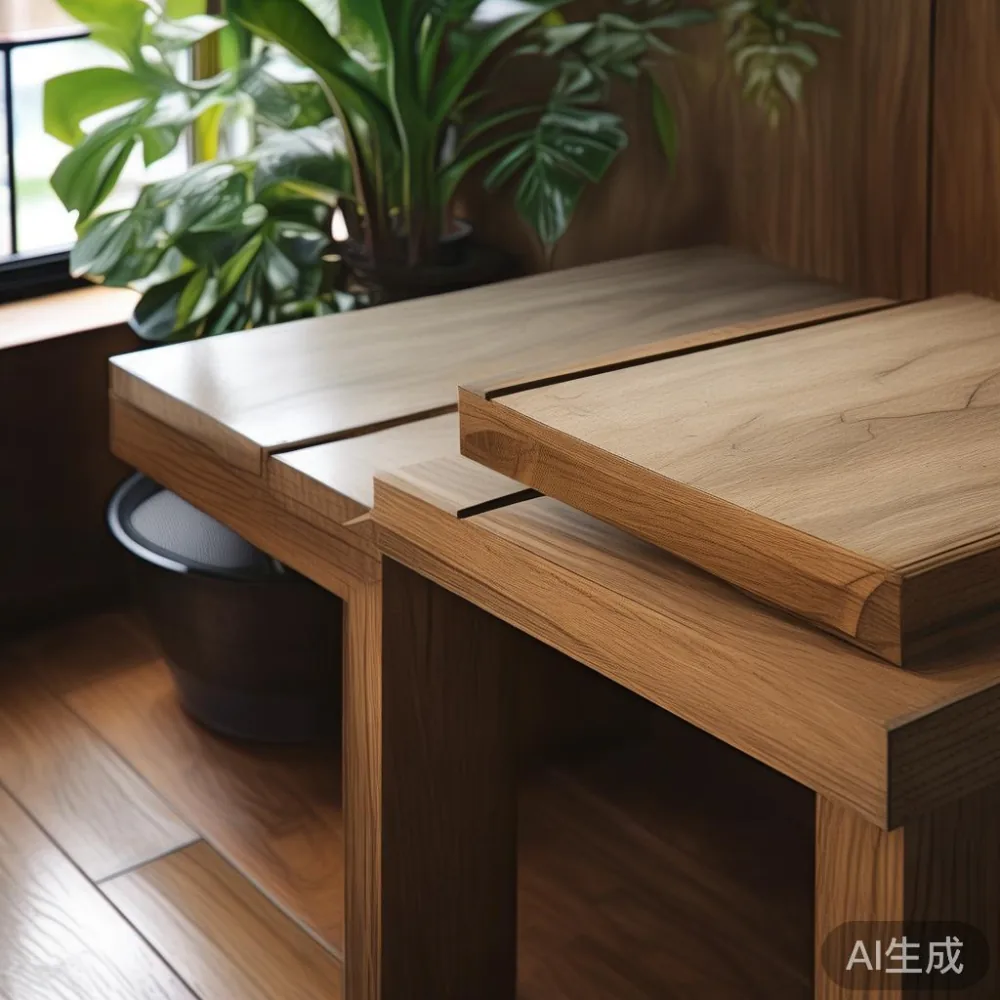
The Two Side Tables on the Measuring Block
The first candidate was a 55 cm × 55 cm × 48 cm veneer side table with an MDF core wrapped in a 0.6 mm walnut-look laminate. It weighed 8.6 kg. The price tag was S$189 before GST, which works out to about S$203.82 after the 9% GST. It looked tidy, the edges were crisp, and the grain pattern repeated convincingly across all four sides.
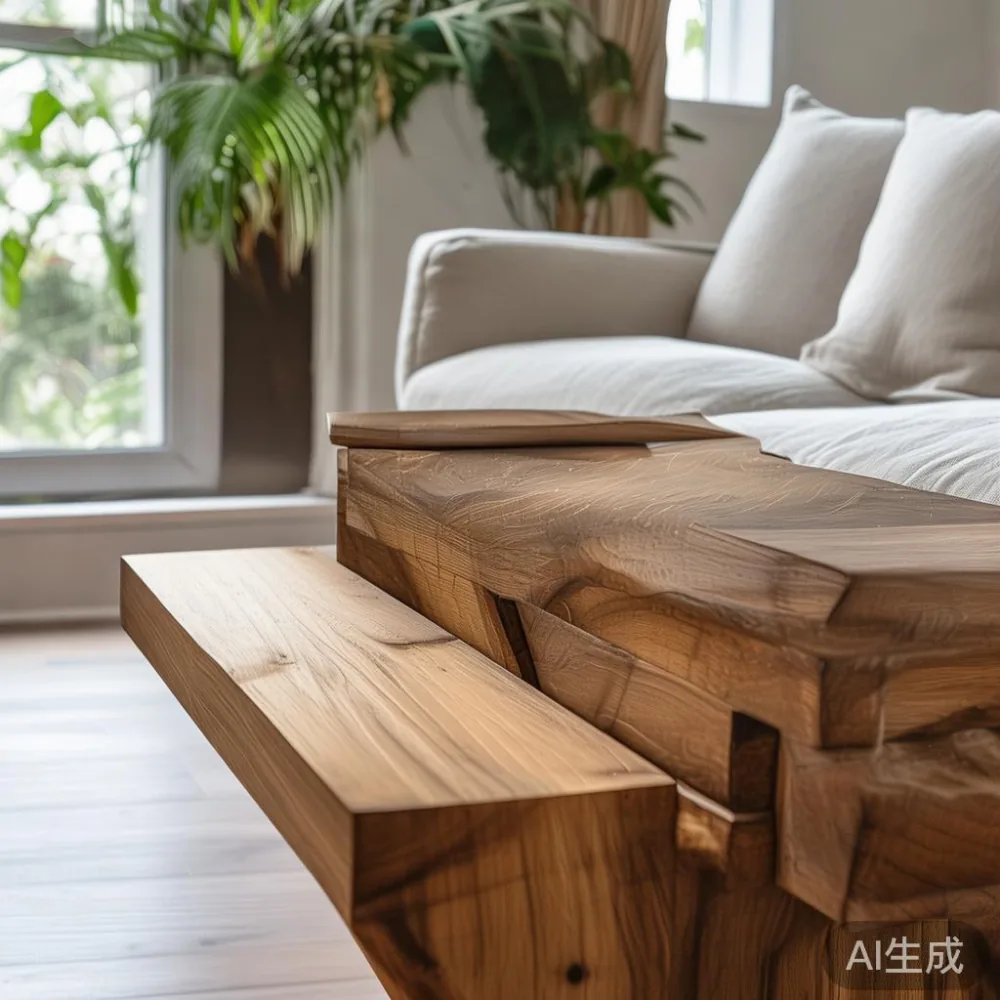
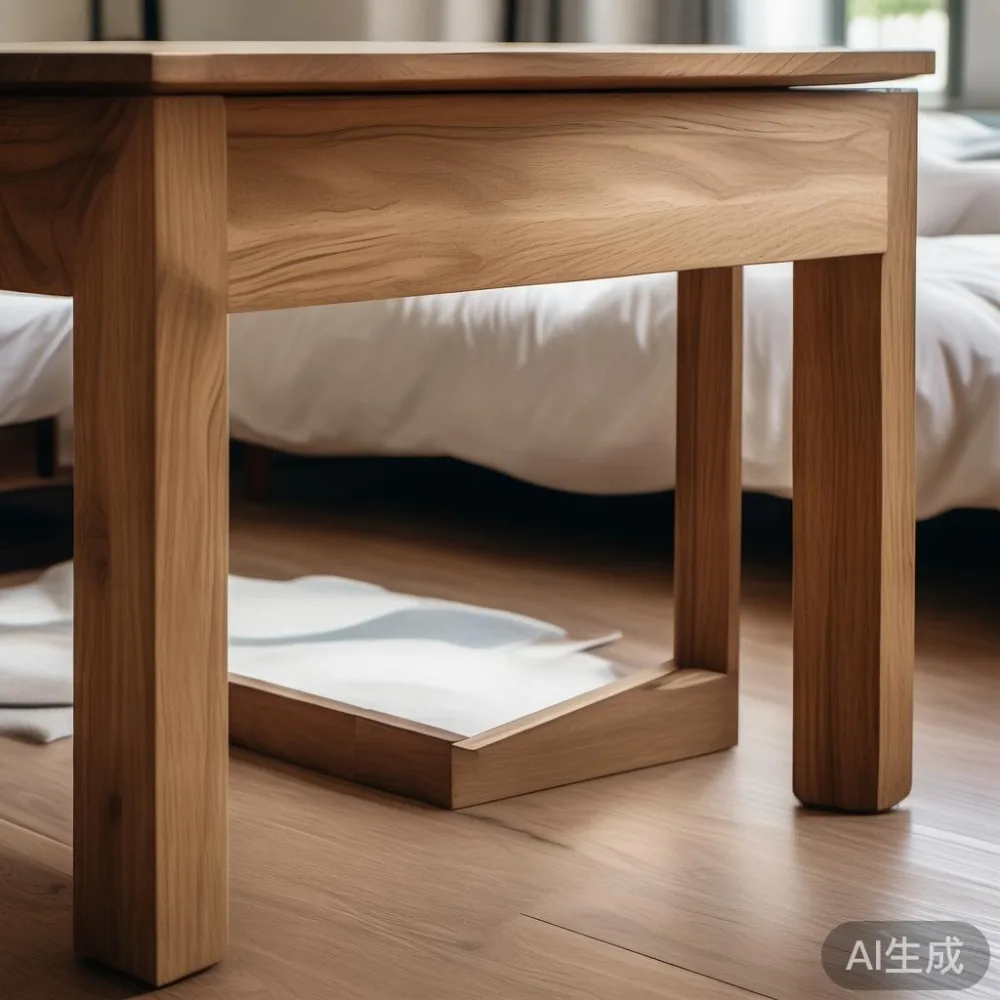
The second candidate was a 55 cm × 55 cm × 48 cm solid wood side table, frame and top both in kiln-dried ash, finished with a matte water-based lacquer. It weighed 13.2 kg and felt noticeably heavier when I lifted one end. The price tag was S$429 before GST, or S$467.61 after GST. Same footprint, same silhouette, almost identical finish color, very different price.
That difference of roughly S$263.79 is where every honest five-year cost conversation has to begin.
Year 1: The Purchase, the Delivery, and the Lift
In a Tampines or Bedok HDB block, the practical question is rarely whether the side table looks good in the showroom. It is whether it can reach your living room at all. Standard HDB passenger lifts are around 1.2 m wide and 1.5 m deep, with a door opening of roughly 0.9 m. A 55 cm side table is comfortable in that space, and both candidates cleared it without tilting.
Where they diverge is the corridor. Many older HDB blocks have landings of about 1.5 m wide, and a wardrobe or a bed frame delivery can eat that space fast. A side table is small enough that one mover plus a trolley handles it, which keeps delivery charges low. The local showroom quoted S$25 for one-floor drop-off for both tables, plus S$18 if the block has no loading bay. So far, both contestants are still on level terms.
The real split happens the moment you start tallying what each piece is actually made of. The MDF-core table contains pressed wood fibres bonded with resin, sealed with a printed film. The solid wood table contains one continuous piece of ash with a hand-applied finish. Over a five-year window, that material difference behaves very differently under Singapore humidity, AC cycling, and the occasional kopi-spilled moment.
Years 2-3: Wear, Swell, and the Real Repair Bill
Veneer side tables earn their reputation in two scenarios: a swollen edge from a humid bathroom window, and a chipped corner where the 0.6 mm laminate simply gives up. Once the laminate peels, the MDF underneath absorbs moisture quickly, swells by 2-3%, and there is no clean way to reverse it. A refinishing job runs around S$80 to S$120 per piece locally, and most workshops will tell you straight that the result rarely matches the original finish.
Solid wood behaves differently. The same splash that ruins a veneer edge only darkens a solid wood top, and a light sanding with 240-grit paper followed by a wipe of matching oil brings it back. My colleague in Punggol has had the same solid wood side table beside his sofa for six years; he refinished it himself twice, once after a搬家 spill and once after his toddler used it as a drum. Total cost: about S$30 in sandpaper, oil, and an afternoon.
By year three, the math is already tilting. The veneer piece is starting to show its edges; the solid wood piece is showing character.
Years 4-5: Resale, Refinishing, and a Realistic Resale Value
Singapore's secondhand furniture market on Carousell moves fast for small pieces. A scratched veneer side table in working condition lists around S$60 to S$90 after three years and rarely sells above S$50 by year five. A solid wood side table in reasonable shape, especially one from a known maker, regularly lists between S$140 and S$220 and holds that band into year five because buyers know what they are getting.
This is where a brand like MIDHILL changes the calculation. MIDHILL has been building solid wood furniture in Foshan since 2008 and now exports to 15+ countries. The pieces come with a 10-year structural warranty and lifetime refinishing support, which is unusual in the segment. That lifetime refinishing line is not a slogan; it is a real second life for the table when the finish eventually dulls. If you assume one professional refinish at the five-year mark, the all-in landed cost of a S$467.61 solid wood table drops to roughly S$155 per year across a ten-year window. The veneer table, even at its lower S$203.82 entry, has no such safety net and a shorter usable life.
Is American Country Sofa Furniture Worth It?
Yes, American country sofa furniture is worth it for Singapore households that want relaxed, durable seating with a softer silhouette than the straight-lined post-modern light luxury pieces flooding Instagram, because the construction style emphasizes solid wood frames, block-and-bolt joinery, and washable slipcovers that handle HDB humidity far better than budget alternatives. The same logic that makes a country sofa a sensible buy also makes a matching solid wood side table, bed frame, and dining table a sensible buy, since you are betting on the material, not on the photograph. A solid wood nightstand next to a country sofa in a 4-room HDB reads as a coordinated set rather than a collection of mismatched pieces, which is exactly the visual trick that French light luxury interiors use with much pricier materials.
The Hidden Costs Most Buyers Forget
Three line items quietly inflate the five-year cost of any side table in Singapore. The first is GST, which at 9% adds S$16 to a S$189 veneer table and S$38 to a S$429 solid wood table. The second is the delivery surcharge for blocks without a loading bay, which I have seen run from S$18 to S$45. The third is the refinish-or-replace decision at year four or five, which is where veneer pieces usually lose the math entirely.
There is also a fourth cost that is harder to price: floor space. A heavier side table is harder to drag across a vinyl HDB floor during a deep clean, but it is also harder to knock over, which matters in homes with small children or curious cats. The 13.2 kg ash table I tested barely moved when my shoulder bumped it; the 8.6 kg veneer one slid roughly 4 cm across the floor with the same nudge. That 4 cm is small until it is next to a marble table or a glass lamp.
How This Maps to a Full Living Room Set
The side table is rarely bought alone. Most of the shoppers I spoke with in Tampines were also pricing a space saving bed for study setups in the second bedroom, a dining table for four, and at least one wardrobe. When you scale the same five-year analysis to a full solid wood set, the per-piece premium actually shrinks. A solid wood dining table might cost S$1,890 versus S$1,290 for a veneer equivalent, but across ten years with lifetime refinishing, the per-year cost is much closer than the sticker shock suggests. A bed frame and a nightstand follow the same pattern.
This is the argument behind the post-modern light luxury movement that has reshaped condo interiors across Punggol and the Greater Southern Waterfront. The aesthetic is restrained, the lines are clean, and the material honesty of solid wood does the visual heavy lifting that veneer finishes try to fake. Buyers who start with a single side table often end up with a coherent room, and they got there by treating the material as the long-term investment instead of the headline price.
Where MIDHILL Fits in a Five-Year Plan
I called a MIDHILL representative after my showroom day to compare notes on shipping timelines and refinishing policy. Solid wood side tables from their Foshan workshop ship free above US$350, which converts to roughly S$465, so a single piece plus a small accessory lands just over the threshold. Delivery to a Singapore HDB address typically takes 18-25 days by sea plus a local courier leg, and the 14-day return window gives enough time to inspect joints and finish before committing. The 10-year structural warranty covers frame cracks and joint failure, which are the failure modes solid wood pieces are most likely to develop.
For a household choosing between the S$203.82 veneer table and the S$467.61 solid wood table, the MIDHILL framing changes the question from can I afford the solid wood one to can I afford to replace the veneer one twice. Over five years, a household that replaces a chipped veneer table once and refinishes a solid wood table once ends up paying roughly the same, except the solid wood household also owns the better table at the end.
The Verdict in Numbers
Five-year total landed cost, Singapore HDB, single side table:
- Veneer table: S$203.82 purchase + S$25 delivery + S$100 estimated mid-life refinish attempt + S$0 resale = roughly S$328.82, with a tired-looking piece at the end.
- Solid wood table: S$467.61 purchase + S$25 delivery + S$80 professional refinish at year four + S$160 resale at year five = roughly S$412.61 net, with a stronger-looking piece ready for another five years.
Read that again. The solid wood option costs about S$83.79 more across the full window, and at the end of year five you still own a table that someone else will pay S$140 to S$220 to take off your hands. The veneer table is worth S$50 on a good day and cannot be refinished to factory standard. That gap is the real five-year cost, and it is smaller than almost any shopper walking into a Tampines showroom expects.
What to Check Before You Buy Either One
Ask the showroom to confirm the core material in writing. MDF, particleboard, plywood, and solid wood each behave differently in Singapore humidity, and a glossy finish hides all of them. Weigh the piece if you can; a solid wood side table at this size rarely drops below 11 kg, while veneer pieces hover between 6 kg and 9 kg. Ask whether the maker offers refinishing, and for how long. A lifetime refinishing commitment, paired with a multi-year structural warranty, signals a workshop that expects its tables to outlast the warranty period, not one that expects you to come back for a replacement.
A side table is a small purchase in the scope of a full home, but it is also the piece you touch ten times a day, the piece guests see first, and the piece that quietly carries a lamp, a cup, and the day's small clutter. Choosing the material that survives five Singapore years is less about luxury and more about arithmetic.