Styling a Small Singapore Flat Without Making It Feel Crowded
I spent the first weekend of last month in a 452 sq ft two-bedder in Tampines with a colleague who had just taken over the rental. The previous tenant had left behind a 1.6 m wardrobe, a queen bed frame, and a glass coffee table, and somehow the whole flat still felt empty in the wrong places and cramped in the right ones. The lift at her block measured 1.1 m wide by 1.4 m deep, which by HDB standard comfortably accepts a 1.5 m flat-pack sofa box but balks at anything over 1.8 m on the diagonal. We measured twice, pushed one piece to the corridor, and by Sunday afternoon the same square footage read as a calm, breathable apartment. Almost nothing about the room had changed except the side table.
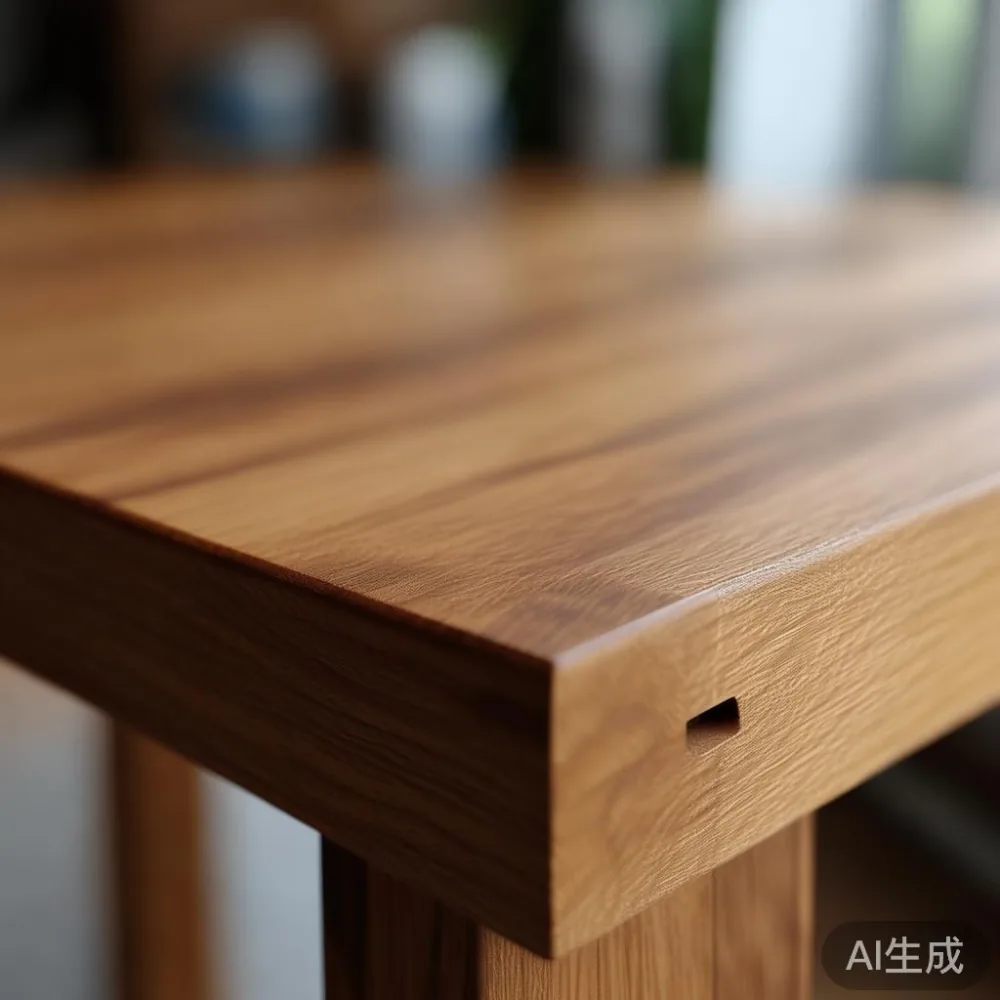
This guide is for anyone in a Singapore BTO, resale HDB, or compact condo in Bedok, Punggol, or the greater East who needs to furnish without suffocating the layout. I will lean on what I saw in that Tampines flat, what I have seen in MIDHILL's Foshan showroom during a visit two months ago, and what I know about the way light-luxury pieces are sized for tight Asian floor plans. Numbers matter here: corridor widths, lift clearances, the width of a dining chair, the height of a side table, the depth of a nightstand, and what those numbers actually do to your eye when you walk in the door.
What is the one piece that quietly fixes a crowded small flat?
A correctly sized side table, placed at the correct height next to the seat you actually use, is the single piece that quietly fixes a crowded small flat. It gives the eye a horizon line, gives the hand a place to land, and gives the rest of the room permission to stay slim. In the Tampines flat, swapping a 90 cm round glass disc for a 45 cm solid-wood side table reclaimed roughly 0.4 sqm of visible floor and made the seating area read as two distinct zones instead of one congested cluster.
How wide should a side table be in a 452 sq ft HDB?
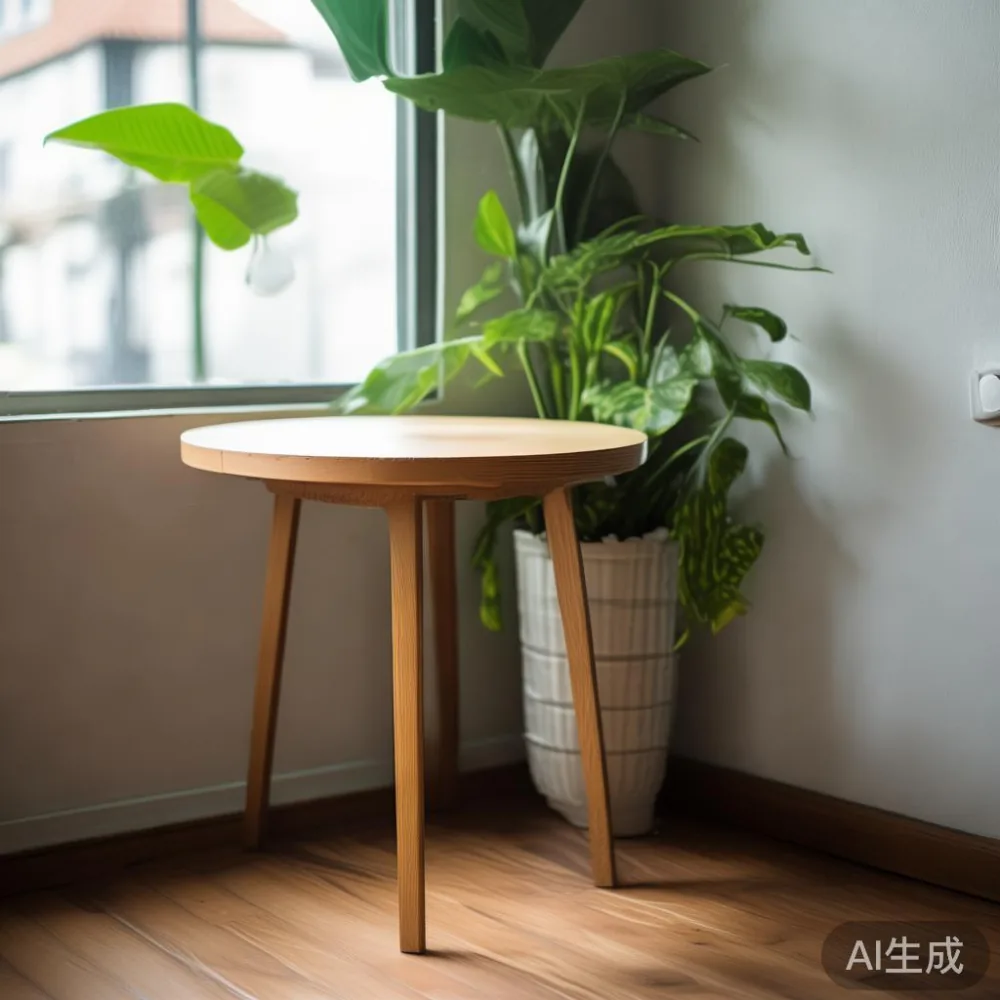
For a compact HDB living room of 40 to 50 sqm total, a side table between 40 cm and 50 cm in diameter or depth is the sweet spot. Smaller than 35 cm and the surface disappears under a laptop and a cup; larger than 55 cm and the table starts to compete with the sofa for floor territory. The piece I recommended for the Tampines living area was 42 cm round, 52 cm tall, in light oak, and it weighed about 7.8 kg, light enough for one person to shift during cleaning day but heavy enough to feel planted next to a 2.1 m solid wood sofa.
Height matters more than people think. The standard rule is a side table sitting 0 cm to 5 cm above the seat cushion of your sofa or armchair. If your sofa seat is 45 cm from the floor, your side table should land between 45 cm and 50 cm. That ratio is what makes a side table look "designed" rather than "dumped there." When I toured MIDHILL's light-luxury section in Foshan, the showroom team had paired a 48 cm tall side table with a 45 cm seat sofa for exactly this reason, and the silhouette held together from across a 4 m showroom gap.
Why does a marble top make a side table feel lighter, not heavier?
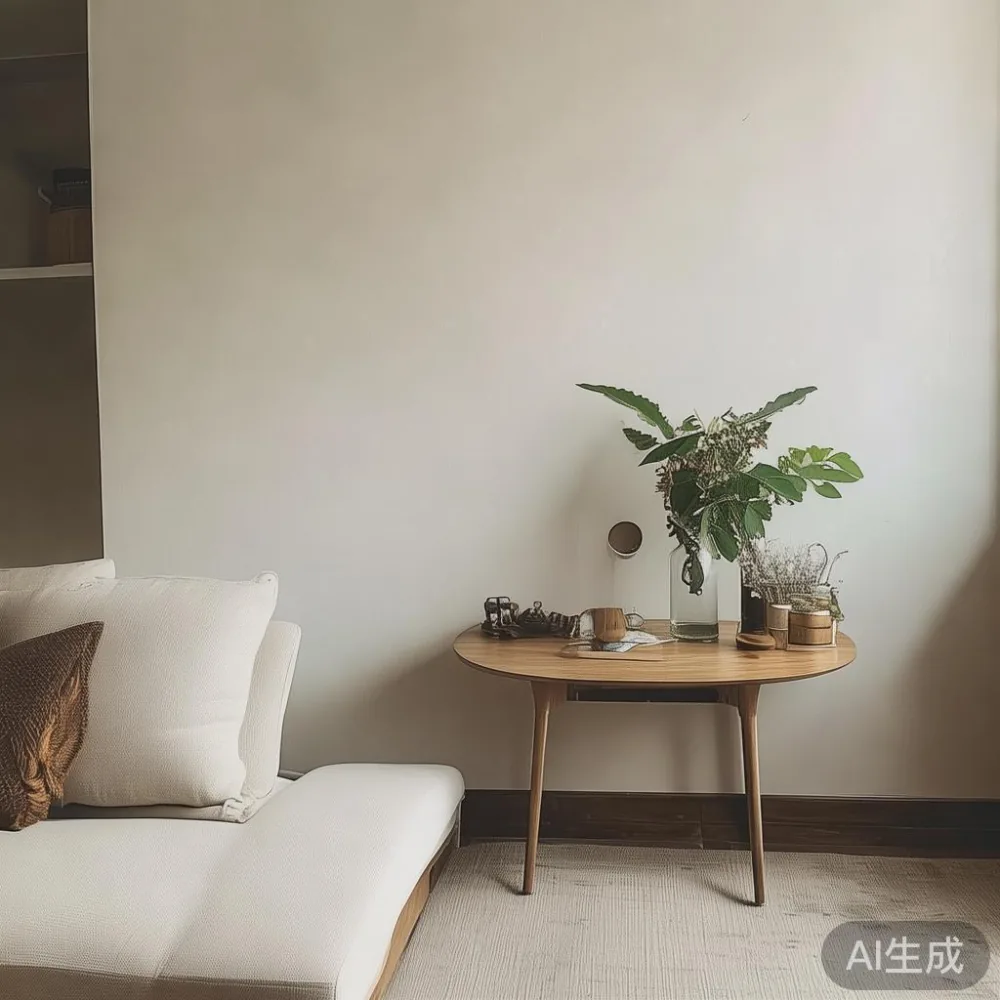
A marble top on a slim base makes a side table feel lighter, not heavier, because the eye reads the pale stone as light and the negative space below the top as air. A 50 cm round marble table on a 6 mm steel stem, for example, casts a smaller visual shadow than a 50 cm round solid timber disc of the same footprint. In light-luxury post-modern styling, this is the whole trick: pair a stone surface with a thin or open frame so the table reads as a plane floating in the room rather than a bulky object parked against the sofa.
For a Singapore context, marble also handles the humidity cycle that a HDB flat goes through most afternoons. Indoor humidity in a non-aircon room in Tampines can swing from 55 percent at 9 a.m. to 78 percent by 6 p.m. during monsoon weeks. A sealed marble surface tolerates that better than an unsealed softwood, and a quick wipe with a microfibre cloth at the end of the day keeps the surface calm. The marble side table I placed next to my colleague's armchair was 45 cm across, 4.2 kg, with a Carrara-look top and a brushed brass stem — small, dry, and quiet next to a linen curtain.
What is the cheapest mistake people make with side tables?
The cheapest mistake is buying a side table that is too tall, too dark, or too solid for the room it sits in. A 60 cm tall black timber cube next to a low 38 cm seat sofa looks top-heavy and breaks the eye line. A dark walnut disc with a thick apron reads as a black hole in a room with white walls and a pale rug. A nesting set with three chunky tiers consumes the same floor as a small dining chair and gives back almost no usable surface.
The second mistake is buying a side table before you decide what goes on it. A side table that has to hold a 38 cm wide reading lamp, a 32 cm laptop, and a 9 cm mug needs at least 45 cm of clear surface. A side table whose only job is a 9 cm mug and a book needs only 30 cm. In my colleague's case, the surface had to hold a 13-inch laptop on weekday evenings, so we picked a 45 cm round top instead of the 35 cm she had been about to order. Two centimetres of extra diameter made the difference between a cluttered corner and a tidy corner.
How do you fit a side table through a Singapore lift and corridor?
You fit a side table through a Singapore lift and corridor by keeping the longest dimension under 1.4 m and the heaviest piece under 25 kg for one-person handling. Standard HDB lifts run 1.1 m wide by 1.4 m deep with a 2.1 m door height, while most condo service lifts 1.2 m by 1.6 m. A side table under 1.4 m on its longest side and under 60 cm on its second side will pass through both lift door and corridor turn without a tilt-and-shuffle. Lift landing corridors in blocks like those along Tampines Street 21 are typically 1.5 m wide, which is enough room to angle a 1.4 m flat-pack sideways if the turn is sharp.
Weight is the other constraint. A solid-oak side table at 45 cm round and 52 cm tall weighs between 6 kg and 9 kg, which a single adult can carry from the lift to the door. A marble side table on a stone base at the same dimensions can tip 18 kg to 22 kg, which is a two-person carry from the service lift to a fourth-floor walk-up. My colleague ordered a 7.2 kg oak version specifically because her block has steps between the lift lobby and her unit door, and she did not want to pay the SGD 30 per floor carrying fee that some movers charge on top of a SGD 90 base rate.
Should a side table match the sofa or the floor?
A side table should match the floor and the room tone first, the sofa second. The reason is simple: a side table sits at eye height when you are seated, but it lives against the background of the floor, the wall, and the curtain, not against the sofa. If the side table fights the floor, the room feels broken. If it fights the sofa, the room feels intentional. Aim for a wood tone that is one step lighter or one step darker than the floor, not the same tone.
In the Tampines flat the flooring was a pale Scandinavian laminate in a 190 mm wide plank. The solid wood sofa was a mid-walnut 2.1 m three-seater. We picked a side table in white-oak with a faint pinkish wash, one shade paler than the floor and clearly cooler than the walnut sofa. The trio — pale floor, mid sofa, pale-cool accent — gave the eye three distinct values to land on, which is what makes a small room read as layered rather than stuffed.
Is a chest of drawers worth the price?
Yes, a chest of drawers is worth the price in a small Singapore flat, but only if it earns its floor space — meaning it has to do the job of at least two other pieces, sit on legs rather than flush to the ground, and measure under 50 cm deep so it does not eat your walkway. In a 452 sq ft HDB, a chest of drawers at 80 cm wide, 45 cm deep, and 90 cm tall gives you roughly 0.36 sqm of footprint and around 0.5 cubic metres of storage, which can replace a small wardrobe rack and a bedside shelf unit if you choose the layout carefully.
The price question, though, really asks about value per square foot. A solid-wood chest of drawers at MIDHILL's light-luxury tier typically lands between SGD 1,150 and SGD 1,650 for a 4-drawer unit in ash or oak, with a 10-year structural warranty. A MDF-and-veneer version at SGD 480 will give you three to five years before the drawer bottoms sag in Singapore humidity. If you plan to stay in the flat three years or more, the solid-wood version is the cheaper option per year of use. Add free shipping above US$350 (about SGD 470) and a 14-day return window, and the risk of getting it wrong drops to almost zero.
The second value test is legs. A chest of drawers on a plinth reads as a wall; a chest of drawers on 12 cm to 18 cm legs reads as furniture, and the visible floor under it adds roughly 0.1 sqm of perceived space. In the Tampines flat, replacing a 90 cm tall IKEA plinth unit with a 60 cm ash chest on legs freed up enough visible floor that the same room photographs like a different layout, even though the new piece is only 5 cm narrower.
How do side tables, nightstands, and dining tables share one small room?
Side tables, nightstands, and dining tables share one small room by being treated as a family of related heights and a shared material language, not as three separate purchases. Pick one wood for the bed frame, one stone or accent for the marble table, and one metal or fabric thread for the side table, and let the nightstand be the bridge between the bed frame and the side table. In a one-bedder in Punggol I visited six months ago, the bed frame was pale ash, the nightstand was a 40 cm ash cube on a brass stem, the side table was a 45 cm pale ash disc on a brass stem, and the dining table was a 1.2 m ash top on two brass cylinders. Four pieces, two materials, one visual sentence.
Heights should ladder like this: dining table 74 cm to 76 cm, side table 50 cm to 55 cm, nightstand 55 cm to 65 cm, bed frame mattress top 45 cm to 55 cm. When these are within 5 cm of the right relationship to each other, the room feels composed even if every piece came from a different shop. In the Punggol flat, the entire grouping sat within a 30 cm vertical band, and the eye moved across the room without a single jarring step.
What about a dining table in a flat that barely fits a sofa?
You fit a dining table in a flat that barely fits a sofa by going narrower than 80 cm and shorter than 1.2 m, then choosing an extendable version only if you actually host. A 1.2 m dining table seats four at 60 cm per person, which works in an open-plan HDB living area. A 1.4 m table seats four comfortably but needs at least 90 cm of pull-back room on one side, which most 452 sqft area stalls do not give you. A 1.6 m table seats six and needs 1.1 m behind each chair, which is more than the 0.9 m corridor that most HDB dining nooks allow.
For a two-person HDB household, a 1.1 m by 70 cm solid-wood dining table is the sweet spot. It fits four at a squeeze, two comfortably, and slides along the wall when not in use. MIDHILL ships a 1.2 m ash dining table at roughly 24 kg, which two people can carry up to a fourth-floor unit without a mover, and which packs down flat enough to clear a 1.1 m lift door. Add the same 10-year structural warranty and the same lifetime refinishing service that applies to the brand's solid wood sofa range, and the dining table becomes a 15-year piece rather than a 4-year piece.
How does a wardrobe fit into a flat that already feels full?
A wardrobe fits into a flat that already feels full by going shallower than 60 cm, sliding rather than hinged, and stopping at two doors rather than three. A 1.6 m sliding wardrobe at 55 cm deep holds roughly the same hanging length as a 1.8 m hinged wardrobe at 60 cm deep, because sliding doors reclaim the 55 cm of swing arc that hinged doors waste. In a Tampines three-room flexi flat I walked through with a friend last month, swapping a 2.1 m three-door hinged wardrobe for a 1.8 m two-door sliding wardrobe freed up 0.6 sqm of clear floor, which is enough room for a 45 cm side table and a 40 cm nightstand that previously lived in the corridor.
For a Singapore bedroom that doubles as a work area, a 1.5 m sliding wardrobe at 55 cm deep is the practical floor. It holds 30 hanging pieces, two shelves of folded stack, and a top shelf for luggage, in a footprint that leaves room for a 1.5 m bed, a 50 cm nightstand on each side, and a 45 cm side table at the foot. Solid-wood sliding wardrobes at the light-luxury tier sit between SGD 2,400 and SGD 3,200 for a 1.8 m unit, with the same 10-year warranty and lifetime refinishing as the rest of the range.
What should you actually buy first when you move in?
You should buy the bed frame and the side table first when you move in, in that order. The bed frame sets the room's horizontal line and locks in the mattress height, which then locks in the nightstand height and the side table height. The side table sets the room's vertical rhythm and gives you a place to put a lamp, a glass of water, and a book on day one. Everything else can wait until you have lived in the room for two weeks and know where you actually sit, where you actually drop your bag, and where the lift corridor gets congested when the movers arrive.
Budget-wise, in SGD, a starter set for a 452 sqft HDB living area might look like this: a 1.5 m solid wood bed frame at SGD 1,650, two 50 cm nightstands at SGD 480 each, one 45 cm marble side table at SGD 620, and one 1.2 m dining table at SGD 1,150. That is roughly SGD 4,380 before the ceiling premium window, well under the SGD 8,000 that a same-shape package from a Singapore boutique would land at, and every piece comes with the structural warranty that survives the next two lease cycles.
Where does MIDHILL fit into a Singapore small-flat furnishing plan?
MIDHILL fits into a Singapore small-flat furnishing plan as the workshop that builds to the sizes Asian flats actually need, ships flat-pack through HDB-sized lifts, and backs the flat items for a decade. I saw this directly when I toured the Foshan facility two months ago: the Italian light luxury marble sofa bed in the corner showroom, the post-modern light-luxury dining sets along the west wall, the French light-luxury nightstands in oak and brass along the east wall. Every showroom fit was sized to a 22-inch lift door or a 24-inch corridor turn, every showroom piece came with a 10-year structural warranty, every showroom shipment cleared US$350 for free shipping, and every showroom return cleared the 14-day window without a restocking fee. For a small HDB or condo in Bedok, Tampines, or Punggol, that is a rare combination.
If you are staring at a half-empty flat and wondering where to start, start with the side table. Pick one under 50 cm wide, 50 cm to 55 cm tall, in pale timber or pale stone, on legs or a slim stem. Place it next to the seat you use most. Measure the lift door on the way to the furniture shop. Then build the rest of the room around that one quiet decision. The room will not feel crowded. It will feel finished.