What Actually Drives the Price of Solid Wood Side Tables in Singapore
I spent last Saturday morning at a Tampines HDB showroom with a friend who was convinced that all side tables cost about the same. By lunchtime, after we had weighed, measured, and flipped over nine different pieces, she was staring at her notebook with the kind of quiet panic that only furniture shopping in Singapore can produce. Two pieces that looked almost identical in the catalogue were separated by SGD 1,400 in price, and the cheaper one was heavier. That afternoon sent me down a long rabbit hole, because the gap was not about wood, finish, or brand prestige. It was about a dozen quiet engineering choices hiding under the surface. This article is the condensed version of what I learned, written for anyone staring at a price tag on a solid wood side table and wondering whether the higher number means anything real.
Is the wood species actually the most expensive line on the invoice?
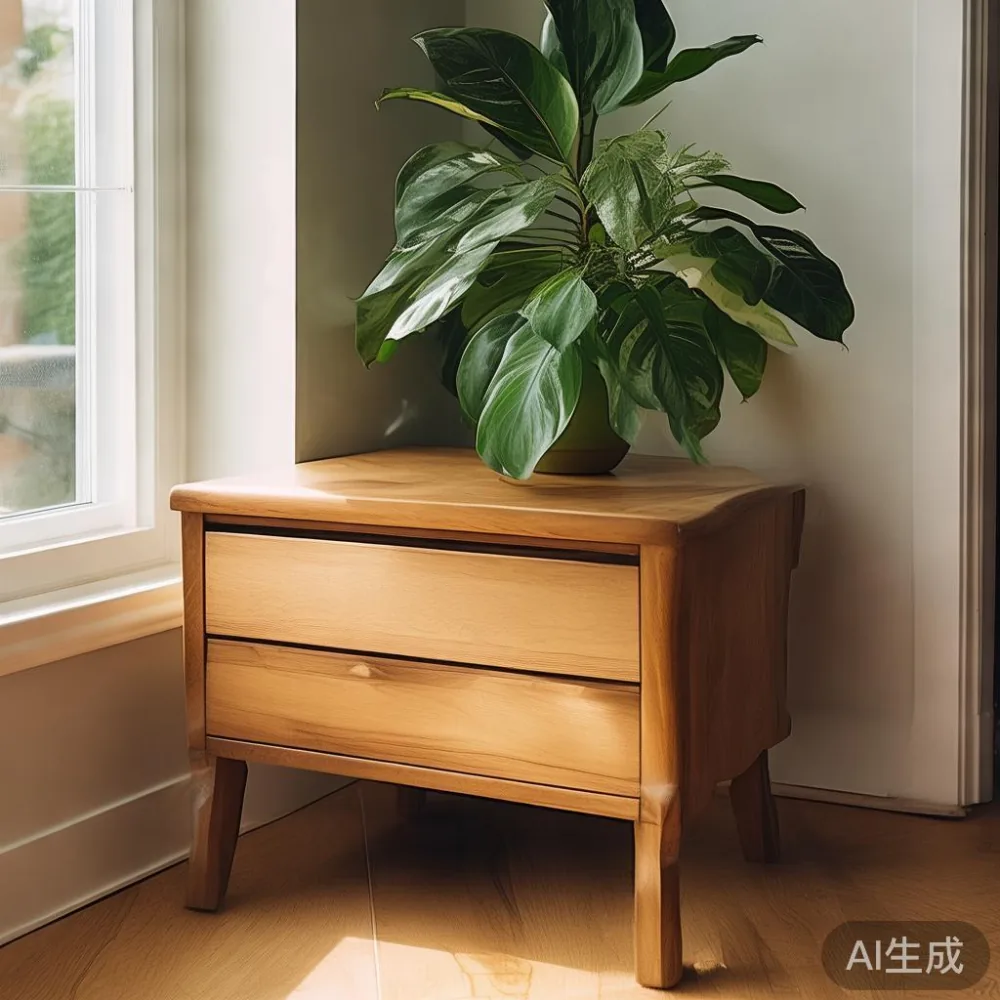
Most shoppers in Bedok and Punggol assume the species of wood is the single biggest driver of cost. It is a factor, but it is rarely the top one. A solid oak side table in Singapore retails for roughly SGD 480 to SGD 760 for a 50 cm round piece, and a solid walnut version sits around SGD 1,100 to SGD 1,600 for similar dimensions. The species gap is real, yet a kitchen-grade ash side table can still cost more than a better-finished oak one if the joinery is more complex. Species tells you about raw material, not about what the maker did with it.
For tropical hardwoods like rubberwood and acacia, which are common in light-luxury solid wood furniture shipped out of Guangdong, the raw board cost per cubic metre is low. Even at this level, the same supplier can produce a SGD 320 bedside table or a SGD 720 bedside table using almost the same boards. The difference lives in the next five factors.
How much of the price is actually labor and joinery?
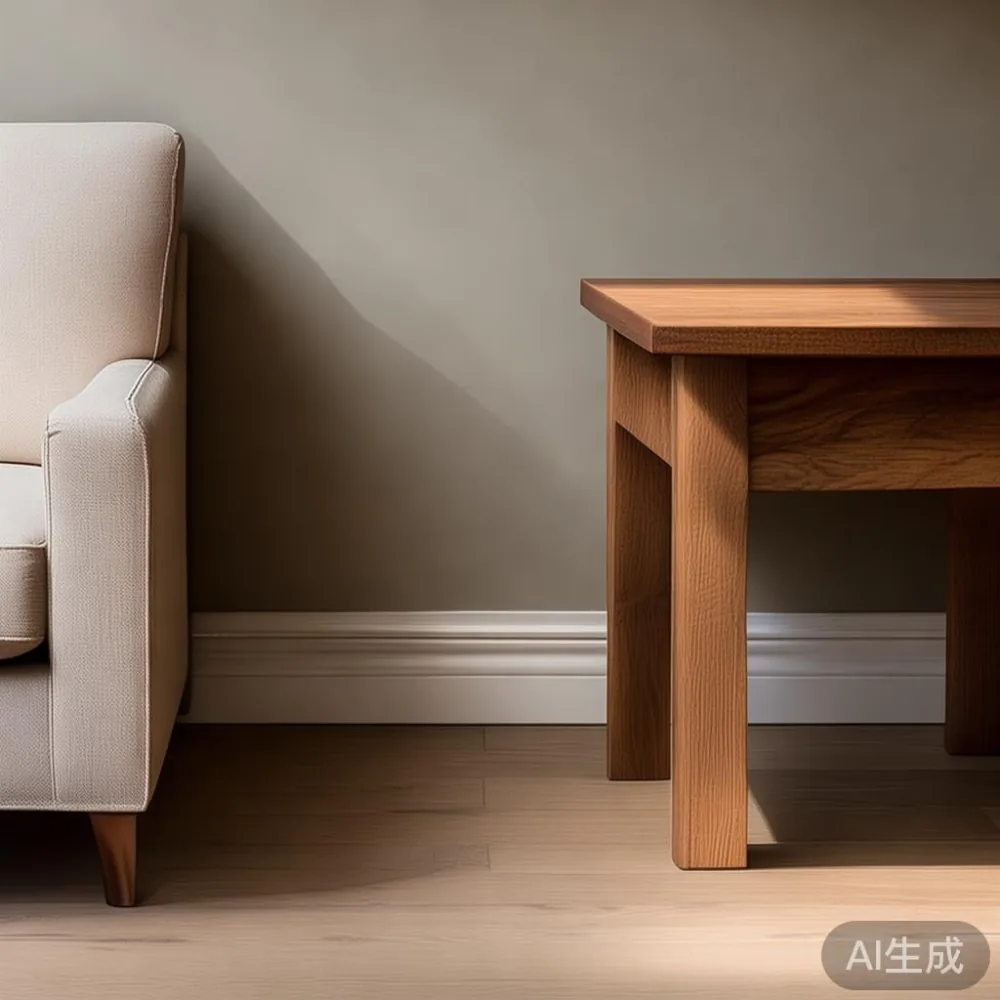
More than most people think. A side table can be nailed, screwed, dowelled, mortise-and-tenoned, or dovetailed. Each step up the ladder adds minutes, skill, and waste. A frame-and-panel nightstand that is simply dowelled and glued can be assembled in 25 minutes by a semi-skilled worker. A mortise-and-tenoned version of the same nightstand takes 80 minutes and requires a bench-trained joiner. Multiply that across a Foshan factory batch of 200 units per day, and the labor delta alone can add SGD 80 to SGD 130 per piece without changing the wood at all.
Last month I visited a workshop in Foshan that supplies several light-luxury brands. The foreman pointed at two identical-looking side tables on the floor and asked me to guess which one had dovetailed drawers. The cheaper one had glued-and-screwed boxes; the more expensive one had hand-cut half-blind dovetails on the drawer corners. Visually they were identical. Underneath, one will outlast the other by a decade in a HDB that gets daily use.
Why does the finish cost more than people expect?
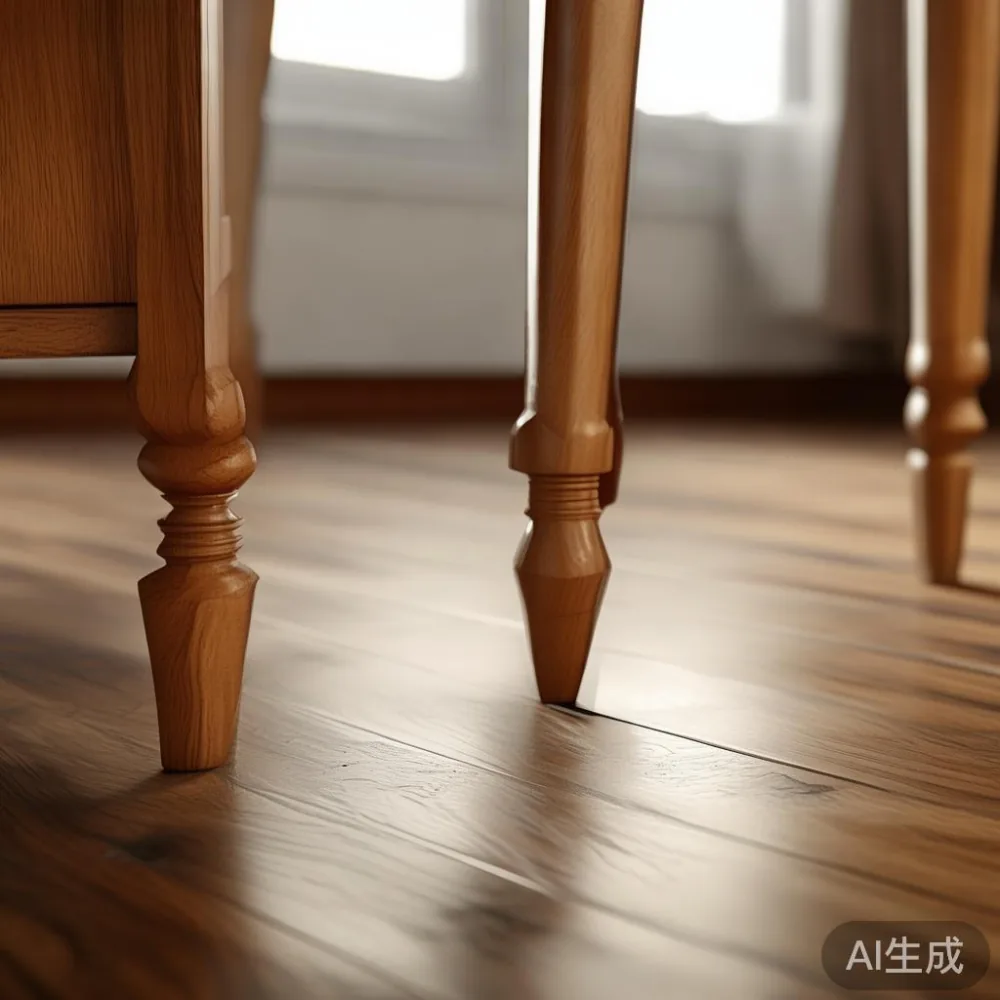
Finish is the silent price driver. A side table can be stained and sealed with a single coat of low-VOC polyurethane in 40 minutes, or it can go through a multi-stage process of sanding, sealing, sanding again, colour spraying, hand-rubbed oiling, and a final wax coat that takes two and a half days. The second process is what gives American light luxury solid wood furniture its soft, low-sheen glow rather than a plastic-looking sheen.
There is a third path that some post-modern light luxury makers use: a hardwax oil rubbed in by hand, then buffed with a horsehair pad. That finish is what allows the owner to refinish the piece every few years without stripping it back to bare timber. For a side table that will sit next to a sofa in a Punggol condo and get coffee rings and hand sanitiser stains, the finish is doing more daily work than the wood species ever will.
What does hardware actually contribute to the price?
Hardware is a small line item that punches above its weight. Soft-close drawer slides from a European brand cost roughly four times what a no-name slide costs. A full-extension undermount slide adds another SGD 25 to SGD 45 per drawer. Magnetic soft-close hinges for cabinet-style side tables run SGD 18 to SGD 32 per pair. When a side table has two drawers and a small cabinet, the hardware alone can swing the price by SGD 120 to SGD 180.
I have opened side tables at the MIDHILL Foshan factory where the difference was obvious from the first gentle push. Cheap slides slam. Quality slides feel like a drawer on a luxury sedan: it pulls itself in over the last 4 cm and closes without a sound. That feel is hardware, not wood. It is one of the clearest price signals in a showroom.
How does shipping from Foshan to a Singapore HDB change the final number?
This is where local context matters a lot. A solid wood side table weighing 18 kg to 28 kg has to clear Singapore customs, pay GST (currently 9 percent on the landed value), travel by container, get delivered to a warehouse, and then travel up the lift of an HDB or condo. Lift dimensions in most 4-room HDB blocks in Tampines are about 1.1 m wide by 1.4 m deep by 2.1 m high. Corridor widths in older blocks run 1.2 m to 1.5 m. A side table that is wider than 60 cm or deeper than 60 cm will not fit through some turns without being tilted on its side, and that adds delivery time and risk.
For a Foshan-to-Singapore shipment, sea freight for a single side table runs SGD 95 to SGD 220 depending on consolidation, plus GST on the CIF value plus duty (most solid wood furniture enters duty-free under HS code 9403.60, but the GST still applies). Add last-mile delivery in Punggol or Bedok at SGD 35 to SGD 80, and a piece that left the Foshan factory at USD 280 can land at your door at roughly SGD 540. The shipping and tax stack is roughly 35 to 50 percent of the retail price for mid-range pieces. This is why free-shipping thresholds like MIDHILL's US$350 / around SGD 480 matter: they flatten that stack for anyone buying more than one piece at once, such as a side table plus a matching nightstand.
Does the warranty and after-sales structure really change the price?
Yes, although the effect is more subtle. A 10-year structural warranty, a lifetime refinishing service, and a 14-day return policy do not appear as line items on the invoice. They appear as risk pricing. A maker who offers a 10-year structural warranty has priced the warranty into the product, which means the wood has to be dry enough, the joints tight enough, and the finish hard enough to survive a decade of Singapore humidity, which sits at 70 to 85 percent for most of the year. That quality control has a cost, but it is usually less than SGD 100 per piece. It is one of the few upgrades in furniture that is genuinely cheap for what you get.
What role does design language play in the price?
Design language is the part of the price that buyers feel but cannot easily measure. French light luxury side tables, with their cabriole legs, hand-finished corner mouldings, and antique-brass hardware, sit at the top of the price band. American light luxury side tables tend to be quieter: straight lines, soft chamfers, and a wider range of wood tones. Post-modern light luxury pieces lean into curves and contrasting veneers, often combining solid wood with marble tops, which adds another SGD 220 to SGD 480 for a 50 cm round marble surface.
If you have been asking yourself whether a piece of solid wood furniture in the French light luxury language is worth a 20 to 35 percent premium over a similar Scandinavian piece, the honest answer is that you are paying for the joinery labour, the finishing steps, and the metalwork, not just the shape. Buyers who want the shape without the joinery often end up disappointed within three years.
How can a buyer in Singapore tell which price drivers actually matter?
The fastest method is to flip the piece over in the showroom and look at the underside, then open every drawer and lift the side table if you can. On a well-built side table, you should see:
1. Solid wood on the underside, not particleboard with a wood-look veneer. Particleboard feels colder and sounds hollow when you tap it with a knuckle.
2. Drawer boxes that are at least 12 mm thick, with dovetail corners on anything above SGD 700.
3. Slides that pull smoothly past two-thirds of the travel, then self-close over the last 3 to 4 cm.
4. A finish that does not show brush marks or orange peel under raking light from a window.
5. A weight that feels appropriate for the dimensions. A 55 cm round solid wood side table should weigh at least 12 kg, and ideally 16 kg to 20 kg for walnut or oak.
If a side table passes all five checks, the price is mostly justified by labour and hardware. If it fails any of them, the price has been padded somewhere you cannot see.
How do these price drivers affect other pieces in the same collection?
The same five factors scale up across a full solid wood furniture collection. A solid wood sofa frame, a bed frame, a dining table, a wardrobe, and a nightstand all use the same species, the same joinery standard, and the same finish line as the side table you are considering. If the side table in the collection is well built, the dining table and the wardrobe will be built to the same standard. If the side table is wobbly or hollow-sounding, the bed frame probably is as well. This is why I always tell shoppers in Punggol and Bedok to test the smallest, cheapest piece in the range first. It tells you almost everything about the rest of the line.
For buyers comparing larger pieces, the same logic applies. A European bed versus an Italian light luxury bed is rarely a contest about wood species at all. It is a contest about corner joinery, slat systems, and finish. The same is true when comparing a Scandinavian wardrobe to a French provincial wardrobe, or a mid-century modern sofa to a post-modern light luxury sofa. The shape changes; the engineering tells the real story.
What about the long-tail buying decisions behind each category?
A few decisions that come up in showroom conversations deserve their own short answer, because the price drivers above apply to all of them.
When shoppers ask about how to choose a Mid-century modern sofa, the honest filter is the same one for side tables: flip it, lift it, open it, sit on it, and look at the unfinished underside. The legs are usually the weakest point on a cheaper piece, and a solid wood sofa frame with through-tenoned legs will outlast a screwed-and-glued one by a clear margin.
When buyers ask whether a French provincial wardrobe is worth it, the answer depends on whether you are paying for the carved detail or just the shape. If the carving is hand-cut and the mouldings are solid wood, the price is justified. If the carving is resin and the mouldings are wrapped MDF, you are paying for the shape only.
When the question turns to best Scandinavian wardrobe for 2026 or best Rustic wardrobe for 2026, the price drivers stay constant: species, joinery, finish, hardware, and shipping. What changes is the design language layered on top, and that language is a smaller share of the price than most buyers assume.
For buyers asking about Japandi furniture under 2000 SGD, the same five drivers apply. The honest budget at this level is usually one bed frame, one side table, and one nightstand built to the same standard, rather than a full room set built to a lower one.
What does this mean for the price on the tag in front of you?
Once you separate species from labour, hardware from shipping, design from warranty, a solid wood side table in Singapore starts to make sense as a bundle of choices rather than a single number. A piece at SGD 320 is usually paying for wood, basic assembly, and the minimum shipping stack. A piece at SGD 720 is paying for better joinery, a longer finishing process, branded hardware, and a warranty the workshop stands behind. A piece at SGD 1,400 is paying for a curated design language on top of all the above.
The point of knowing the price drivers is not to chase the cheapest number or to assume the highest one is right. It is to be able to point at a side table and say which of those five or six layers you are actually paying for. Most shoppers I have walked through a Tampines or Bedok showroom with end up making a clearer decision once they know which layer matters most to them. For some it is the finish, because they want a piece they can refinish in their own condo. For others it is the hardware, because they open and close that drawer eight times a day. For others it is the warranty, because they want a maker who answers the phone in ten years. None of those answers is wrong. The mistake is buying a side table for its wood species when what you actually needed was a drawer that closes properly.