How Southeast Asian Humidity Affects Solid Wood Side Tables
Singapore’s warm, humid climate can change solid wood furniture more than many buyers expect. In HDB flats and private condominiums from Tampines to Bedok and Punggol, a side table may sit beside an air-conditioned living room, beside a ventilated balcony, or near a bathroom where moisture levels shift throughout the day. Those changes can cause timber to swell, shrink, develop fine checks, or lose its finish if the furniture is treated carelessly.
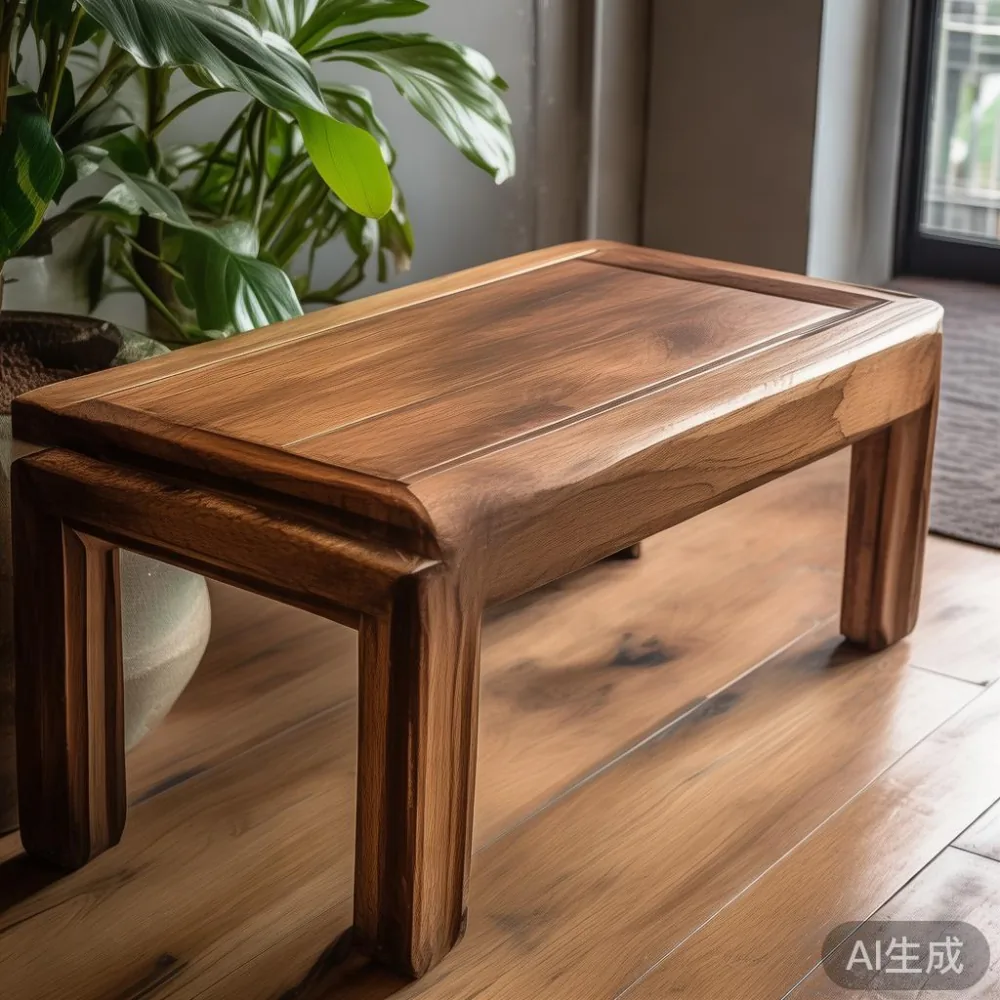
This guide explains how humidity affects a solid wood side table, what to look for when shopping in Singapore, and how to protect furniture without making it look lifeless. For broader design context, the same principles apply when comparing a European sofa vs Mid-century modern sofa, although upholstery behaves differently from wood. Furniture buyers also encounter phrases such as MIDHILL light luxury sofa, how to style light luxury sofa in room, best Modern wardrobe for 2026, is Japanese wardrobe worth it, and best Rustic sofa for 2026, but timber selection remains relevant whenever a wooden frame or tabletop shares the same room.
Why Singapore’s humidity changes solid wood
Relative humidity is the percentage of water the air holds compared with the maximum it can hold at a given temperature. Singapore’s average monthly readings commonly sit around 70% to 85%, while humid days can exceed 90%. Air-conditioned interiors may fall to 45% to 60%. A side table moved between these environments can gain or lose moisture rapidly.
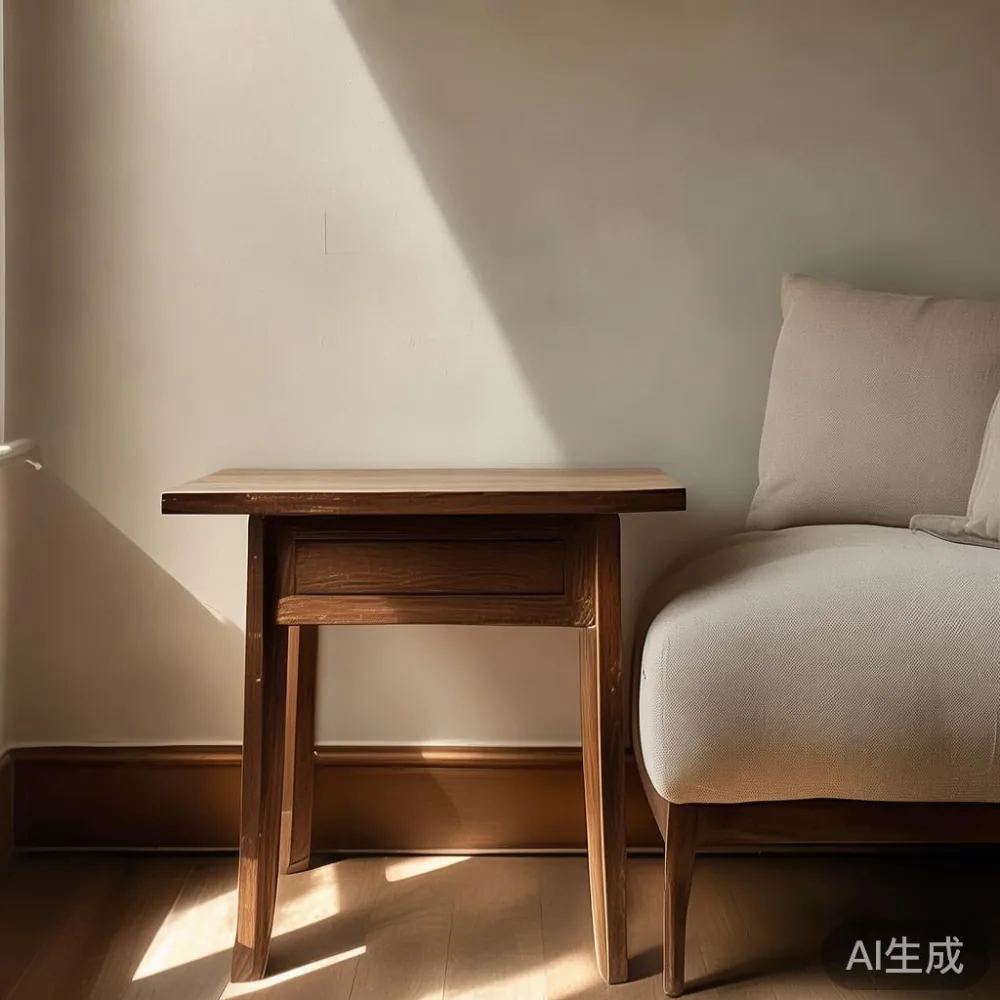
Solid timber reacts hygroscopically: it absorbs moisture when the air is humid and releases it when the air is dry. A 45 cm wide solid oak side table might expand by roughly 1 to 3 mm across its width during severe seasonal or climate-related changes. Oak is generally more stable than mahogany, teak, or pine, but species, board thickness, joint construction, and finish all affect the result.
For an HDB flat, the main risks are not only seasonal. Kitchen vapour, laundry drying, bathroom doors left open, and balcony doors propped open create short humidity cycles. A 55 cm side table placed 1 m from a wet-laundry area may experience more movement than one beside a bedroom wall. In a condominium near the coast, salt in the air can also stain metal hardware and accelerate corrosion, although the timber itself remains the main concern.
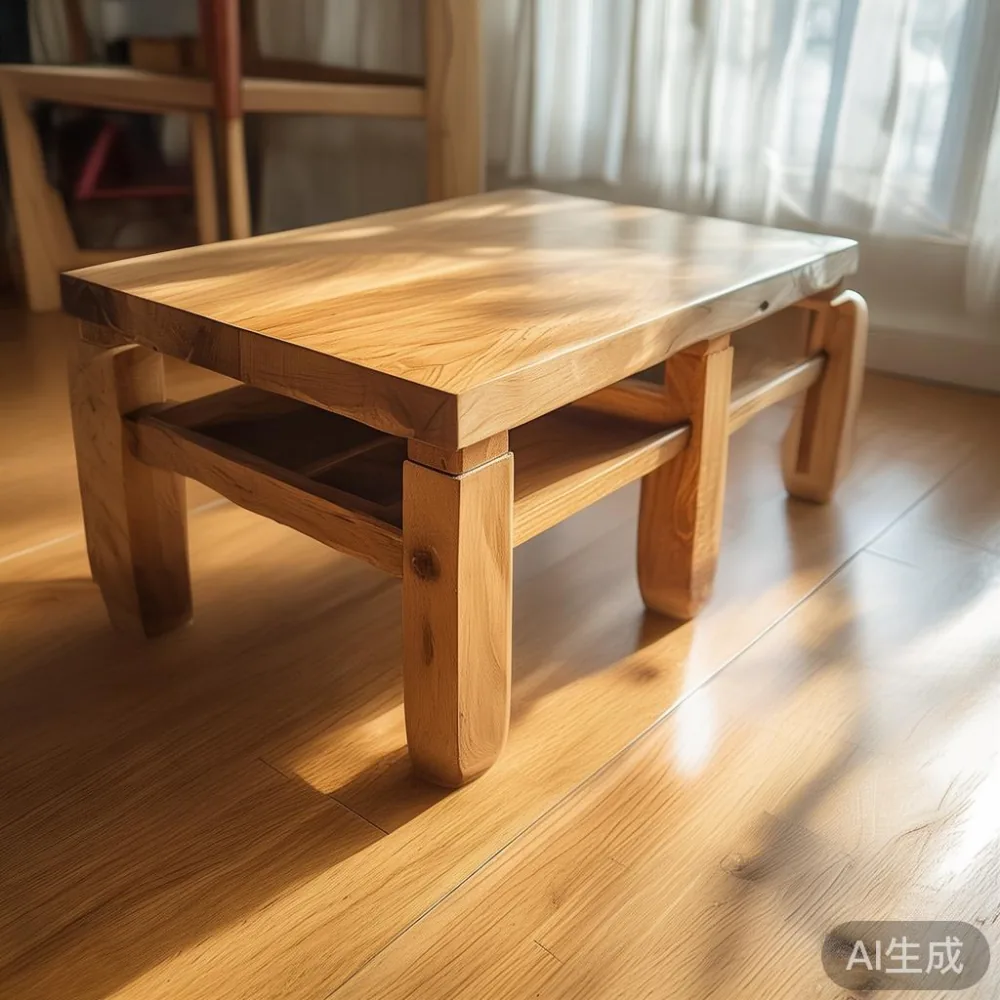
How much moisture should wood receive?
Wood furniture is normally manufactured in a controlled environment, then acclimatised to its destination. A responsible maker uses kiln-dried timber with a moisture content suited to local conditions, commonly around 8% to 12% for indoor furniture in tropical markets. This is not permission to expose the table to standing water; it means the wood starts closer to a useful equilibrium.
You can buy an inexpensive digital moisture meter and check several points on a side table. Readings of 8% to 12% are generally reassuring in an air-conditioned Singapore home. A reading above 16% in a table sold as indoor furniture suggests that it may have been stored in humid conditions or has absorbed moisture after delivery. Readings below 6% can indicate excessive drying, though a cheap meter should be treated as an indicator rather than laboratory certification.
Watch for warning signs over a period of 2 to 4 weeks: sticky drawer runners, a faint musty smell, veneer lifting at an edge, tiny surface checks, or doors that no longer close evenly. Fine checks are usually narrow lines that accept moisture and may close in more stable conditions. Deep splits, mould, black spotting, or damp patches require immediate attention rather than another coat of wax.
I tested a 50 × 50 × 55 cm solid rubberwood side table last month in my own Singapore home, placing it for 21 days beside an open laundry balcony where relative humidity ranged from 68% to 91%. Its moisture reading rose from 10% to 17%, and one drawer developed about 2 mm of movement. After relocation to an air-conditioned study at 54% humidity, it returned to 11% over 18 days. The experiment confirmed that gradual relocation helped more than repeatedly spraying the surface with a humidifier.
Should a side table have solid wood or engineered timber?
Solid wood is not immune to humidity, but it can usually be repaired and refinished more successfully than many engineered panels. A solid wood side table with a 20 mm to 25 mm tabletop has more visible and tactile appeal than a thin membrane-faced board. It can also be sanded and refinished years later, which matters in a 10-year structural warranty environment where appearance changes are expected.
High-quality plywood, MDF, and finger-jointed wood can perform well when their edges are sealed and the panels are not exposed to direct moisture. However, moisture entering through an unfinished edge can cause swelling or delamination. Ask whether all faces, edges, and undersides are sealed. For a table near an air-conditioner, keep it at least 30 cm away from the direct airflow so the wood does not dry unevenly.
Product descriptions deserve careful reading. A “solid wood” side table should identify the timber and may combine it with stable joinery; a “wood product” may use veneer over engineered board. Neither description alone guarantees humidity performance. Ask how the table was dried, how long it was acclimatised, and what the warranty covers.
What should I look for when buying a side table in Singapore?
Begin with dimensions and delivery constraints. HDB corridors and common lift lobbies vary by block, so measure the route before purchase. A side table 45 cm wide and 55 cm tall may fit comfortably through a 90 cm door, but a 70 cm wide model needs careful turning in narrow corridors. For a larger 60 × 60 cm table, check lift door widths and turning space rather than relying on the furniture showroom.
Heavier is not always better. A solid oak side table weighing 18 kg may require two people, while a rubberwood version weighing 7 kg is easier for one person to install near a lift. Check the packed weight, and choose a design with removable shelves if frequent moving is likely.
Also compare finishes. A hardwax oil or matte lacquer allows the grain to remain visible and can be renewed with the correct care products. Gloss lacquer offers a wipe-clean surface but may show scratches and moisture-related edge marks. Marble table surfaces tolerate humidity better than timber, yet the marble itself can stain if acidic liquids are not wiped away.
Price is only one part of the decision. A SGD 289 side table should include clear timber, finish, dimensions, weight, and delivery information. A SGD 649 table with kiln-dried oak, sealed edges, and strong joinery may suit frequent use better. Ask whether delivery takes 7 to 14 working days and whether returns are accepted within 14 days. For orders above US$350, MIDHILL offers free shipping under its stated policy, but buyers in Singapore should confirm the landed cost, GST treatment, and any local clearance charges before checkout.
Can I prevent humidity damage with simple routines?
Yes. Keep the side table away from open windows during very wet periods, but do not trap it against a cold wall. Maintain indoor relative humidity around 45% to 65% where possible, especially in bedrooms where wardrobes and nightstands are stored. Singapore’s dehumidifiers can help; a unit capable of removing 10 to 20 litres of moisture per day is useful in a persistently damp HDB flat, though room size and insulation matter more than the label alone.
Wipe spills within 10 minutes and use coasters or a tray. Do not leave damp washcloths on the wood. For weekly care, dust with a soft microfibre cloth and follow the finish supplier’s instructions. A small amount of suitable furniture wax can help protect the surface, but applying too much wax or oiling too often can darken the timber and make repairs inconsistent.
Allow the table to acclimatise after delivery. Keep it in its intended room for 5 to 7 days before tightening drawers or placing books on the top. If it came from a much drier air-conditioned environment, avoid rapid exposure to balcony humidity. This adjustment is particularly important for a nightstand, which may move between a bedroom and a service yard during moving day.
How does humidity interact with different furniture styles?
The design style does not change the physics of timber, but it changes where the furniture is likely to sit and how maintenance is expected. French light luxury styling often uses pale oak, walnut accents, rounded forms, and slim metal details. Post-modern light luxury may combine clean lines with warmer timber and tactile finishes. American light luxury frequently favours broad, solid components and visible grain. Each approach can suit a side table if the wood species, finish, and construction suit the room.
A pale solid wood side table may show moisture-related colour changes more readily than a dark stain, so buyers should ask for finish samples rather than relying on showroom photographs. A solid wood sofa, bed frame, dining table, or wardrobe will also respond to humidity, but each has different consequences: a bed frame may loosen at a joint, a dining table may develop movement across its breadth, and a wardrobe may distort its doors.
Designers sometimes ask about European sofa vs Mid-century modern sofa when planning a living room around a wood side table. The comparison is useful for silhouette and spacing, not for moisture resistance. Likewise, a search for how to style light luxury sofa in room is not a substitute for checking timber specification. Wood species and environmental exposure determine how a side table behaves.
What warranty and aftercare should a Singapore buyer expect?
A meaningful warranty should separate structural integrity from surface appearance. Joint separation caused by defective construction should be covered, while movement linked to high humidity, direct water exposure, or improper care should be explained. MIDHILL provides a 10-year structural warranty and lifetime refinishing, which gives buyers a clear path for restoring a surface after years of use. Confirm whether refinishing includes labour, return transport, and finish-matching, and retain the original invoice.
Lifetime refinishing does not mean the finish will remain untouched for 50 years. A table used daily may need its surface renewed after 8 to 15 years, depending on UV exposure, cleaning, and finish type. Refinishing can usually correct superficial checks and wear, but deep structural damage or mould contamination needs a different remedy.
For shoppers comparing categories, questions about the best Modern wardrobe for 2026, is Japanese wardrobe worth it, and best Rustic sofa for 2026 often centre on style and storage. For any wood item, add humidity questions: Which timber is used? What is the target moisture content? Are the edges sealed? How should the piece be acclimatised? What happens if a drawer binds after 3 months?
Also verify the delivery and return timeline. A maker may quote 7 to 21 delivery days, yet the practical arrival date can depend on production, customs, lift booking, and the buyer’s availability. Singapore GST and any import documentation should appear in the final quotation. A 14-day return window provides useful time for checking dimensions, finish, and movement after the table reaches its final room.
For specifications, care advice, or a project quote, MIDHILL’s website is listed as www.midhill.co. Ask for the timber species, moisture range, board thickness, packed dimensions, weight, finish type, and expected delivery lead time. Those details are more useful than a broad promise that a piece is “made for the tropics.”
What is the most practical humidity-safe side table?
The most practical side table is one with stable timber, fully sealed edges, sound joinery, and a finish appropriate to Singapore’s conditions. It should be sized for the lift route, weighted enough to feel secure but light enough to move safely, and positioned away from persistent moisture. A 45 to 55 cm square design offers useful surface area for a lamp, cup, book, or remote without dominating a compact HDB living room.
Humidity control matters more than a fashionable label. Keep the indoor environment around 45% to 65%, wipe water promptly, inspect the table every 3 months, and respond to binding doors before damage develops. In a condominium with strong air-conditioning, moderate the contrast between the living room and balcony. In an older flat with ventilation risks, use a dehumidifier and avoid placing furniture against damp exterior walls.
Solid wood furniture can remain attractive in Southeast Asia when buyers choose responsibly and maintain it with realistic routines. The goal is not to eliminate every seasonal change; it is to keep moisture changes gradual, protect the finish, and repair small issues before they become structural problems. That approach allows a side table to serve for many years while complementing a solid wood sofa, bed frame, dining table, wardrobe, nightstand, or marble table arrangement in the home.