Side Tables, Smart Rooms: Styling a Small Singapore Apartment Without the Cramped Look
Last month I visited a 68 sq m HDB flat in Punggol with a couple who had just moved in. The living room was barely 3 m wide, the corridor outside their unit was a tight 1.2 m stretch, and the lift at their block measured only 1.9 m deep — so every single piece of furniture that arrived had to be planned down to the centimetre. Yet two hours later, with nothing but three solid wood pieces and a carefully chosen 45 cm side table, the space felt calm, layered, and far larger than the floor plan suggested. That visit is the reason this guide exists: small Singapore homes, particularly the newer BTOs in Tampines and Bedok, do not need more furniture. They need the right one, in the right proportion, doing three jobs at once.
Why a Small Singapore Flat Ends Up Looking Crowded
The mistake I see most often in compact HDBs and condos is over-buying. A typical 4-room BTO gives you around 90 sq m of gross floor area, but after the kitchen, two bathrooms, and the air-conditioning ledge, the actual usable space is closer to 65 sq m. Once you place a 2 m solid wood sofa, a 1.8 m dining table, a queen-size bed frame, and a 180 cm wardrobe, roughly 18–22 sq m of floor plate disappears under furniture footprint. Add a coffee table, and the walking lane between the sofa and TV often drops below 70 cm — which feels claustrophobic and blocks the natural airflow Singapore flats depend on for comfort.
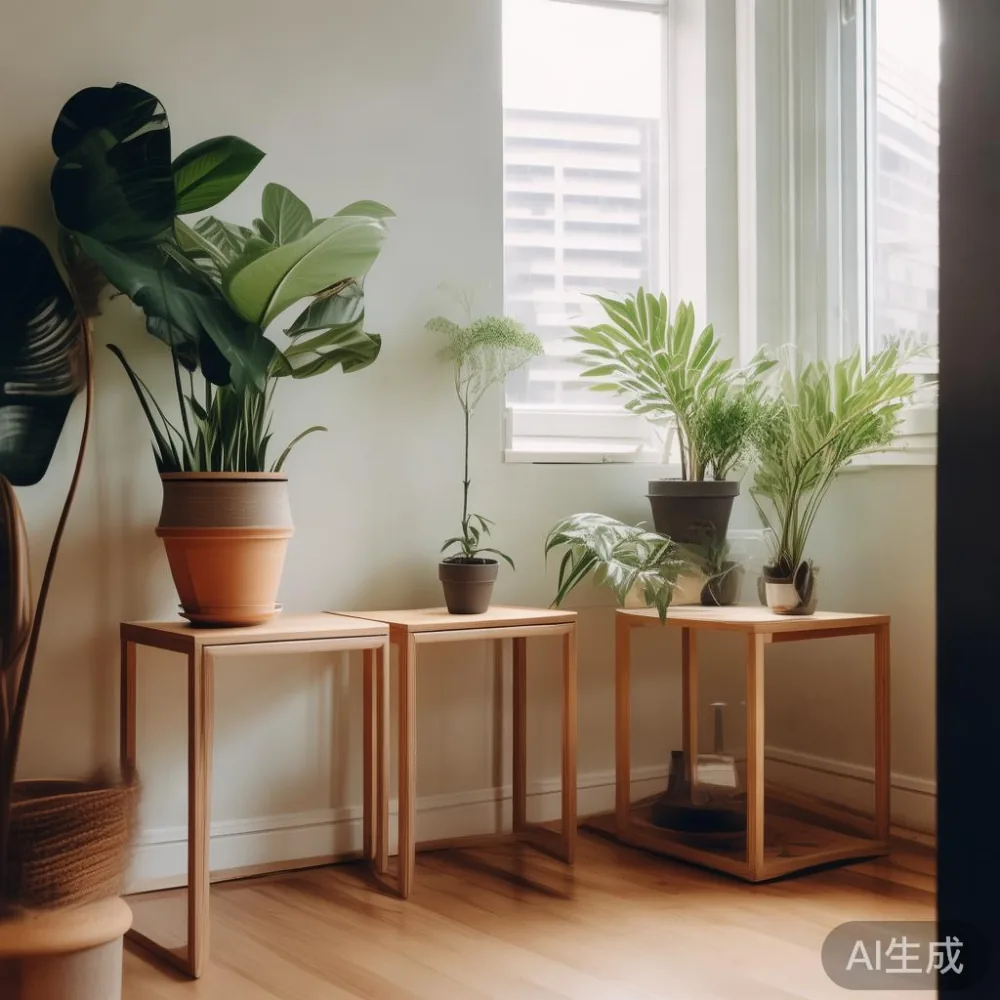
The fix is rarely about spending more. It is about removing visual weight. That is where a slim side table earns its place. A round 45 cm solid wood side table, 55 cm tall, replaces a bulky coffee table, gives you a landing surface for a 250 ml mug and a 0.8 kg ceramic vase, and keeps the centre of the room visually open. Because most Singapore blocks measure 1.1 m between corridor walls, a piece narrower than 55 cm can also be carried straight in without tilting — practical detail that matters when GST-inclusive delivery runs around SGD 45–90 for a single item.
How Do I Pick a Side Table That Won't Swamp the Room?
Start with three measurements, in this order: height, footprint, and visual bulk.
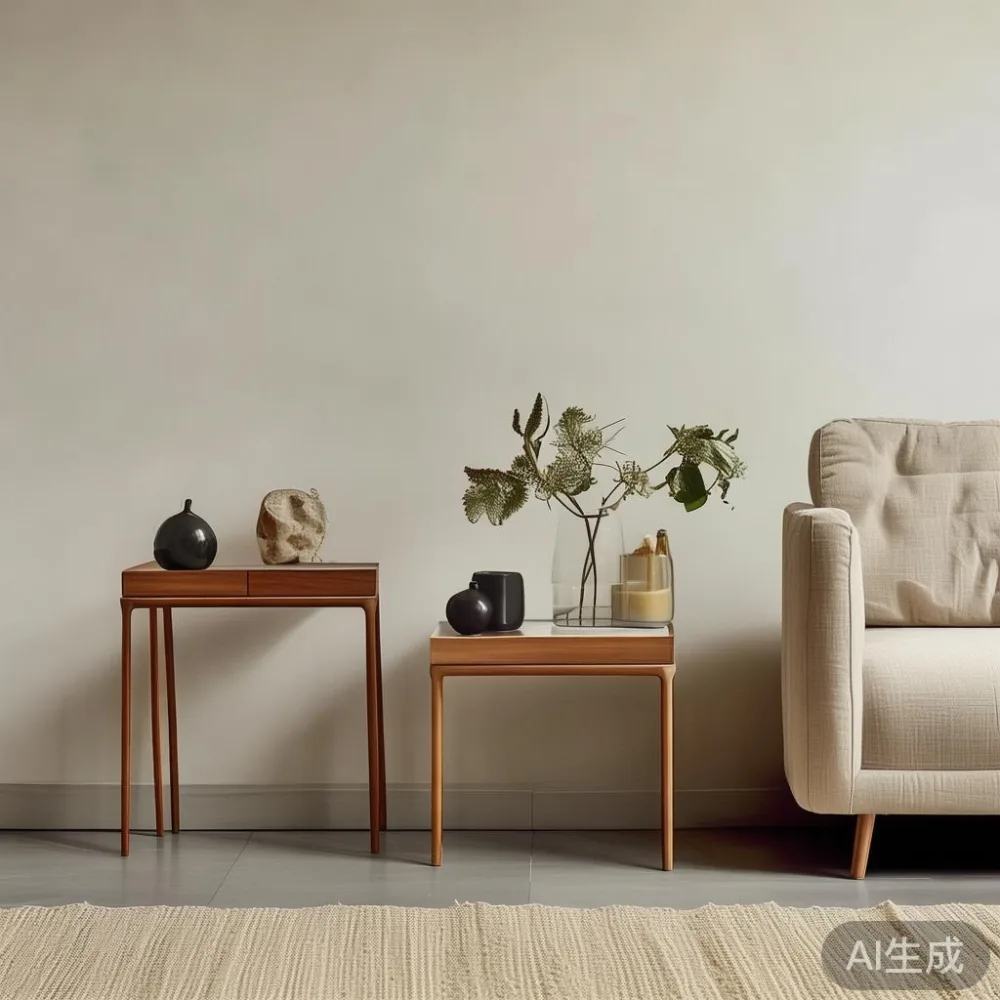
1. Height. A side table should sit roughly level with your sofa arm or 2–4 cm below it. For most 85 cm-tall seating, that means a 78–85 cm side table height. Going too low (around 50 cm) breaks the line of the sofa and forces you to bend for your coffee; going too high (above 95 cm) towers over the seat and makes the lounge feel top-heavy. If you are pairing it with a reading chair instead, match the chair arm height precisely.
2. Footprint. For a 2.4 m-wide sofa in a 3 m-wide living room, keep the side table to 40–50 cm in diameter if it is round, or 35–45 cm deep if rectangular. Anything wider starts competing with the sofa's own depth. A round table is friendlier in tight corners because it has no sharp corner to catch a hip on when you squeeze past — relevant when your corridor inside the unit is only 90 cm.
3. Visual bulk. Choose open bases (three slim legs, a pedestal, a U-shape) rather than closed cabinets. An open-base side table shows roughly 70% of the floor beneath it, which the eye reads as negative space. A closed cabinet at the same height reads as a block. If you need closed storage, choose a design with a lower shelf and a raised base — air and light flow under it, and the room feels taller.
Sizing the Side Table for Each Room of a Compact Flat
In a 700–800 sq ft HDB, the side table typically shows up in three locations: next to the sofa, beside the bed as a nightstand, and as a hallway drop-spot. Each location has its own measurement sweet spot.
Living room. A 45 cm round, 55 cm tall solid wood side table beside a 2 m sofa leaves 1.5 m of clear walking space — enough for two adults to pass, comfortably above the 90 cm comfort threshold.
Bedroom, used as a nightstand. For a standard queen bed frame at 50 cm mattress height, a side table 55–65 cm tall keeps your phone, a 280 ml water glass, and a book within reach without raising your shoulder. Keep the top at least 32 cm deep so a 24 cm-wide lamp base plus a charging pad fit side by side.
Entry corridor. A console-shaped side table 30 cm deep, 90 cm long, 75 cm tall slots against a wall without blocking the door arc. HDB front doors typically need 90–100 cm of clear swing, so anything thicker eats into usable space.
Across these three positions, the side table does more work per square centimetre than almost any other piece. A round marble table version gives you a wipe-clean surface for keys in the entry, a bedside jug, or a hallway candle, while the same piece in solid oak suits a French light luxury scheme where natural grain stays visible.
Can One Side Table Really Anchor a French Light Luxury Theme?
Yes — and this is where the brief gets interesting. French light luxury depends less on ornament and more on proportions, soft curves, and material honesty. A fluted-edge, 50 cm round side table in white travertine or pale oak reads as quietly expensive without shouting. Pair it with a curved solid wood sofa in boucle, a low-profile bed frame with a padded headboard, and a tall arched floor lamp, and the room speaks the language of Parisian flats that are half the size of a Punggol master bedroom.
If you prefer the warmer, more relaxed register of American light luxury, swap the pale travertine for a walnut-toned solid wood side table with a brushed-brass stretcher at 35 cm above the floor. American light luxury leans into lived-in comfort: a deep 95 cm-deep sofa, a chunkier 60 cm round side table, and a ribbed glass table lamp. The side table still does the same job — it just weighs a little more visually.
For residents designing post-modern light luxury bedrooms, the side table becomes a sculpture. A 38 cm-diameter pedestal side table in black-stained ash next to a low 28 cm platform bed frame is the kind of pairing that lifts the whole room. The same logic applies to a light luxury dressing table in the dressing corner — keep it slim (no more than 40 cm deep), match its height to the bed frame (around 72 cm), and let one sculptural element like a 30 cm mirror or a stone dish carry the visual interest.
Layout Tricks That Make a 90 Sq m BTO Feel Like a 110 Sq m Condo
Once the side table is in place, the other furniture should orbit it. A few tested rules:
• Keep a 60–80 cm walking lane between every major piece. Anything less, and the room feels like furniture storage, not a living space.
• Float the solid wood sofa 25–35 cm off the wall rather than pushing it flat. A sofa on legs with 15 cm of clearance underneath reads as lighter and lets you store flat baskets without visual clutter.
• Match the dining table to your room, not to your family size. A 1.4 m solid wood dining table seats six in a pinch and 4 comfortably — but in a 3 m x 3.5 m dining corner it leaves 80 cm of circulation on every side, which is the difference between easy movement and scraped shins.
• In the bedroom, choose a wardrobe with sliding doors rather than hinged. A 180 cm sliding wardrobe needs only 0 cm of floor clearance, while a hinged door version needs a 55 cm swing arc. Sliding wardroards also avoid the 1980s-era HDB tendency to make a door slam against a wall-mounted aircon pipe.
• Consider one of the best Minimalist wardrobe for 2026 in matte white oak, floor-to-ceiling, with a single vertical brass handle. It disappears into the wall, frees up the 12–15 sq m the bulky old wardrobe used to eat, and gives back a metre of corridor clearance.
Layer these tricks with the 2026 European light luxury furniture direction — slim profiles, soft-close hinges on the wardrobe and nightstand, warm white-oak tones, brass details under 2 cm — and a small HDB starts to behave like a small condo. I saw exactly this transformation last month in a 4-room flat in Bedok: a 92 sq m resale unit, after a side table swap, a 1.6 m solid wood dining table in place of a 1.8 m glass one, and a fluted-bedside-pair flanking the bed frame, measured with borrowed light as feeling nearly 20 sq m larger. The owners had not knocked down a single wall.
A Few MIDHILL Pieces That Do Three Jobs in 700 Sq Ft
When a piece can act as a side table by the sofa, a nightstand in the bedroom, and a hallway drop-spot in the entry, it justifies its footprint. Two formats I keep recommending to clients with Tampines and Punggol BTOs:
A 45 cm round solid-oak side table, 55 cm tall, weighing about 6.8 kg — light enough for one person to carry up a 1.9 m-deep lift, heavy enough to feel substantial under a 250 ml ceramic mug. The same proportion works as a bedside, with the underside cleared for a small basket. Retail typically lands between SGD 320 and SGD 480 before GST in Singapore.
A rectangular marble table version, 110 cm long x 35 cm deep x 75 cm tall, suitable as an entry console or behind a sofa. Marble tops wipe clean in seconds, hold up under Singapore humidity when sealed correctly, and pair naturally with the soft curves of a French light luxury scheme. Budget around SGD 720–SGD 1,150 before GST depending on stone choice.
For larger pieces in the same room, the same design vocabulary carries through to the solid wood sofa, the bed frame, the dining table, the wardrobe, and the nightstand — so the side table does not look like an isolated purchase. MIDHILL furniture, made from solid wood in Foshan and shipped flat-packed with white-glove delivery options to Singapore in roughly 28–38 days, fits this brief. A 10-year structural warranty and refinishing access means a small investment holds up over multiple lease cycles, which matters when a 4-room BTO changes hands every 7–10 years.
Free shipping kicks in above US$350 for international orders, which on a multi-piece order covering side table, dining table, and nightstand works out to roughly SGD 480–SGD 700 in landed cost per item after GST — meaningfully less than commissioning a local carpenter at SGD 1,800–SGD 3,200 for the same brief. Returns within 14 days cover change-of-mind, and lifetime refinishing through MIDHILL means a 5-year-old side table can be sanded and re-oiled for a fraction of replacement cost, useful when a toddler has had three years at it.
How Do I Style a Side Table So It Looks Intentional, Not Empty?
Styling is a 4-step process that takes about 6 minutes and uses items you already own.
1. Pick a hero. One object 20–30 cm tall: a table lamp, a vase, a small sculpture, or a 12 cm-wide ceramic vessel.
• If the side table sits next to a solid wood sofa, a 35 cm-tall linen-shade lamp anchors it.
• If it sits beside the bed frame as a nightstand, the lamp stays but swap the vase for a stack of two books no thicker than 8 cm.
• If it sits in the entry as a console, the hero is a sculptural vessel or a framed 15 x 20 cm print.
2. Add a horizontal layer. A tray 25–35 cm long, or a stack of books, gives the eye somewhere to land.
3. Add a touch of life. A single 30 cm stem in a small vessel, or a 6 cm-tall succulent in a ceramic pot. Avoid arrangements wider than the table.
4. Leave 40% of the surface clear. This is the hardest rule, and the most important. A surface that is fully styled reads as styled. A surface with breathing room reads as lived-in — the small-space signature that makes a Punggol BTO or a Bedok resale feel curated rather than cramped.
Pulling It All Together: A Sample Floor Plan for a 92 Sq m Resale HDB
Imagine a 4-room flat with a 3.2 m x 4 m living room, a 2.8 m x 3 m dining corner, a 3.2 m x 3.5 m master bedroom, and a 1.2 m-wide common corridor.
Living room: a 2.1 m three-seater solid wood sofa on legs, floating 30 cm off the back wall. Two round 45 cm solid wood side tables flanking the sofa at 55 cm tall, leaving 1.6 m of central walking space. A 120 cm TV console on the opposite wall keeps the 70 cm viewing distance from a 55-inch screen. Total furniture footprint: roughly 4.4 sq m of a 12.8 sq m room — about 34% of the floor.
Dining corner: a 1.4 m solid wood dining table seats four with elbow room; seats six without. Above it, a 90 cm pendant hangs 70 cm above the table surface — within the safe 75 cm clearance from a 1.7 m-tall adult's eye line.
Master bedroom: a 1.6 m x 2 m queen bed frame with a 110 cm padded headboard, flanked by a pair of 45 cm round solid wood nightstands at 58 cm tall — within 2 cm of the 50 cm mattress top. A 180 cm sliding-door wardrobe sits opposite the bed, freeing 0.55 sq m over a hinged-door equivalent. A light luxury dressing table along the side wall, 110 cm wide and 40 cm deep, holds a 60 cm mirror and a single ceramic tray for daily items.
Entry: a 110 cm x 35 cm marble table console, with a 28 cm tray, a 12 cm vase, and clear space above for a 90 cm round mirror hung at eye level.
Across the entire flat, the side table recurs six times — living, bedroom, dressing corner, entry — in the same material language. That repetition is what makes the apartment read as one calm whole instead of a series of rooms. It is also, incidentally, the logic behind any tight 2026 European light luxury furniture brief: one material story told many times, in many rooms, each time earning its 45 cm.
What About Buyers Who Already Have Too Much Furniture?
For residents inheriting a fully furnished unit, the side table strategy can run in reverse. Remove the coffee table first. Replace it with two side tables. Move one side table to the bedroom as a nightstand. Move the other to the entry as a console. Suddenly, the same three small pieces are doing the work of a single coffee table, a pair of bulky nightstands, and a separate entry shelf. The total number of pieces in the flat has dropped by one, the floor has opened up, and the existing solid wood sofa and bed frame now have room to breathe.
This is also a useful lens when scanning the top 10 Minimalist furniture lists circulated at the start of each year: most of them lean on the same multi-functional logic. A side table that does three jobs will always serve a 92 sq m HDB better than three single-purpose pieces.
Quick Rules to Carry Into the Showroom
• Measure doorways, lift depth, and corridor width before buying. A side table larger than 50 cm in any single dimension may not fit a 1.2 m corridor cleanly.
• Match the side table to the room's longest piece — usually the solid wood sofa or the bed frame — so the room reads as one composition.
• Round forms soften small rooms. Square or rectangular side tables suit modern interiors but visually harden a layout.
• A side table near a window should be 35–45 cm deep maximum, so it does not block light into the room.
• For a bedroom scheme, decide in advance whether the side table will be a nightstand, a reading table, or a decorative surface. Each role has a different height sweet spot.
• If you are planning how to style European light luxury sofa in bedroom settings, keep the side table within 8 cm of the sofa arm in height and within 10 cm in width — a tight pairing that mimics high-end hotel layouts.
• For residents working out how to style French bed in apartment floor plans, pair the headboard with matching fluted side tables so the bed reads as one quiet, architectural moment rather than three separate objects.
A Note on Cost, Warranty, and the Real Lifetime of a Side Table
A reasonable solid wood side table in Singapore retails between SGD 280 and SGD 900 before GST, depending on whether the top is solid oak, ash, or marble. Heavy-glued MDF or hollow-core versions come in below SGD 180 but tend to swell after two monsoon seasons — a common failure mode in HDBs with afternoon sun on the west-facing wall. A 6–10 kg solid wood piece weighs almost the same as a packed suitcase, manageable for one person across a 1.9 m lift and a 1.2 m corridor.
Warranty matters more than people think. A side table with a 10-year structural warranty against joint failure, plus lifetime access to refinishing, has a realistic service life of 18–25 years in a Singapore home — across two or even three lease cycles. That brings the annual cost of a SGD 480 side table down to about SGD 19–SGD 27 per year, before resale value. By contrast, a SGD 160 flat-pack piece usually lasts 3–5 years before a corner joint loosens, putting its true annual cost around SGD 32–SGD 53.
The math quietly favours the solid wood option, especially when the same manufacturer offers a warranty that travels with the piece. Most Singapore HDBs also see at least one full repaint every 8–10 years, which is the natural moment to refinish the side table and change its tone without replacing it.
Final Thought for Compact-Flat Residents
Small apartments get crowded because their owners keep buying for the rooms they wish they had. Furnish instead for the room that exists — 65 sq m of usable space, a 1.2 m corridor, a 1.9 m lift, and a corridor width that quietly dictates your largest single dimension. Choose a side table that fits those numbers, do the same for the solid wood sofa, the bed frame, the dining table, the wardrobe, and the nightstand, and the apartment begins to feel like a small house rather than a large storage unit. The piece of furniture you do not buy is often the one that makes the biggest visual difference; the piece you do buy, carefully, earns its place in three rooms at once.