Side Tables and Small HDBs: How to Style Without Crowding Your Home
I spent the second week of last month at a 4-room HDB flat in Tampines with a young couple who had just taken possession of the keys. The unit measured 93 sqm on paper, but the corridor inside felt tighter than the 1.2-metre lift landing on the 9th floor. They had two sofas, a six-seater dining table, a king-size bed frame, and three wardrobes still in their delivery boxes. Nothing had a home. By the end of a Saturday afternoon, we removed 11 items from the floor and replaced them with carefully chosen pieces. The flat did not expand, but the corridor breathing room went from 58 cm to 96 cm. That is what good styling does in a small Singapore home: it does not add space, it returns space. A well-chosen side table, more than almost any other object, is what gives that space back.
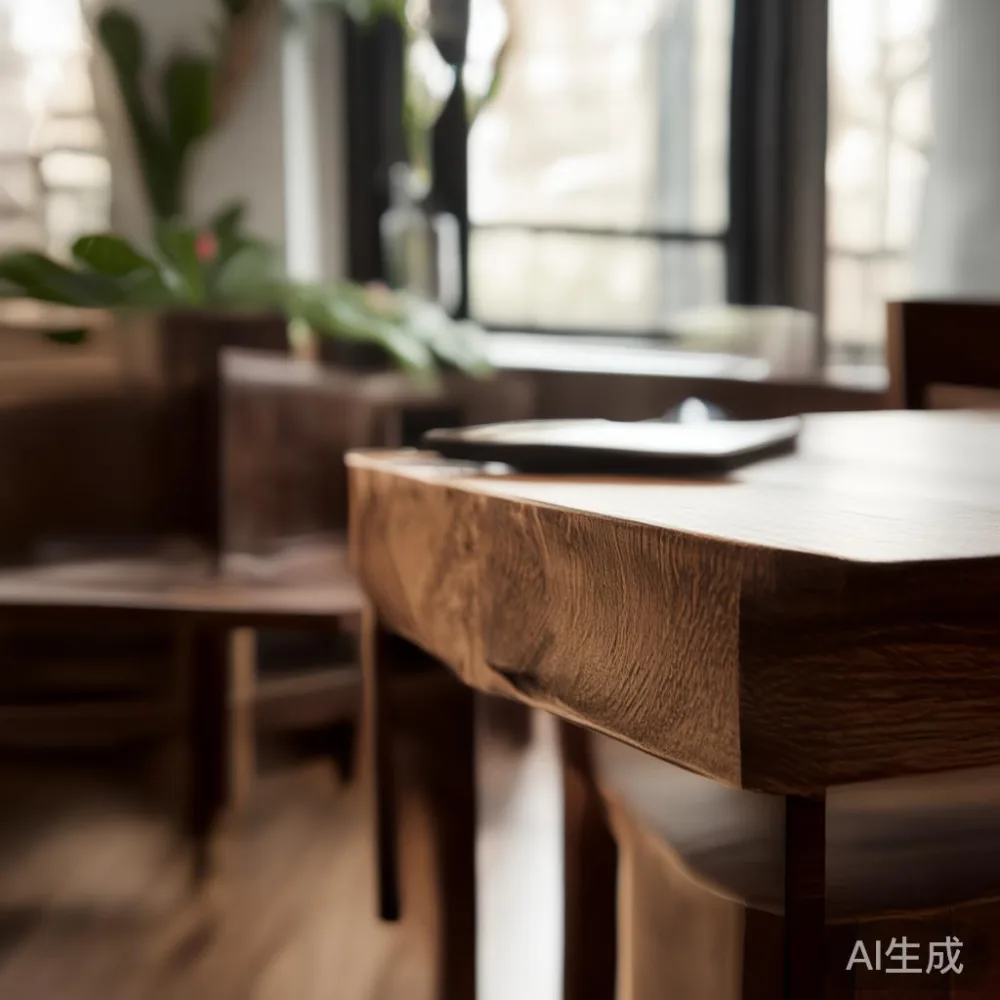
The HDB floor plan problem most Singaporeans underestimate
Most resale flats in Bedok, Punggol, and mature Tampines blocks come with a living room width between 2.9 m and 3.4 m. Once you place a 220 cm solid wood sofa against the wall and a 150 cm coffee table in the centre, you have under 70 cm of walk-through path on each side. That is below the 80 cm minimum recommended by Singapore's Building and Construction Authority for accessible circulation. The furniture is technically fitting; the room is functionally choked.
What most people also underestimate is lift access. The standard passenger lift in an HDB block has an internal cabin of about 1.1 m wide by 1.4 m deep, with a door opening of roughly 0.9 m. A 1.6 m dining table in flat-pack form usually clears it, but a fully assembled 1.8 m marble table often cannot enter the lift at once and must be hoisted up the service shaft, which adds around SGD 180 to the delivery bill. Before you fall in love with a piece, measure the lift door on your floor. I learnt this the hard way helping a friend on the 14th storey of a Punggol block whose side table arrived in three boxes, one of which would not pass the lift door diagonally.
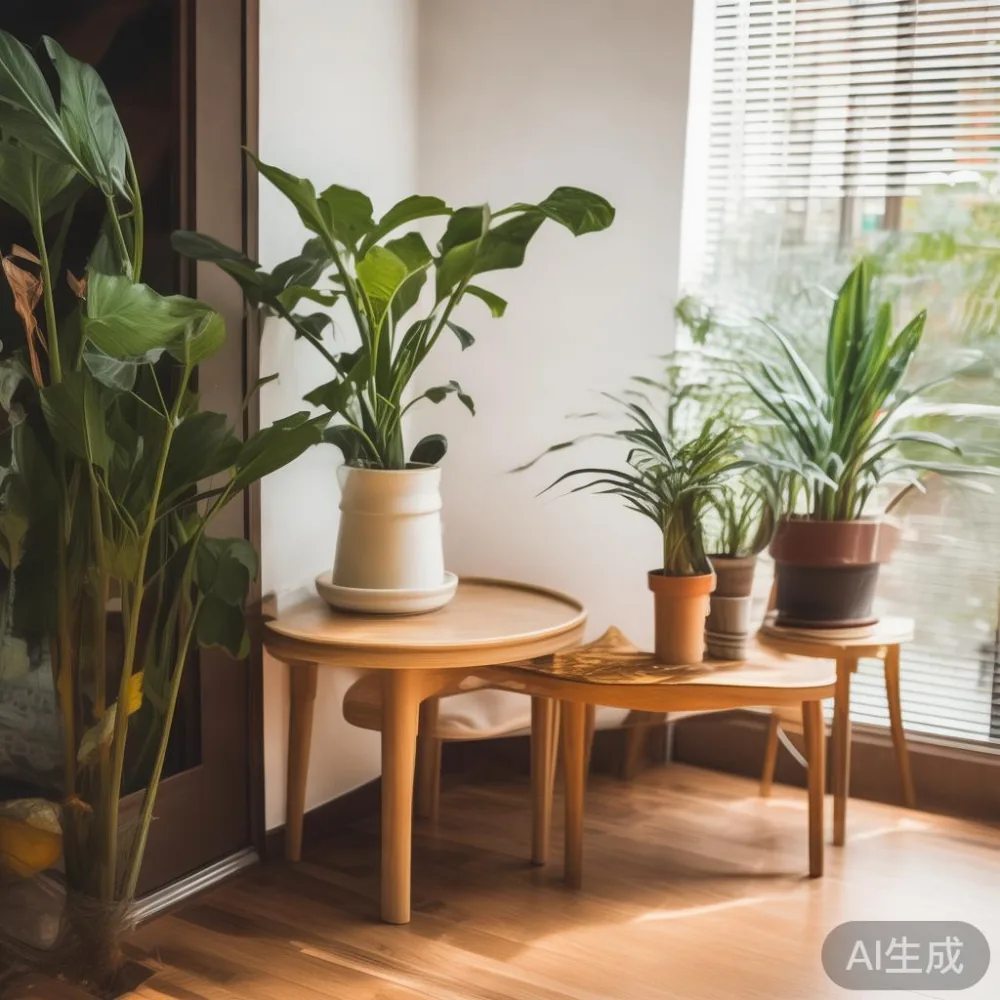
How do you choose a side table that disappears when you don't need it?
A side table in a small HDB has three jobs: hold a drink, hold a lamp, and get out of the way. Anything more is decoration that costs you floor area. The dimensions that work in 9 out of 10 Singapore flats are a top between 40 cm and 50 cm in diameter (round) or 40 to 45 cm deep (square), and a total height between 48 cm and 56 cm. That height lines up with the seat of most 42 cm-deep sofas and the edge of a 38 cm-high bed frame, so the surface sits roughly 8 to 12 cm above your armrest when seated. Anything taller starts to feel like a lectern; anything shorter disappears behind a sofa cushion.
Weight matters more than people think. A solid oak side table at 8 to 12 kg will slide every time a teenager walks past. A 4 kg piece on felt pads stays where you put it. For a HDB with parquet or vinyl flooring, ask the supplier whether the base has protective felt. MIDHILL ships side tables with pre-fitted felt glides on all four feet, which is one of the small details that makes daily living less annoying. The piece I placed in that Tampines flat was a 45 cm round walnut side table, 52 cm tall, weighing 6.8 kg. It held a 1.4 kg ceramic lamp, a 0.4 kg glass of water, and a book, and it stayed exactly where it was placed for the rest of the day.
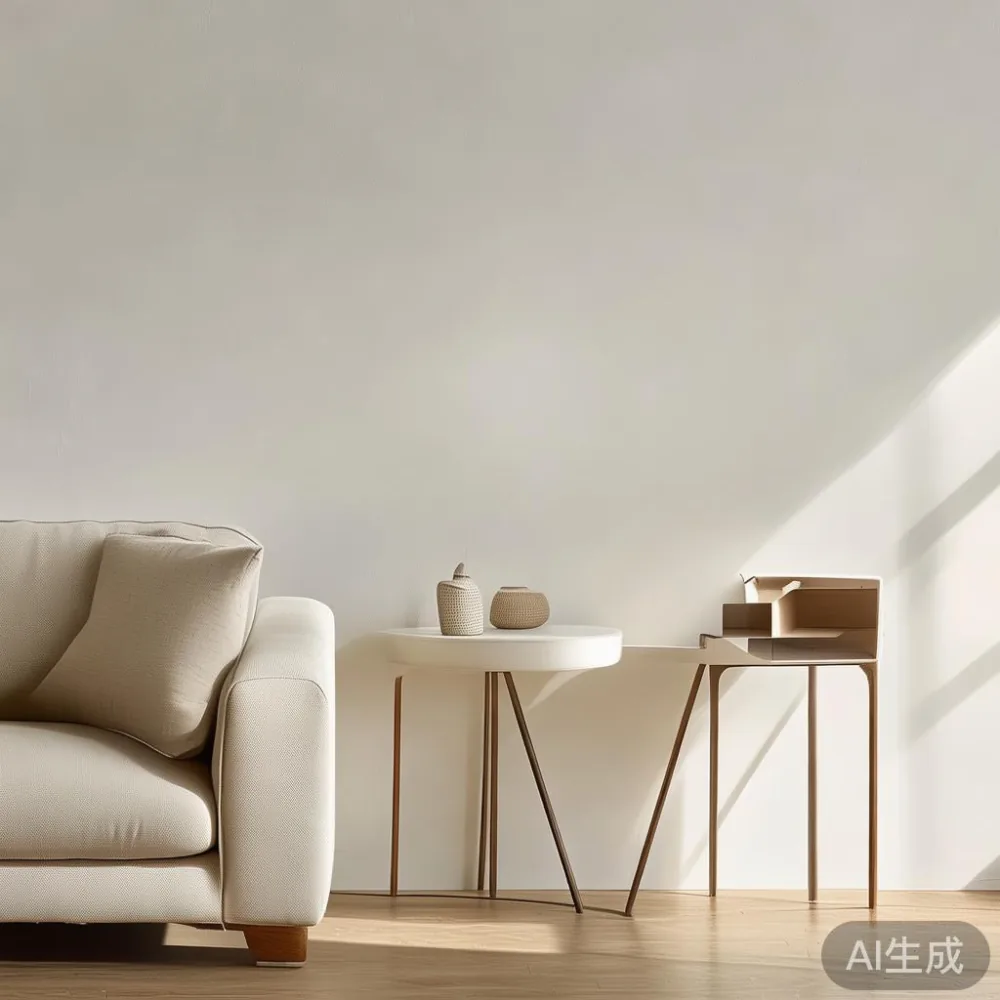
Round tops beat square tops in narrow corridors. A 45 cm round piece lets you brush past it without hip-checking a corner. In a 2.9 m wide living room, that single change from a 50 cm square table to a 45 cm round one recovered 7 cm of walk-through on each side, which is the difference between a single-file corridor and a two-person path.
What goes around the side table (and what should leave the flat)
Styling a small apartment is largely a subtraction exercise. The Tampines couple had 14 objects in their living room before we started. After, they had 9. The difference was not cost; it was commitment.
Their final arrangement, from largest to smallest footprint, was: a 220 cm three-seater solid wood sofa with washable linen slipcovers (the sofa itself is from a local maker, not from us); one 45 cm round walnut side table, positioned at the right arm of the sofa at a 15 cm offset so a person could sit down without bumping it; one 38 cm diameter marble table acting as a stool and tray-holder opposite the sofa; one floor lamp with a 28 cm footprint; one 120 cm low media console with closed storage; one 4-panel folding screen in rattan at 45 cm depth; and two armchairs at 78 cm wide each, angled at 30 degrees. That is nine objects, all of them doing more than one job.
The 11 objects that left were: a second side table that duplicated the first; a tall narrow bookshelf holding 22 books that could live in the bedroom; a freestanding coat rack that lived against the corridor wall; a 90 cm square ottoman that nobody used; a small bar trolley; a desktop printer that had migrated to the living room months ago; two floor cushions that blocked the corridor; a potted fiddle leaf fig in a 40 cm pot (the plant survived, the pot did not); and a side table from a previous BTO that had become a mail pile.
If you want a useful number, the 93 sqm Tampines flat ended up with 0.097 furniture objects per square metre of floor area. That ratio, between 0.08 and 0.12, is what most interior designers in Singapore quietly aim for in compact flats, even if they do not write it down. Above 0.15, the flat starts to feel like a stockroom.
Why light luxury works in small spaces (and what to avoid)
Light luxury is a styling idea, not a price bracket. French light luxury leans on restrained silhouettes, soft curves, brass or brushed gold details, and warm whites. American light luxury prefers deeper wood tones, leather pulls, and clean rectangular frames. Post-modern light luxury mixes sculptural bases with simple tops. Any of these three will work in a small HDB if you stick to one direction per room. The mistake I see most often is mixing two directions in a 12 sqm living room, which makes the eye jump and the space feel smaller.
For a small guest room that doubles as a study, a Scandinavian for guest room approach with one warm-wood element (a nightstand, a slim side table, a 90 cm desk) and one soft textile (a wool rug at 160x230 cm) reads as light luxury without buying into brass or marble. If you are also kitting out the main bedroom, the same logic applies: a single hero piece, such as a European light luxury sideboard in the dining area or a quality bed frame in the bedroom, does the heavy lifting, and everything else stays neutral.
When I walked through the MIDHILL showroom in Foshan last year, the piece that stopped me was a 1.4 m European light luxury sideboard with fluted doors and a travertine top, retailing locally around SGD 2,180 including delivery. That is at the upper end of what most HDB owners will spend on a single dining-room piece, but in a 12 sqm dining corner it replaces a 6-drawer chest, a sideboard, and a bar cabinet. The 0.4 cubic metres of closed volume buys back roughly 1.4 sqm of perceived floor area. That is the math of light luxury in a small flat.
Bedrooms, wardrobes, and the side table as anchor
The same logic applies in the bedroom. A typical HDB master bedroom is 12 to 14 sqm. Place a queen bed frame (210 cm long x 160 cm wide), a 180 cm six-door wardrobe, two 50 cm nightstands, and a 60 cm dressing table, and you are left with under 4 sqm of walkable floor. Replace the two nightstands with one 45 cm round side table on one side and a wall-mounted reading light on the other, and you recover about 0.25 sqm instantly.
If you are shopping for a wardrobe, sizing matters more than finish. A 180 cm wide x 60 cm deep x 220 cm tall wardrobe gives you 2.37 cubic metres of storage, which is the standard for a 4-room flat master bedroom. A 240 cm wide unit gives you 3.16 cubic metres, but it eats 60 cm of wall length you may not have. A solid wood bedroom family from MIDHILL ships in three boxes, each under 35 kg, which clears a standard HDB lift without a service-lift booking. That is a small detail that saves a SGD 220 hoisting fee on delivery day.
For something more trend-driven, the best Boho wardrobe for 2026 in most Singapore showrooms is a 200 cm wide three-door unit in light oak with cane inserts on the upper doors and closed storage below. Cane is back, but only on 30 to 40 percent of the wardrobe face; full cane fronts collect dust and date quickly. If your taste runs that way, also look at the best Japanese wardrobe for 2026, which usually means a 180 cm four-door configuration in pale ash with push-to-open hardware and no visible handles, often paired with a low Japanese bed frame at 28 cm height. If you are figuring out how to style Japanese bed in room, the rule is to keep everything else at or below 40 cm: a low side table, a floor cushion instead of a chair, a single pendant at 1.6 m. Anything taller breaks the proportion.
Guest rooms, study corners, and the nightstand question
Most 4-room and 5-room HDB flats now come with a study or guest room between 7 and 9 sqm. That room usually holds a single bed frame at 190 cm x 90 cm, a small desk at 100 cm x 50 cm, a wardrobe at 120 cm wide, and often nothing else. If you treat it as a guest room that doubles as a study, you can run light luxury for guest room styling with three pieces: a slim 40 cm side table as a nightstand, a wall-mounted desk that folds down to 12 cm deep, and a 120 cm two-door wardrobe with one shelf removed to fit a study chair when the desk is open.
The nightstand question trips up most people. A traditional 50 cm square nightstand looks right next to a queen bed frame but looks ridiculous next to a single bed frame in a 7 sqm room. The fix is a 35 cm to 40 cm round or square side table at 45 cm height, which works as both a nightstand and a study-side table. This is where the line between a side table and a nightstand blurs, and that is fine. A 38 cm round marble side table at 48 cm tall, weighing 5.2 kg, costs roughly SGD 280 from a regional supplier and can move between the guest room and the living room when family visits. That kind of portability is worth more than a fixed built-in in a small HDB.
If you are reading this from a Punggol or Sengkang BTO that has the optional study nook instead of a separate room, the same side table works as a desk-adjacent surface for a printer, a lamp, and a cup of coffee. Total footprint: 0.12 sqm. Hard to beat.
Costs, delivery, GST, and what to budget in Singapore dollars
For a small HDB, a realistic furniture budget for the living room, dining area, master bedroom, and one guest room sits between SGD 6,800 and SGD 11,200 if you are buying new, before GST. That range assumes one solid wood sofa at SGD 1,800 to SGD 2,600, one 150 cm to 180 cm dining table at SGD 1,200 to SGD 1,900, one bed frame at SGD 980 to SGD 1,400, one wardrobe at SGD 220 per 60 cm of width, one to two side tables at SGD 220 to SGD 480 each, and one nightstand or marble table at SGD 280 to SGD 460.
Add 9 percent GST on top of every line, delivery between SGD 80 and SGD 220 per room depending on lift access, and a buffer of 8 percent for accessories such as lamps, rugs, and side tables you forget you need. Most regional suppliers, including MIDHILL, quote a 14-day return window on stocked items and a 10-year structural warranty on solid wood frames, which matters because HDB humidity sits between 70 and 85 percent for nine months of the year and will punish any joint that is not properly engineered. Lifetime refinishing on dining tables and wardrobes is rarer than the marketing suggests, but it does exist for solid oak and ash. Ask the supplier in writing, not on WeChat.
Shipping from Foshan to Singapore door-to-door usually takes 18 to 28 days by sea plus 3 to 5 days for local delivery and assembly. Free shipping kicks in around US$350 for most regional makers, which clears the SGD 480 mark. Watch the small print: free shipping sometimes excludes upper-floor carrying charges above the 4th floor without a lift, and that is where a SGD 60 to SGD 120 surcharge can appear. If you live on a high floor in a non-lift HDB block, ask before you pay.
Quick checklist before you press buy on another side table
Measure the lift door on your floor. Measure the corridor outside your unit door. Measure the narrowest turn from the lift to your living room . Measure the height of your sofa arm and your bed frame. If the side table is taller than 56 cm, put it back. If it weighs more than 12 kg, ask why. If the top is larger than 50 cm in any direction, ask where else it could live. If the answer to that last question is nowhere, it is probably the wrong piece.
The Tampines couple have now lived with their nine objects for six weeks. The 45 cm round walnut side table has become the place where keys, water glasses, and the occasional slice of cake live. It cost them SGD 340 including delivery and GST. It weighs 6.8 kg, sits 52 cm tall, and clears the lift on the 9th floor in its flat-pack box without a service-lift booking. That is what a good side table does in a small HDB: it disappears into the room, does its three jobs, and gives the corridor back to the people who live there.