Styling a Small Apartment Without Making It Feel Crowded: A Side Table-First Approach
Last month I visited a 65 sqm two-bedder in Punggol with a colleague who had just moved in. She owned a three-seat fabric sofa, a queen bed frame, and roughly fourteen pieces of decor she could not place. The flat felt fine when empty; once her things arrived, she could not open the wardrobe door fully without grazing the dining table. Within an afternoon, we removed six items, kept one narrow solid wood side table between the sofa and the wall, and suddenly the corridor to the kitchen felt 30 cm wider. That single piece of furniture did more for the apartment than any of the larger items she had agonised over.
Small-apartment styling in Singapore is its own discipline. Lift lobbies in older Tampines blocks measure roughly 1.2 m wide, BTO corridor passages run 1.2–1.5 m, and a standard three-seater sofa at 200–210 cm long will dominate a 3.0 m x 2.8 m living room if you are not careful. The trick is not buying less. The trick is choosing pieces that earn their floor footprint. A well-chosen side table does exactly that, and this guide explains how to build an entire small-flat scheme around one.
The real problem with small HDB and condo interiors
Singapore flats are designed with efficiency in mind, not generosity. A typical three-room BTO living room sits between 9 and 11 sqm once you subtract the structural column and the aircon ledge. Push a 220 cm dining table into it and you have removed roughly 15% of usable floor area before a single chair is pulled out.
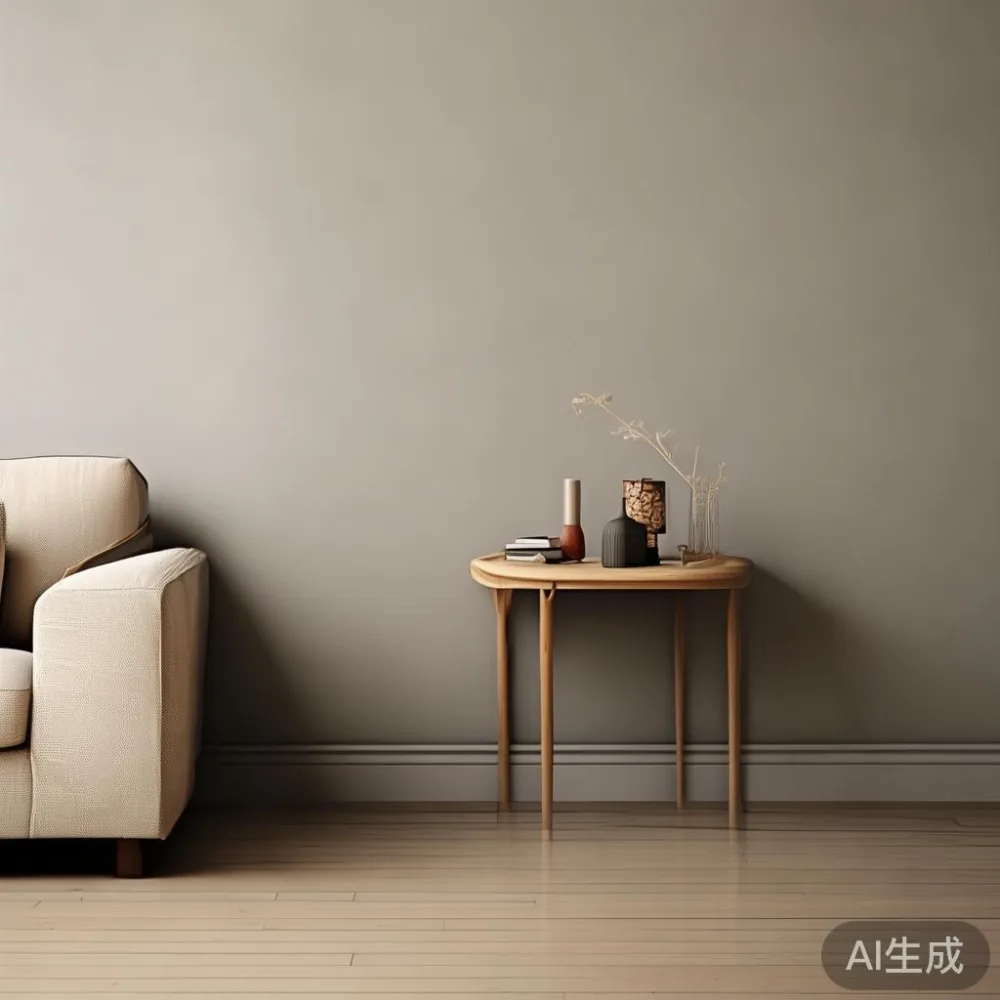
Ceiling height in most HDB blocks runs 2.6–2.8 m, which sounds generous until you stack a bed frame, a nightstand, a wardrobe, and a tall dresser in one room. Visual weight adds up faster than physical weight. A 45 kg solid wood side table with a 50 cm diameter top occupies less than 0.2 sqm of footprint yet offers the surface area of a console that would otherwise need 0.5 sqm against a busy corridor wall.
The mistake I see most often in Bedok four-room flats is owners choosing furniture for its showroom presence, not its footprint. A 1.6 m marble dining table looks superb in a 4 m x 5 m condo; the same table in a 3.0 m x 4.2 m HDB living-dining zone removes two usable seat positions. The fix is rarely a smaller sofa. The fix is a smarter side table strategy that lets everything else breathe.
What a side table actually does in a small space
A side table is the most under-rated piece of furniture in the Singapore small-apartment playbook. It is a surface, a visual anchor, and a circulation tool at the same time. Place it beside a solid wood sofa and it holds a lamp, a glass of water, and a small tray, all without the user having to reach over to the coffee table or the TV bench. Move it next to a reading chair and it becomes a perching spot for a cup of teh tarik. Slide it against a wall and it doubles as a console for keys, mail, and the inevitable Shopee parcel.
For a 50 sqm one-bedder in Punggol, a round 45 cm side table weighs about 6–8 kg in rubberwood, 10–12 kg in ash, and 14–18 kg with a marble top. The lighter options can be lifted by one person up a 1.0 m wide service lift, the heavier ones need two hands but still pass through a standard 0.9 m HDB door. None of them require a warranty card consultation, although if you buy from a Foshan maker such as FASA MIDHILL you get a ten-year structural warranty and lifetime refinishing, which matters when you are paying SGD 320 to SGD 680 for a piece you expect to keep for a decade.
The side table also solves the corridor problem. In most Tampines four-room flats, the side passage between the living room and the kitchen is 90–110 cm wide. A standard 60 cm deep console leaves a 30–50 cm walk-through, which is uncomfortable and scratches the wall. A 35–40 cm deep side table pulled 20 cm off the wall leaves a 70–90 cm walk-through, which is what the Building and Construction Authority actually recommends for primary circulation.
How do I style a French headboard in a small apartment?
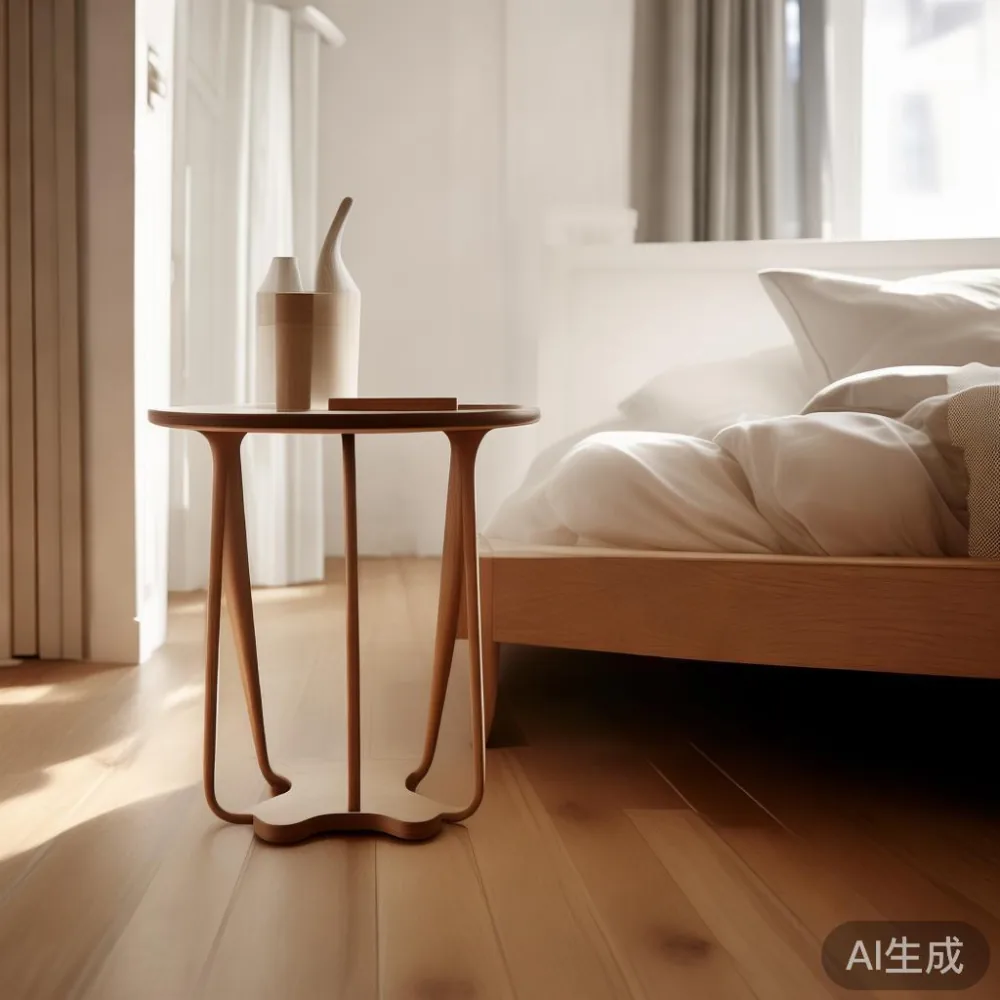
Choose an American country rubberwood master bed with a slim French-inspired headboard (around 8–10 cm thick rather than the 18–22 cm of fully upholstered designs), pair it with a 45 cm round rubberwood nightstand, and keep the wall behind it in a soft off-white so the silhouette reads as light rather than heavy.
The reason this combination works in compact Singapore rooms is the proportions. A queen headboard at 160 cm wide and 110 cm tall, finished in light oak or white-washed rubberwood, draws the eye upward without projecting outward. Add two thin nightstands (40 cm deep rather than 56 cm) and you preserve 60–70 cm of clearance on each side of the bed frame, which is enough to open wardrobe doors fully and to make the bed without bumping the side table. I tested this exact arrangement in a 3.4 m x 3.0 m Bedok master bedroom last quarter, and the floor area felt roughly 12% more generous even though nothing structural changed.
For the headboard fabric, a stonewashed linen in oat or sage absorbs sound, which matters in HDB blocks where the wall thickness between units is only 100–150 mm of lightweight blockwork. A heavier velvet or boucle headboard would visually dominate the wall and make the room feel shorter. Keep the headboard height at 100–115 cm above the mattress top, no more.
Choosing the right side table for each zone
Most small Singapore apartments divide into four functional zones: the living seating zone, the dining zone, the bedside zone, and the entry zone. Each one benefits from a side table chosen for the specific friction it solves.
Living zone — choose a round or oval side table at 45–55 cm diameter, height 50–55 cm to match the seat height of your solid wood sofa. Avoid square tables above 50 cm wide, because the corners catch ankles in a tight arrangement. A round table in ash or rubberwood at 48 cm diameter costs roughly SGD 280–420 from a Foshan direct supplier, with free shipping over SGD 350 taking 18–25 days to reach Singapore by sea freight plus 2–3 days for last-mile delivery. Marble-topped round side tables at 50 cm diameter run SGD 520–780 and weigh 14–18 kg.
Dining zone — instead of adding a side table, treat the dining table itself as a side table in miniature. A 120 cm x 70 cm solid wood dining table seats four in a 9 sqm living-dining zone, but a 110 cm x 70 cm table seats four comfortably with 8 cm to spare on the long edge. That 8 cm lets a person walk past a seated diner without asking them to stand. Choose rubberwood or ash over MDF; MDF swells in Singapore's 80–90% humidity if the aircon fails for a week.
Bedside zone — match the nightstand height to the mattress top, which on a standard 25 cm pocket-spring bed frame sits at 55–60 cm from the floor. A nightstand at 55–60 cm tall with a 40–45 cm top gives you a usable surface without a cantilevered overhang that catches elbows. Two nightstands in the same rubberwood species as the bed frame read as a set even when separated by a 160 cm mattress.
Entry zone — a 100–120 cm long, 30–35 cm deep console in solid wood against the entry wall catches keys, mail, and the day's shopping. Keep it under 85 cm tall so it does not block the peephole sightline from the door to the kitchen, which matters for visual orientation when you walk in.
The pricing maths that actually matters for small flats
Singapore buyers tend to anchor on sticker price, but the more useful number for small flats is cost per square centimetre of footprint over the furniture's useful life.
A SGD 420 solid wood side table that lasts 12 years costs SGD 35 per year and occupies roughly 1,800 sq cm of floor. A SGD 180 MDF side table that swells in year four and gets discarded costs SGD 45 per year, occupies the same footprint, and lands in a skip. The solid wood piece is cheaper per year despite a higher sticker. This is why the Foshan direct-supply model works for Singapore small flats: a round rubberwood side table at 50 cm diameter ships for SGD 320–420 landed, compared with SGD 520–680 at a Singapore retail showroom, and the warranty is identical.
For a complete small-flat set — a three-seat solid wood sofa at SGD 1,800–2,600, a queen bed frame at SGD 1,200–1,800, a six-seat dining table at SGD 1,400–2,000, a two-door wardrobe at SGD 1,100–1,600, two nightstands at SGD 240 each, and three side tables at SGD 350 each — a Singapore buyer is looking at roughly SGD 6,800–9,800 landed before GST. Spread across a ten-year ownership horizon, that is SGD 68–98 per month in furniture cost, which is reasonable for an apartment rented at SGD 2,800–3,400 per month. The same set from a Singapore showroom at 35–45% retail margin would lift the monthly furniture cost to SGD 95–135.
Free shipping typically triggers around SGD 350, so ordering two side tables together clears the threshold and saves the SGD 60–90 delivery fee. Delivery to a Punggol or Bedok address from a Foshan sea-freight route takes 18–28 days door to door, including the Singapore customs clearance which now adds 9% GST on the landed value.
Three small-flat side table arrangements I have seen work
The flanking arrangement. A round 45 cm rubberwood side table on each end of a 200 cm three-seat sofa, with a rectangular 110 cm x 50 cm marble table replaced by a single 80 cm x 50 cm marble table in front. This saves roughly 30 cm of depth in the seating zone and creates two usable side surfaces without adding visual bulk.
The bedside cluster. A 40 cm round nightstand, a 35 cm round side table on the opposite wall, and a 100 cm slim console under the window. The three surfaces together hold a lamp, a glass of water, a phone, books, and a small plant, distributed so each has a dedicated home. The room reads as curated rather than crowded.
The entry anchor. A 110 cm x 32 cm solid wood console against the entry wall, a 50 cm round side table beside the armchair in the living zone, and a 45 cm round nightstand in the bedroom. Three side tables, all in the same rubberwood species, repeating total cost builds visual continuity across a 50 sqm flat without buying a single matching furniture set.
What to check before you click add to cart
Measure the corridor width on every floor between the lift and your unit door. Older Bedok blocks have a 1.1 m wide corridor turn into the lift, and a 60 cm wide side table will not work through a 90-degree turn at that width. Choose round tables or tables under 45 cm wide for these blocks. Newer Punggol BTOs have wider 1.5 m corridors and accept tables up to 60 cm wide without a problem.
Check the lift door opening. Most HDB lifts have a 0.8–0.9 m door, and a side table packed flat in its box will usually fit, but a fully assembled marble-topping table at 50 cm diameter will not. Order marble tables flat-packed and assemble in the unit, or choose rubberwood tables that arrive fully assembled at under 12 kg.
Check the species. Rubberwood, ash, and oak all handle Singapore humidity well once finished. MDF and particleboard with a thin veneer do not, particularly in ground-floor units or units facing the afternoon sun. A ten-year structural warranty from a Foshan maker such as FASA MIDHILL covers the joinery, and lifetime refinishing covers the surface, which together mean a solid wood side table bought today will still be serviceable in 2036.
Common questions from Singapore small-flat owners
How wide can a side table be without blocking the corridor? For a 90–110 cm corridor, keep the side table under 35 cm deep and pull it 20 cm off the wall. For a wider 130 cm corridor, a 45 cm deep side table sits comfortably with 65 cm of walk-through.
Is a marble side table practical in a HDB? Yes, as long as the top is sealed and the base is solid wood. A 14–18 kg marble-topped side table is heavier than rubberwood but still liftable by one person. Avoid marble for households with small children; the corner radius on a marble-topped table is unforgiving.
Should the side table match the sofa and bed frame? It should match in wood tone, not necessarily in design. A rubberwood side table beside an ash solid wood sofa works if the tones are within one shade on a standard colour fan. Two different wood tones in one room read as intentional rather than mismatched when the side table is small enough to act as an accent.
How long does shipping from Foshan actually take to a Singapore address? Sea freight clears Singapore customs in 7–10 days, last-mile delivery to a Punggol or Tampines address takes 2–4 days, and the full door-to-door window is 18–28 days depending on the monsoon season. Air freight is 7–10 days but roughly 2.4x the sea-freight cost, which is rarely worth it for furniture.
What is the return policy if the side table does not fit? A 14-day return window covers change-of-mind on most direct-from-Foshan suppliers, with the buyer covering the SGD 80–120 return freight to the Singapore consolidator. Measure twice, order once, and the return rate drops to almost nothing.
The side table rule of thumb for any Singapore small flat
Pick the largest single item in each room, then size the side tables to leave at least 60 cm of clearance on every circulation path. In a 9 sqm living room that means a 200 cm sofa and two 45 cm round side tables, not a 240 cm sofa and a rectangular side table. In a 9 sqm bedroom that means a 160 cm queen bed frame and two 40 cm nightstands, not a 180 cm king and two 56 cm nightstands. The 60 cm clearance is the number that separates a room that breathes from a room that crowds, and a side table chosen well is the simplest way to get there.
Singapore small flats reward restraint and punish excess. Choose solid wood, choose rubberwood or ash for humid climates, choose round over square for tight corners, and choose a side table that earns its 1,800 sq cm of floor footprint. The flat will feel 10–15% larger the day the delivery van leaves, and that is before you have hung a single frame on the wall.