How One Well-Chosen Side Table Can Open Up a Small Singapore Apartment
If you live in a four-room HDB flat in Tampines or a 700 sqft condo in Punggol, you already know the rule of Singapore living: every centimetre earns its rent. The lift lobby on the 14th floor is roughly 1.6 m wide, the corridor outside your unit is around 1.2 m, and a full piano move requires a booking with the Town Council. Furniture in this city is judged by how much function it gives per square foot, and the pieces that survive that audit tend to be slim, solid, and quietly beautiful. After fifteen years of watching homeowners wrestle with bulky sofas and oversized wardrobes in 90 sqm flats, I have come back to the same conclusion again and again: the small piece that solves the most problems in a compact home is the humble side table.
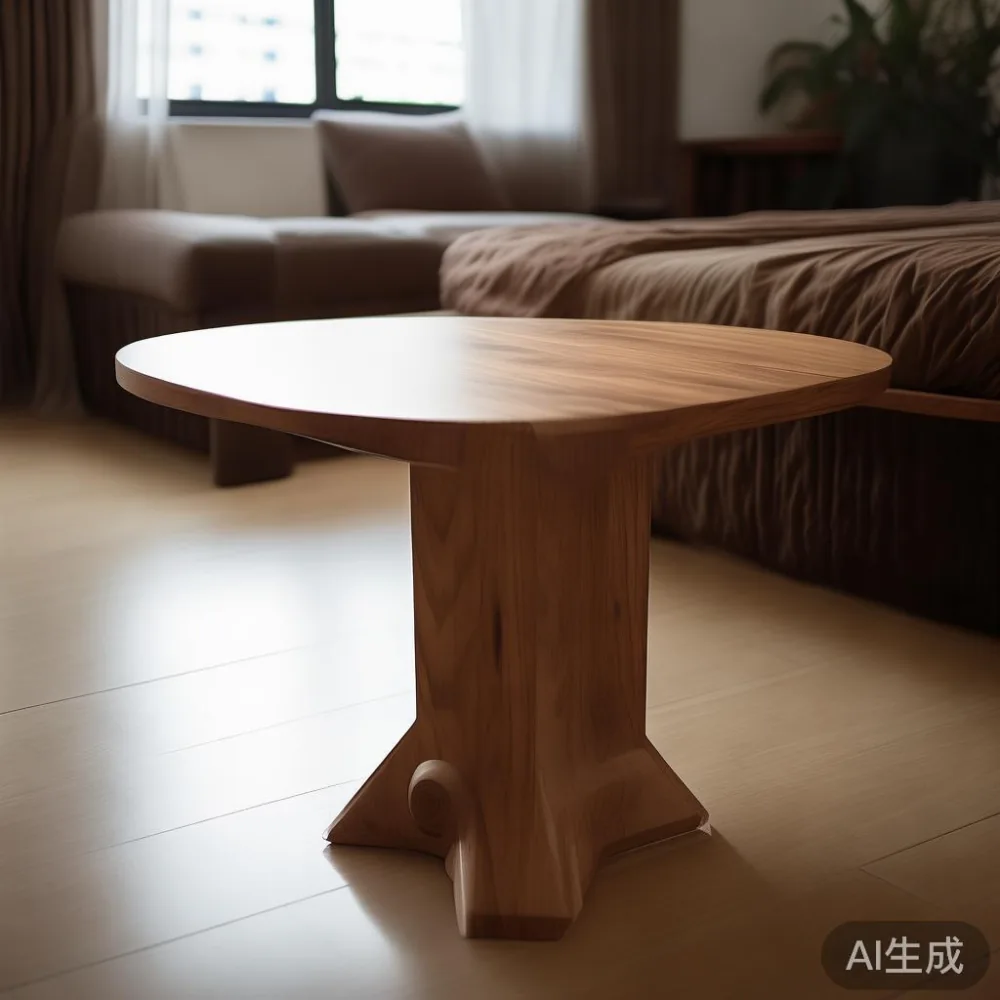
Last month I visited a resale flat in Bedok with my colleague. The owner had a 2.4 m solid wood sofa, a six-seater dining table she never used past dinner, and a king-size bed frame that ate half the master bedroom. The room felt crowded even though it had a decent 3.2 m by 3.5 m footprint. We removed nothing except one dining chair and added a 45 cm round solid wood side table next to the sofa. Within an hour, the living room read as larger. Not because of any trick, but because the eye now had somewhere to rest. That is the starting point of this guide, showing you how a single piece, picked correctly, can rewrite how your apartment feels.
Why Singapore Apartments Punish the Wrong Furniture
Compact living in Singapore comes with its own geometry. A typical three-room flat gives you about 65 sqm, a four-room about 90 sqm, and a five-room 110 sqm. Ceiling heights sit around 2.6 m to 2.8 m. Once you place a 90 cm-deep sofa, a 40 cm-deep console behind it, and a 90 cm dining table, you have lost a full metre of walking space in a 3 m wide room. The corridor outside your unit is shared, so bulky deliveries have to be broken down. That is why I always tell clients to measure the lift opening (about 2.1 m tall by 1.5 m wide in most HDB blocks) before buying anything taller than 80 cm.
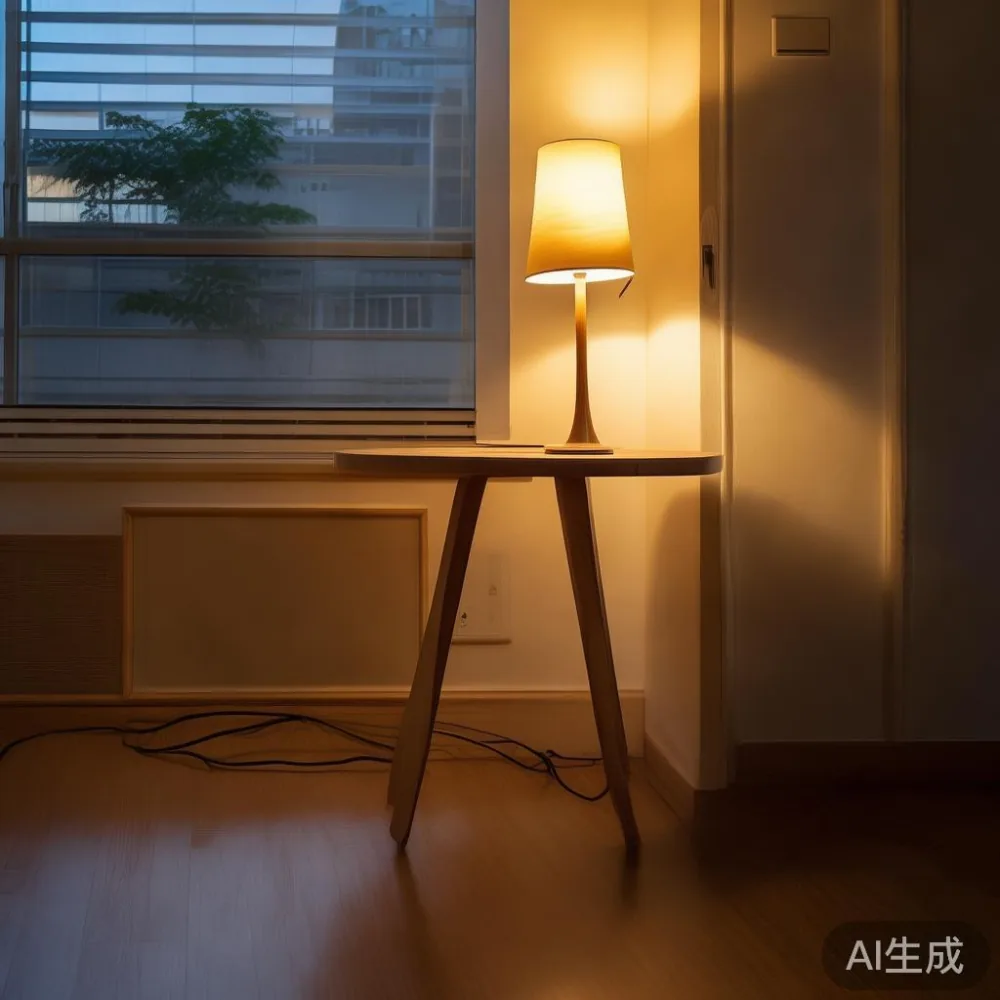
Heavy MDF furniture often costs less upfront, but it sags, peels, and starts to smell of damp during the November monsoon. Solid wood pieces, by contrast, can take a knock, breathe with the humidity, and be sanded back after five or ten years of service. For a small apartment, I look for pieces under 30 kg if they need to be moved often, and between 15 kg and 45 kg if they are anchors like a dining table or a bed frame. A solid wood side table in oak or ash typically lands in the 8 kg to 18 kg range, which means a single person can shift it when vacuuming.
Price matters too. With 9% GST still in play on imported furniture, a S$120 side table is really S$130.80 at the till. A S$600 dining set becomes S$654. A good rule in a small apartment is to spend more per piece, but on fewer pieces. One S$480 solid wood side table will outperform three S$160 flat-pack ones over a decade.
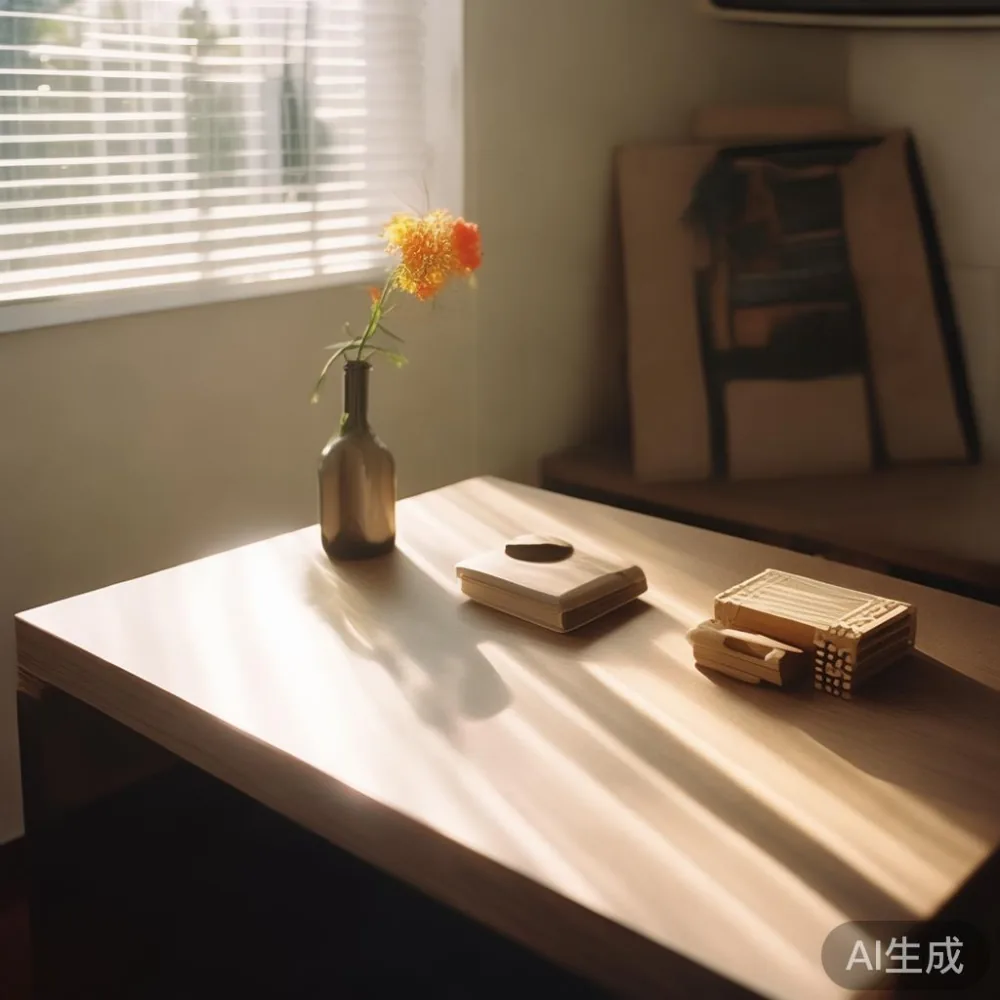
What Does "Light Luxury" Actually Mean in a 90 sqm Flat?
The phrase gets thrown around by every showroom on Geylang Road, so let me set my own definition. Light luxury is restrained, warm, and tactile. It is French light luxury seen in a slim shaker dining table with brushed brass handles, or post-modern light luxury in a soft-curve nightstand with a travertine top. American light luxury tends toward darker walnut, deeper cushions, and a reading-nook feel. None of these styles ask you to fill a room. They ask you to choose one good piece and let it breathe.
In a small apartment, light luxury multiplies: you can have a foot of French provincial detail in a 180 cm wardrobe, or a slice of American walnut on a 55 cm side table. The point is not the label. The point is the feeling of weight and finish that only solid wood and real marble give you. A friend in Punggol told me last year that her 6 sqm balcony now feels like a 12 sqm one, simply because she replaced a plastic trolley with a 60 cm round marble side table and a single plant. That is the ratio we are aiming for in every room.
For readers browsing for for sale light luxury furniture, the practical filter is simple: ask whether the piece is built from solid hardwood, kiln-dried to handle tropical humidity, and finished with a water-based matte lacquer that will not yellow after two wet seasons. Anything that ticks those three boxes is worth a closer look.
How Do You Pick a Side Table That Saves Space Instead of Stealing It?
Here is the actual question I get most often from clients in Singapore. My answer always starts with three measurements: the seat height of your sofa, the width of the walkway beside it, and the largest object you plan to put on top. If your sofa seat sits at 45 cm, your side table top should sit between 50 cm and 60 cm. Anything lower forces you to stoop; anything higher than 65 cm feels awkward when you rest a hand on it.
Width is where Singapore apartments punish most buyers. A 60 cm round side table needs a full 60 cm of clearance on every side to feel calm. In a 90 sqm flat with a 2.4 m sofa, I usually recommend a 45 cm to 50 cm round, or a 40 cm by 40 cm square, in solid wood with a slim 3 cm top. Height of the table itself should fall between 50 cm and 60 cm. Total weight between 6 kg and 12 kg if it is oak, which means a single adult can lift it for cleaning.
For a Japandi-leaning home, where the bed frame is low and the wardrobe is shallow, a 40 cm round side table at 50 cm tall works beautifully as a nightstand as well. A lot of my clients ask me how to style Japandi bed in room without crowding it, and the answer almost always includes a pair of small side tables instead of one wide nightstand. Two 40 cm rounds read as lighter than one 80 cm rectangular block, and they give each partner their own lamp and cup of water.
Which Side Table Works Next to a Solid Wood Sofa, a Marble Top, or a Bed Frame?
Match the surface, not the colour. That is the rule I repeat in every Tampines and Bedok consultation. A solid wood sofa with a walnut frame wants either a contrasting oak side table or a quiet marble side table. If your sofa is upholstered in stone-washed linen, the side table can be the warm element. If your sofa is dark leather, a soft cream marble side table will cool the room down without adding weight.
A marble side table, around 50 cm in diameter and 55 cm tall, costs more per piece but takes punishment from coffee spills, humidity, and the daily mug. Real marble weighs between 18 kg and 25 kg at that size, so make sure the spot you choose can hold that load on your floorboards or tiles. A solid oak side table of the same dimensions weighs about 10 kg, which is easier for the same purpose. For most small HDB living rooms, I recommend starting with one solid wood side table next to the sofa, and a marble side table only if you have a second source of height variation, such as a slim console behind the sofa.
For the bedroom, the same logic applies. If your bed frame is solid wood in ash or walnut, pair it with a matching solid wood nightstand. If your wardrobe is an Italian light luxury wardrobe in grey oak with brushed brass handles, the nightstand should echo those tones. And if you are working out how to style French provincial wardrobe in room with curved cornices and a soft white finish, the nightstand should be simpler than the wardrobe, not louder. A clean 45 cm round solid wood side table in a pale oak finish lets the wardrobe speak first.
Can One Side Table Really Replace a Coffee Table, a Nightstand, and a Console?
Yes, if you choose carefully. In my own apartment in Punggol, a single 50 cm round solid wood side table does three jobs. By the sofa in the morning, it holds a tray with coffee and a small plate of toast. By the bed at night, it becomes a nightstand for a 25 cm table lamp, a phone, and a glass of water. By the entry during the day, it holds the keys, a folded tote, and a small plant. I move it three times a week. At 11 kg, it slides easily on our tiled floor with felt pads underneath.
That kind of multi-tasking is exactly what a small Singapore home needs. A bulky coffee table that only holds a laptop is wasted square footage. A heavy nightstand that only holds a lamp is wasted space. A side table that can travel between roles, fit under a window, and slide out of the way during a CNY gathering is worth more than three single-purpose pieces. In a 90 sqm flat, you can usually own three to four side tables in different finishes and rotate them between rooms without breaking the budget. At MIDHILL, for example, a 45 cm solid oak side table with a hand-rubbed matte finish runs around S$280 to S$420, which is roughly S$305 to S$458 after GST.
Delivery also matters. Most HDB blocks allow delivery only between 9 am and 5 pm on weekdays, and weekend slots fill up quickly. A side table under 12 kg usually arrives pre-assembled in a single carton, which means no drilling at your corridor, no mess in the lift, and no booking the management office for a big move. That is a small detail until you have waited six weeks for a wardrobe that arrived in twelve flat-pack boxes.
How Do You Style a Side Table Without Crowding It?
Less, but better. A 45 cm round side table can hold three objects, not seven. The rule I give every client is one tall element (25 cm to 35 cm, like a table lamp or a slim vase), one medium element (10 cm to 20 cm, like a stack of two books or a candle), and one personal element (a small plant, a photo, a piece of driftwood from East Coast Park). That is the entire surface. Anything more and the table starts to compete with the room.
For homeowners exploring the top 10 Coastal furniture looks for their condo, the side table is where the style lives. A weathered oak round, paired with a rattan lamp, a linen-bound book, and a single shell, can carry an entire coastal theme without one piece of blue paint. For the Japandi look, swap the rattan for matte ceramic, the linen for raw cotton, and the shell for a small stone. The table is the canvas; the styling is the brush.
If you are reading this from a Tampines four-room flat with a 2.4 m solid wood sofa, here is the practical sequence. Step one: measure the height of your sofa seat. Step two: choose a side table within 5 cm of that height. Step three: pick a material that contrasts your sofa (walnut next to oak, oak next to dark leather). Step four: place it 5 cm to 10 cm away from the sofa arm so you can still vacuum behind it. Step five: style it with one lamp, one object, one plant. Step six: live with it for a week before adding anything else.
For readers browsing luxury light luxury furniture on the web, that same sequence applies to every other piece in the apartment. The bed frame, the dining table, the wardrobe, the nightstand, the marble table for the entry. Each one deserves the same three-question audit: is it solid wood or real marble, can it move when I need it to, and does it earn its footprint every single day. MIDHILL pieces, in my experience, answer yes to all three, which is why I keep returning to them in client briefs. Their 10-year structural warranty and lifetime sanding service also mean you are not buying a disposable object; you are buying something that will be in your home for the next fifteen to twenty years.
What About the Rest of the Apartment: Bed Frame, Wardrobe, and Dining Table?
The side table is the entry point, but the same rules apply to every larger anchor. A solid wood bed frame for a queen mattress sits at roughly 210 cm by 160 cm, weighs between 35 kg and 55 kg in oak, and needs a 60 cm to 80 cm clearance on three sides for sheet-changing. In a 3 m by 3.5 m master bedroom, that leaves a 60 cm to 80 cm walkway and a slim wardrobe or dresser on the fourth wall. Pick a bed frame with a low headboard (under 90 cm) if your ceiling is the standard 2.6 m. Anything taller makes the room feel shorter.
A dining table for four sits at roughly 120 cm by 80 cm. In a 90 sqm flat, it usually doubles as a work desk, a homework station, and a Sunday roasts spot. Choose one in solid oak or ash, with legs that allow four adults to sit without knee contact, and a top that can take a hot pot without a cloth. A 120 cm table seats four for meals, two for work, and folds down to a console against the wall when guests arrive. The right table earns its 1.4 sqm of footprint, the wrong one wastes it.
A wardrobe is the largest single object in most HDB bedrooms, and the one most likely to fail. A proper solid wood wardrobe at 180 cm tall by 120 cm wide by 60 cm deep weighs around 130 kg to 180 kg, which is too heavy to move once assembled. Measure your lift and your corridor before ordering. For readers exploring an Italian light luxury wardrobe for the master bedroom, plan the delivery route first, then the finish. A 180 cm wardrobe in grey oak with soft-close hinges and three drawers inside is roughly S$2,800 to S$4,200 before GST, and S$3,052 to S$4,578 after. Spend a Saturday morning at the showroom, measure with a tape, and bring a small notebook.
At the entry, a slim console or a small marble table at 110 cm by 35 cm by 80 cm gives you a spot for keys, a tray, and a single flower stem, without blocking the door swing. In a narrow HDB entry of about 1.2 m wide, a deeper piece is a daily annoyance. Keep it shallow, keep it solid, keep it quiet.
A Quick Checklist Before You Click Add to Cart
Run through them in order, and you will not regret the purchase.
1. Measure the lift opening, the corridor width, and the door swing of the room where the table will live. 2. Confirm the height of your sofa seat or bed frame, and stay within 5 cm of it. 3. Pick solid wood or real marble, with a water-based finish for our humidity. 4. Keep the weight between 8 kg and 18 kg for movable pieces, and under 30 kg for anchor pieces if you live above the 10th floor. 5. Style the top with one tall, one medium, one personal object. 6. Confirm the delivery window with your Town Council or condo management, and book the lift if the item is over 80 cm tall. 7. Keep the receipt and the warranty card. A 10-year structural promise, like the one from MIDHILL, is a real safety net in this climate.
For readers looking at www.midhill.co for the first time, those seven checks are the same ones I run for every client. Solid wood, real marble where it counts, restrained proportions, and a finish that will age well in our tropical light. A small apartment does not need more furniture. It needs better furniture, picked one piece at a time, with the same care you would give a piece of jewellery. The side table is the right place to begin.