How Southeast Asian Humidity Affects Solid Wood Side Tables
Singapore’s warmth and humidity can be pleasant for most of the year, but they place a steady demand on solid wood furniture. A side table may look perfectly still beside a sofa, yet its timber can quietly absorb moisture between June and September. In an HDB flat, where the living room may be only 12 to 18 sq m, that movement can affect the fit of drawers, the alignment of doors, and the visible finish on a table top.
For homeowners in Tampines, Bedok, and Punggol, the answer is not simply to avoid wood. It is to understand the indoor environment, select suitably stable timber, protect the piece from sudden changes, and maintain it with realistic care. MIDHILL designs solid wood furniture around practical use, supported by a 10-year structural warranty and lifetime refinishing. The points below explain how humidity affects a side table, what to watch for, and how to keep it in good condition in Singapore.
Why does Southeast Asian humidity affect solid wood side tables?
Wood is hygroscopic: it takes in moisture when the surrounding air is humid and releases it when the air becomes drier. In Singapore, outdoor relative humidity commonly ranges from about 65% to 90%, while air-conditioned interiors may fall to 45% to 60%. A side table placed near an open window can therefore move between two quite different moisture conditions within a single day.
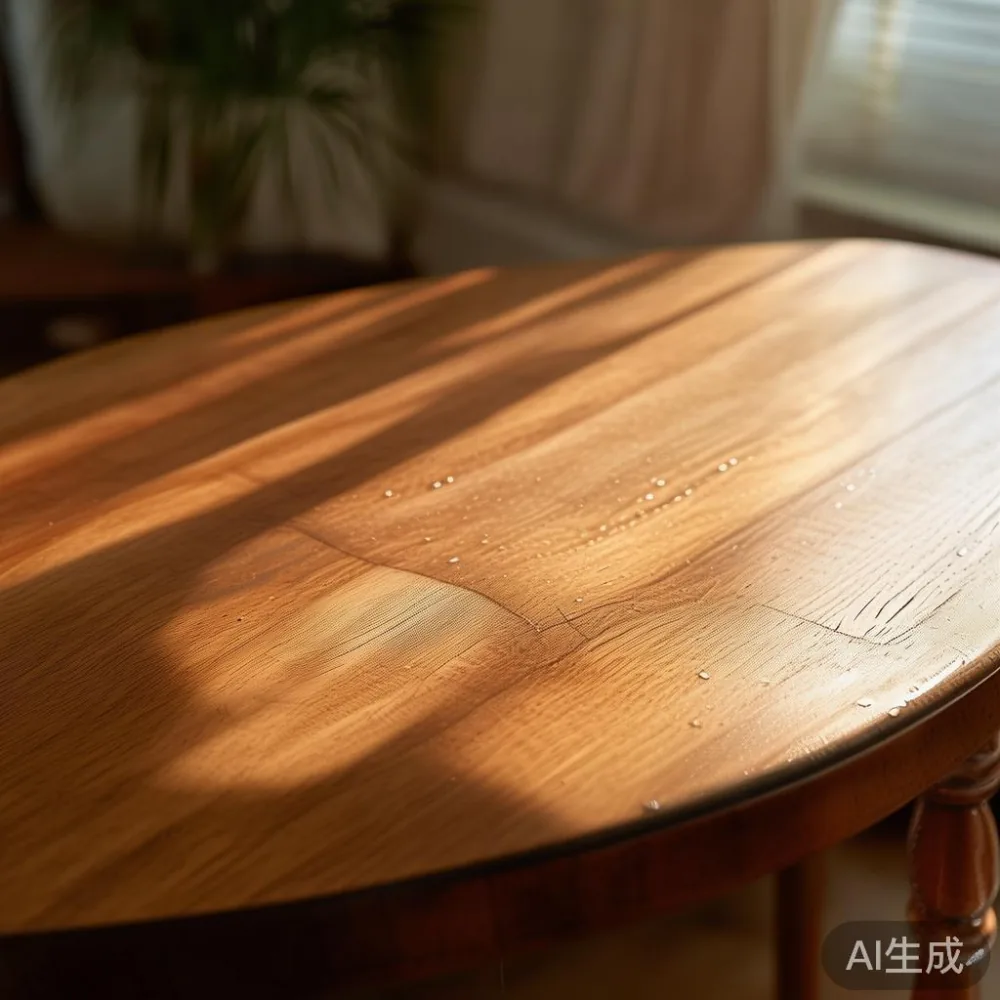
The movement is small in a well-made table, but it is measurable. A 50 cm-wide tabletop might expand by roughly 1 to 3 mm across its width during a pronounced humidity cycle. That amount is enough to make a tight drawer feel sticky or reveal a minute gap at a joint. It is also why solid wood sofa frames, bed frames, dining tables, and wardrobes need some breathing room and stable placement.
Temperature matters too. A sunlit condominium room can reach 32°C by late afternoon, while an air-conditioned bedroom may sit at 24°C. The combination of heat and moisture usually causes greater dimensional change than moderate humidity alone. Direct air-conditioning draughts have the opposite effect: repeated drying can lead to small checks in a finish or slight contraction around panel edges.
Singapore’s lift and corridor dimensions add another layer to furniture planning. A compact side table is often easier to carry through a 90 cm HDB landing and around an 85 to 110 cm condo corridor, but the delivery route should still be measured before purchase. A boxed table with a 55 cm top and 50 cm height may weigh 8 to 14 kg, depending on its timber and construction. Confirm the lift dimensions, protect the corners, and remove the side table from the carton only after it reaches the room intended for it.
How much humidity is safe for solid wood furniture?
For general indoor use, a relative humidity range of about 40% to 65% is comfortable for most people and manageable for solid wood furniture. Singapore homes do not need to imitate a temperate climate all year, but keeping the setting closer to 55% to 65% will reduce repeated swelling and shrinking. Useful readings can be taken with a digital hygrometer placed near, rather than directly against, the side table.
Use a practical 3-level guide:
- 40% to 60% RH: Stable conditions with little visible dimensional movement. This range is easy to maintain in an air-conditioned bedroom but may require a dehumidifier in a less exposed corner.
- 60% to 70% RH: Acceptable for short periods. Wipe condensation promptly and leave 3 to 5 cm between the side table and a wall or curtain.
- Above 70% RH for long periods: Higher risk of swollen joints, musty odours, mould around the base, and finish that feels tacky. Improve ventilation or run a dehumidifier.
Do not judge a table by a reading taken in one room only. A Punggol flat facing an open courtyard may measure 78% RH at 8 p.m., while the bedroom corner measures 56%. Place the hygrometer in the actual living area for at least 24 hours before deciding that the furniture is unsuitable.
Condensation deserves special attention. In Bedok, a side table beside a sliding door may collect visible beads of water during a heavy afternoon shower. A table top may appear wet even when the air reading is moderate. Use a coaster under drinks, wipe water within 10 minutes, and avoid leaving damp laundry directly above or beside the piece.
Which timber and construction details help a side table resist humidity?
Solid hardwoods such as oak, ash, beech, and teak are commonly chosen because they are less prone to extreme movement than some lower-density woods. Teak’s natural resistance to moisture makes it a practical choice near a balcony, although a protective finish and good detailing remain necessary. No timber is completely immune to humidity, and any promise that a piece will never react should be treated with caution.
Look for a side table with furniture-grade joinery rather than a thin decorative shell. Dovetails, mortise-and-tenon joints, and well-fitted drawer components generally tolerate seasonal movement better than simple nailed frames. A solid top around 2 to 3 cm thick feels substantial, yet very thick timber can also move more than a modest panel. Construction quality matters more than thickness alone.
Back panels and undersides deserve inspection. A solid wood dining table, wardrobe, or bed frame should have surfaces finished on exposed areas and appropriately sealed undersides. If a side table has an open rear shelf, leave 2 to 3 cm of ventilation space and keep it away from walls that may feel damp.
For coordinated interiors, a light luxury TV console can share the same timber family as a side table without making the room feel heavy. In the bedroom, Japandi for guest room projects often use pale oak with simple lines, while a light luxury TV console balances a solid wood sofa nearby. These compositional choices are less about chasing a label than about giving related pieces visual consistency.
MIDHILL’s solid wood furniture is built for long use rather than short display life. The company’s 10-year structural warranty addresses the core frame, while lifetime refinishing provides a route for restoring the surface after years of use. That combination is useful in Singapore, where a good side table may pass through several homes or be moved as a family’s layout changes.
Where should I place a side table in a humid HDB or condo home?
Begin with airflow and sunlight rather than the most convenient corner. Avoid a position directly beside a bathroom, beneath an air-conditioning vent, against a cold exterior wall, or under a window that remains open through the afternoon. A side table should stand on a level surface with enough space around it for the top to expand without pressing against a skirting board.
Allow 5 to 8 cm from a wall in a naturally humid corner. For a bed frame or nightstand placed beside a bed, check that the nightstand does not touch a damp floor or a fabric skirt. A side table used beside a dining table should not be pushed tightly against the chair zone; the repeated contact and movement can stress a drawer or leg.
Sunlight is not the same as humidity, but it can amplify the problem. Repeated heating can soften a film finish and fade the colour unevenly. Keep a solid wood side table at least 1 m from a west-facing window during peak hours, or use a curtain with a light-filtering fabric. Avoid dark felt pads under the legs, since they can trap moisture. Felt or cork pads on a clean, dry floor may be used for scratch protection, but they should be replaced if they become damp.
For lift access, record the door opening, lift car dimensions, landing turns, and corridor width. A table top of 45 to 55 cm and height of 50 to 60 cm is common in compact Singapore interiors. If a wide top has to be tilted through a 90 cm doorway, check the diagonal clearance and ask the delivery team whether the top can be removed. Allow 2 to 4 working days for standard delivery after stock confirmation, and more time for a scheduled condominium delivery with access requirements.
How should I care for a solid wood side table during monsoon months?
Start with a simple weekly routine. Dust with a soft, dry microfibre cloth, including the underside and the inside of any drawer. Do not spray cleaner onto the timber; apply a small amount to the cloth instead. This prevents liquid from seeping into joints. If the table has a marble table top or marble accent, follow separate stone-care instructions and avoid acidic cleaners.
Check the environment monthly. Record the humidity reading, look beneath the table for dampness, and run the air conditioner for 20 to 30 minutes in commonly used rooms. A compact dehumidifier can bring a persistently wet corner from 75% to around 60% RH, but place it with at least 20 cm clearance and follow its drainage instructions. Avoid directing cold air at the side table for hours each day.
Protect the surface from heat and liquids. Use coasters around 10 cm across for warm mugs, and a larger mat for laptops or hot dishes. Wipe spills immediately. Cleaning products containing ammonia, bleach, silicone, or strong alcohol can damage some oil or wax finishes. Mild pH-neutral soap diluted with water is safer for ordinary marks, followed by drying with a separate cloth.
Do not leave magazines, plastic bags, or damp cloth under the table for weeks. They can hold moisture against the wood. In a guest room, a side table may collect sunscreen, insect repellent, or damp towels. Coastal for guest room styling calls for pale textiles and natural materials, but those should not be placed on a damp timber surface without a protective layer.
For minor movement, allow the timber to acclimatise for 24 to 72 hours rather than forcing a swollen drawer. Do not sand aggressively at the first sign of stickiness. If a drawer continues to bind after the weather changes, the frame or runner may need adjustment. Major cracks, loose joints, or a top that has visibly warped should be assessed before applying moisture or heat.
Can humidity damage a wardrobe, bed frame, or other solid wood piece?
Yes. A wardrobe can twist if one side is exposed to a damp wall while the other faces an air-conditioned room. A bed frame can develop a squeak when rails loosen or joints shift. A dining table may develop a pronounced ripple in its top, and a nightstand can suffer at the drawer rails. Large pieces usually react more visibly because they span wider distances and experience more variation across their surfaces.
Wardrobes need airflow behind or beside them and should not be pushed against an exterior wall during heavy rain. If you are working out how to style French provincial wardrobe in apartment interiors, include 5 to 10 cm of clearance and avoid positioning the carved frame where dampness can remain trapped. The result is easier to maintain and keeps the decorative profile clear of visible swelling.
For storage, keep solid wood away from washing machines, bathroom pipes, and unventilated service areas. Place folded fabric or books on shelves rather than plastic covers against the timber. For a bed frame, check the underside after a storm and remove any pooled moisture with a dry cloth. Useful Mid-century modern with storage projects can work well in compact flats, provided the integrated cabinets are not overcrowded and their doors can open after normal seasonal movement.
Another question buyers ask is: is Mid-century modern wardrobe worth it for a Singapore apartment? The answer depends on the construction, proportions, and placement more than on the style alone. A correctly made wardrobe with stable joinery and suitable clearance can serve for 10 years or more. To evaluate one, inspect the back panel, open and close each door several times, and compare the wood tone under 3 different lighting conditions.
How do I know if a side table needs professional attention?
Watch for 4 signs: a drawer that will not close, a gap wider than 2 mm that was not present at delivery, a joint that feels soft, or a finish that has become sticky or deeply checked. A surface mark that can be wiped away is usually a cleaning issue. Deep splits, mould growth, or a warped top indicate that the environment or the piece needs professional assessment.
Before raising a warranty request, document the problem with 3 photographs and note the room humidity over 7 days. This helps distinguish movement caused by moisture from impact damage or an installation issue. MIDHILL offers a 10-year structural warranty and lifetime refinishing, so the original purchase record and care history should be retained.
Buyers should also understand the service terms. MIDHILL provides free shipping on orders over US$350, although any Singapore price shown in SGD should be confirmed at checkout because taxes, including GST, and delivery arrangements may apply. The 14-day return period offers a practical opportunity to check fit and finish at home, but returned furniture should be protected from humidity and impact during transport.
Consider measurements before ordering a side table. For a compact sofa in an HDB living room, a top width of 40 to 50 cm and height of 45 to 55 cm usually creates a usable relationship without blocking circulation. A marble table top adds visual coolness but is heavier, often 15 to 30 kg for a small unit, and may need two people during delivery. A solid wood construction may weigh 8 to 14 kg, so the lift limit and the distance from the lift should also be checked.
Good furniture is designed to age, but it should age within clear limits. In Singapore, protecting a side table means balancing natural timber movement with ventilation, avoiding abrupt wet and dry conditions, and arranging pieces so their construction can accommodate the climate. More information and current product details are available at www.midhill.co.