How Southeast Asian Humidity Affects Solid Wood Side Tables
Humidity is rarely the first concern when furnishing a Singapore home, yet it has a direct effect on solid wood. Warm, moisture-laden air can make timber expand, contract, swell, or check, especially along the grain. In Tampines, Bedok, and Punggol, air-conditioned HDB flats and condos provide a useful indoor buffer, but daily changes still occur when doors open to the corridor or windows are opened during a shower. Understanding this movement helps a homeowner choose a practical side table and care for it properly.
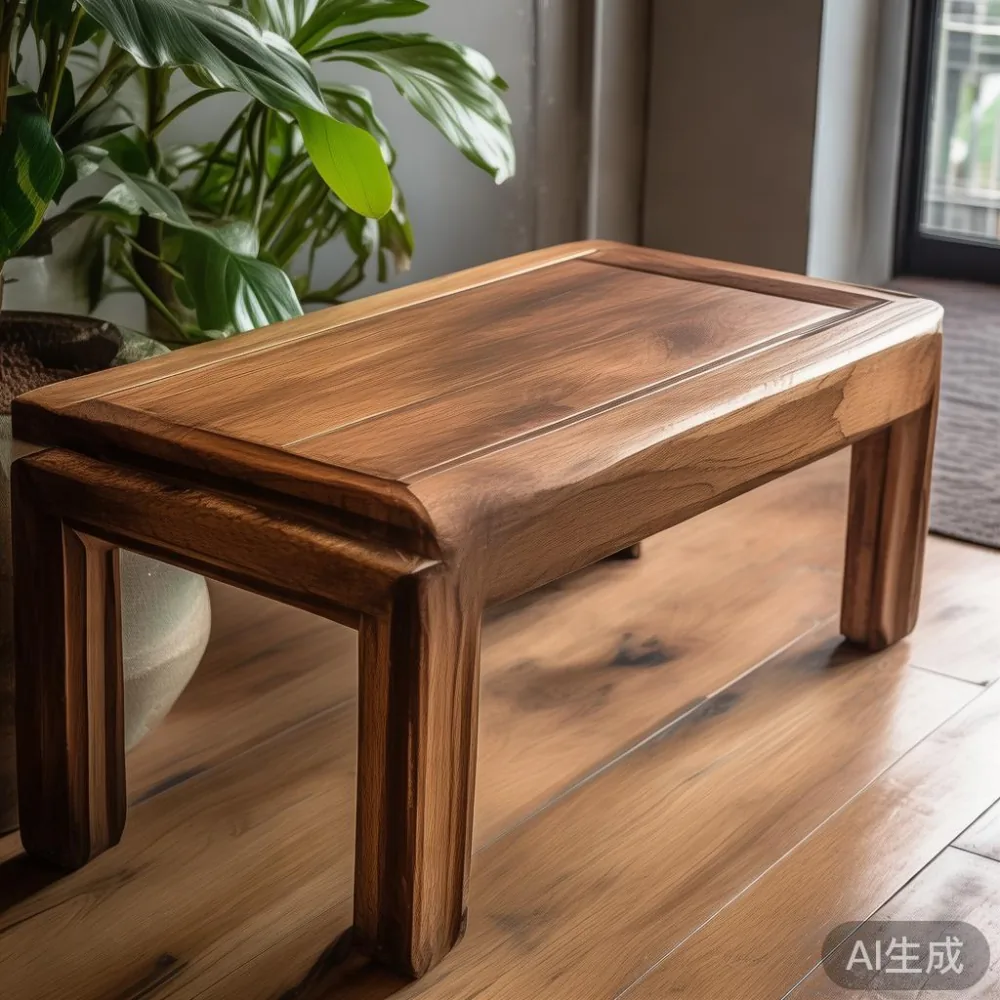
MIDHILL builds solid wood furniture in Foshan and has supplied customers in more than 15 countries since 2008. Its 10-year structural warranty covers long-term construction, while lifetime refinishing reflects a different promise: surface restoration as wood ages. Humidity control remains the owner’s responsibility, but sound furniture design gives the timber room to respond without twisting joints or distorting proportions.
What relative humidity does to solid wood?
Wood is hygroscopic, meaning it exchanges moisture with the surrounding air. At 60% relative humidity, most indoor solid wood is comparatively stable. As humidity approaches 70%, moisture movement becomes more noticeable; below 40%, wood may lose enough moisture to shrink. These are not rigid damage thresholds, because thickness, species, finish, and location all matter, but they offer useful reference points.
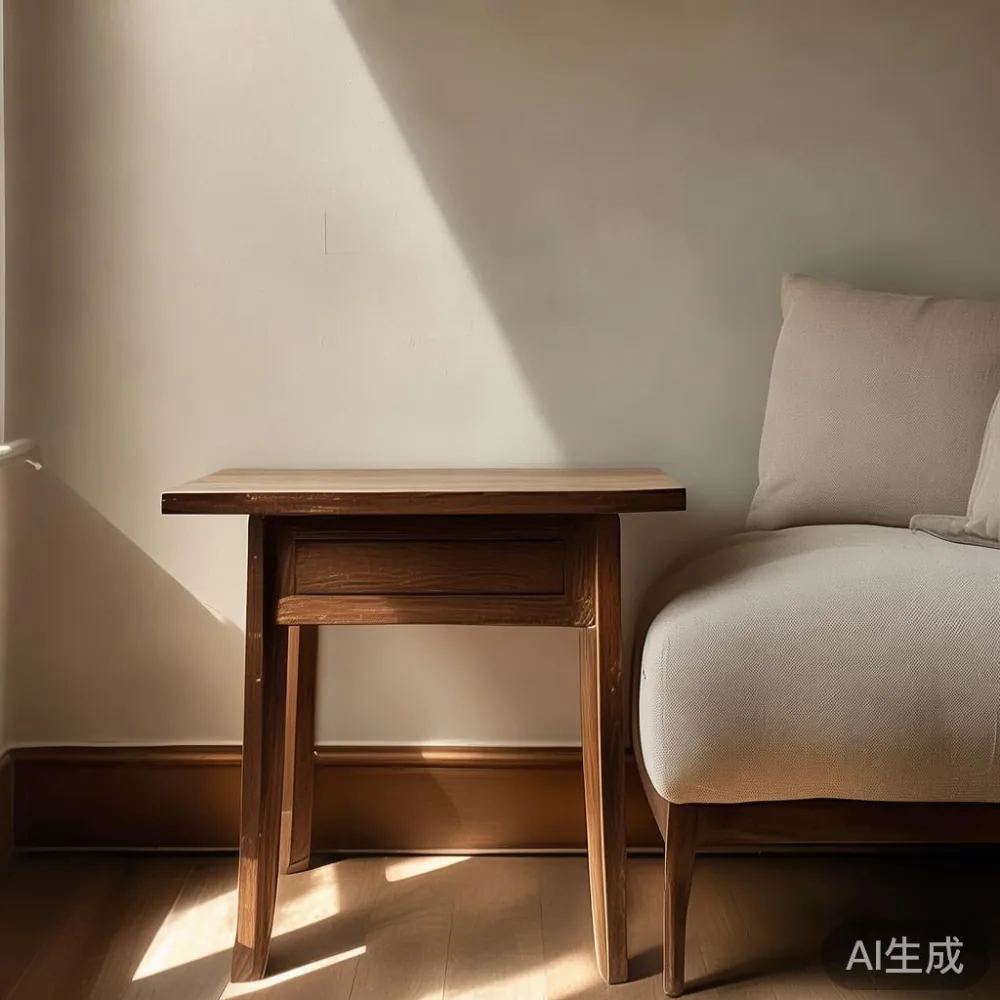
A 50 cm wide oak side table may vary across its width by only 1–3 mm during a seasonal cycle. A 180 cm long solid wood dining table can show larger total movement because more timber is involved. Movement across the grain is more restrained than movement along it. Grain direction therefore matters: a panel that expands sideways can press against a wall, while one that expands lengthwise may pull away from a fixed stop.
Small surface checks can appear if a finished panel dries unevenly. Deep splits, lifted veneer, distorted doors, and jammed drawers are more serious. Veneer can blister after repeated wetting, whereas well-sealed solid wood generally tolerates stable indoor humidity with fewer visible problems. Painted and lacquered surfaces slow moisture exchange, but joints, end grain, and small scratches still need attention.
Do air-conditioned HDB flats and condos need humidity care?
Yes, although the indoor environment is easier to control than an open veranda or an unconditioned ground-floor corridor. A Bedok HDB flat may shift between 58% and 72% relative humidity when several people cook, shower, wash laundry, and open the main door. At night, the air conditioner removes moisture; by afternoon, the same room may become more humid.
Place a side table away from bathroom doors, kitchen steam, laundry balconies, and air-conditioner outlets. Keep it at least 30 cm from a window that receives direct sun and about 60 cm from a vent if possible. A digital hygrometer is inexpensive: spend SGD 25–60 on a model that records minimum and maximum readings. Position it near the table, not inside a drawer where humidity appears artificially low.
Aim for a practical indoor range of roughly 45–65% relative humidity. In a condo near the coast, exterior humidity can vary by more than 15 percentage points over a 24-hour period. Interior doors and curtains buffer those swings, but a side table placed directly beside a sliding balcony door may experience repeated moisture cycles.
Lift and corridor width do not change the physics of wood movement, though they affect delivery and relocation. A compact package of 80 × 50 × 12 cm may fit a standard HDB lift opening of about 90 cm, but a boxed dining table of 210 × 100 × 85 cm may require the service lift. Measure the lift door, corridor turns, landing, and unit threshold before confirming delivery.
How should homeowners choose a side table for humid rooms?
Choose solid wood from a known species, inspect the construction, and allow for seasonal variation. A frame made from boards about 18–25 mm thick usually offers more dimensional stability than very thin material. Look for joints that can accommodate movement, smooth surfaces without rough sanding, and a finish applied to all faces and end grain where the design permits.
Ask for the species. White oak, American walnut, ash, and teak each behave differently, but no species is immune to prolonged moisture exposure. Kiln drying also matters: stock balanced for an indoor climate around 8–12% wood moisture content is appropriate for many conditioned spaces. Green wood at 20% moisture content can shrink visibly as it reaches the room.
French light luxury often favors pale oak, creamy tones, tapered details, and clean silhouettes. Post-modern light luxury may use walnut with softened geometry, while American light luxury commonly combines warm timber with restrained metal accents. None of these styles excuses poor moisture control. A French-inspired side table with a 45 cm top can suit a narrow living room, but its finish and stability still need to fit the location.
For a compact HDB interior, a round top has a practical advantage: it has no sharp corner and allows air to circulate around the perimeter. A 50 cm diameter round side table beside a 200–230 cm sofa creates a balanced arrangement. Rectangular models fit angular rooms but require at least 5–10 cm of clearance from walls if seasonal expansion is possible.
Consider stability as well as width. A lightweight side table may shift on smooth tile, so a base spanning 30 cm or weighing at least 8 kg can resist casual knocks. Tall models should have a centre of gravity within the footprint. For papers, lamps, and drinks, consider a sealed top, raised edges, and a load rating of at least 15 kg.
What is the best daily care routine for a side table?
Use coasters and wipe spills promptly. A water ring can leave a mark within 10–30 minutes, depending on the finish. Place a coaster under every cup, bottle, and humid grooming product. Ceramic or stone coasters may add 3–8 mm of height, which should not prevent a lamp base or charging pad from sitting evenly.
Dust with a soft cloth, then wipe with a lightly damp cloth wrung nearly dry. Avoid soaking the top, flooding the joints, or spraying cleaner directly onto wood. Neutral soap diluted in water should be used sparingly. After cleaning, dry the surface within 5 minutes and keep the room ventilated without creating a strong cold-air draft.
Do not place a hot styling iron, curling iron, air fryer, or kettle on the side table. A ceramic mug may be around 70°C, while styling irons can reach 150–230°C. Heat can soften some finishes, darken pale timber, or create permanent rings. Use a heat-resistant tray rated for at least 150°C, and confirm compatibility with the finish.
Check the underside every 3–6 months. Look for mould around a cold beverage glass, condensation beneath a laptop stand, or a musty smell after rain. A side table near an air-conditioner outlet should not carry objects that block airflow. Maintain at least 20 cm around table legs when air circulation is poor.
During humid months, an indoor dehumidifier may help, but it should not create rapid swings. A 10–20 litre/day unit can maintain a small bedroom, while a 25–35 litre/day model suits a larger open-plan living area. Set it to approximately 55–60% rather than chasing a perfectly fixed number. Clean the filter every 2–4 weeks in dusty conditions.
Can different furniture types share the same humidity principles?
Yes, although scale and use alter the symptoms. A solid wood sofa frame can loosen at joints if it repeatedly absorbs moisture, while a bed frame may move across a tiled floor as it expands. A dining table needs enough clearance at its ends, and a wardrobe requires ventilation if fitted close to walls. The underlying rule is stable indoor humidity, sound finish, and room for dimensional movement.
A solid wood sofa with upholstered cushions requires breathable covering, but its timber frame still needs careful placement. The comparison in light luxury sofa vs Mid-century modern sofa often concerns shape and material, yet both perform better when removed from damp corners. How to style European sofa in bedroom discussions often ignore air movement; leave 30–50 cm behind a freestanding frame when space permits.
A dining table may take up 180–240 cm of length, so moving it away from a humid exterior wall is more important than forcing it against the perimeter. A wardrobe at 200 cm high contains much more timber than a side table and may show seasonal movement in tall panels. A nightstand should remain accessible for inspection rather than being pushed tightly into an unventilated alcove.
Marble table surfaces resist moisture better than most timbers, but their bases, adhesives, and joints still require stable conditions. European light dining table buyers may compare veneer, solid wood, and marble; finish quality remains relevant to all three. Searches for a MIDHILL coffee table review can help buyers assess construction photographs, delivered dimensions, finish consistency, and after-sales expectations rather than judging appearance from one image.
For broader design references, top 10 Mid-century modern furniture lists often feature tapered legs, walnut, and compact silhouettes. A side table in that style can work well beside a sofa, provided the top is not repeatedly exposed to drinks or bathroom moisture. Minimalist for small living room planning should also include clearances of at least 5 cm at walls and 90 cm along primary walking routes.
Why do finishes, joinery, and delivery details matter?
A finish slows moisture exchange, but it is not an absolute barrier. Inspect lacquer for scratches, wax for water spots, and oiled surfaces for pale patches. Re-oil according to use and product instructions; a common interval is every 6–12 months. Severe scratches, peeling, or mould require assessment before another coat is applied.
Joinery should distribute seasonal movement without forcing timber against fixed hardware. Solid wood dining table tops may use fasteners that permit limited expansion, while drawer runners should not be fitted as though the base will remain absolutely still. For a side table, screw blocks and joints should show no gaps when the top is touched by different parts of the body.
Uncrate furniture indoors or in a dry covered area and allow packaging to acclimate for 24–48 hours when feasible. Remove screws only after assembling and checking every part. Keep protective pads under the top for at least 7 days, but never place a side table close enough to a humid entrance for trapped packaging to encourage mould.
Singapore delivery often takes 3–7 working days after dispatch, depending on stock and location. Confirm whether GST is included in the quoted price. A SGD 349 order sits just below the free-shipping threshold stated here, while an order of SGD 350 meets it; taxes and remote-area terms should still be checked at checkout. Returns are generally accepted within 14 days, subject to the stated product and condition rules.
Why did my inspection reveal problems that a showroom photo did not?
Last month I visited a home in Tampines to inspect a solid wood side table after several weeks of refined humidity. A showroom photograph had concealed a fine 0.4 mm surface check near the end grain. The table stood about 25 cm from a laundry balcony door, and a recorded hygrometer had reached 74%.
The structure was stable, but the finish had trapped a faint ring beneath an unsealed coaster. We moved the table 70 cm away from the opening, reduced the maximum indoor reading, wiped and dried the affected area, and applied the approved maintenance finish. The mark became much less visible, while the check did not widen over the next 14 days.
The episode confirmed what the showroom could not show: climate, placement, and daily habits determine how a finish ages. A side table can remain structurally sound for years when protected, yet a small moisture-related defect can appear quickly if wet objects remain on it. Choose solid construction, measure the room, control humidity, and treat maintenance as a simple routine of minutes rather than a dramatic restoration.